AI estimate as of July 26, 2025 · verify with a professional before acting
AI-Generated · Verify before acting
Everything on this page is generated by AI for informational purposes only. AI can make mistakes — the AI may misidentify items or misattribute them (artist, maker, brand, designer, origin, era). This is not an official valuation and should not be used for insurance, sale, tax, estate, legal, or lending purposes — or any decision requiring a certified appraisal. It is not an authoritative claim about any person, brand, or rights holder — do not share or rely on it as a factual statement about a third party. Always consult qualified professionals before making financial decisions.
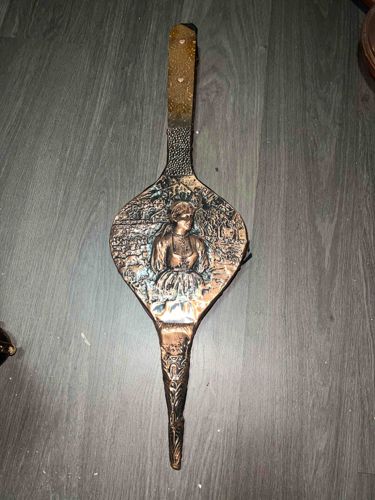
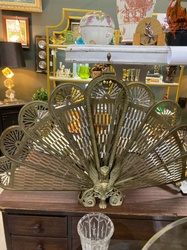
This appears to be an ornamental fireplace bellows, though it might lack the functional leather or fabric chamber essential for air propulsion. Its primary function seems decorative. The piece is constructed primarily of metal, likely copper or a copper alloy, displaying a warm, inviting reddish-brown patina. The design is heavily embossed, featuring a central figure of a woman, possibly in period attire, seated or depicted in a serene pose, surrounded by a rural or garden landscape with buildings and trees. The intricate detailing on the woman's dress and the surrounding scenery suggests a high level of craftsmanship. The handle, extending from the top, is also metallic, with an textured or stippled pattern where it connects to the main body, transitioning to a smoother, possibly hammered finish further up. It shows signs of wear, particularly a darkening and possibly some verdigris or tarnishing consistent with age and exposure, especially on the handle and raised portions of the relief. The tip of the bellows is elegantly tapered and also features relief decoration, adding to its aesthetic appeal. No clear manufacturer's marks or signatures are visible from the provided image, making it difficult to pinpoint exact manufacturing details or a specific artisan. Given the style of the relief and the material, it likely dates from the late 19th to mid-20th century, possibly during the Arts and Crafts movement or a period that valued ornate, traditional designs. The quality of the embossing indicates good craftsmanship, suggesting it was a product intended to be admired for its decorative merit. There are no obvious signs of significant damage beyond expected wear and patination, such as dings or structural deformities.
AI Appraisal Report
This ornate metal fireplace bellows appears to be a decorative piece, likely non-functional, constructed of copper or a copper alloy. Its condition, as observed from the image, is consistent with age, showing a warm patina, typical tarnishing, and some verdigris, particularly on the handle and raised areas of the relief. This wear is expected and contributes to its antique aesthetic rather than detracting significantly from its value. The intricate embossing, depicting a serene woman in a landscape, suggests good craftsmanship and an artistic sensibility. I would place its likely date of manufacture between the late 19th and mid-20th centuries, possibly influenced by the Arts and Crafts movement, given its emphasis on detailed, traditional design and material quality.
Market conditions for vintage decorative fireplace accessories are steady, with demand for unique, well-crafted pieces. Similar embossed copper or brass items, especially those with figural designs, find buyers among collectors of antique home decor and those seeking period accents. While not exceedingly rare, the quality of the embossing and its apparent good condition make it a desirable item. The absence of clear manufacturer's marks limits our ability to attribute it to a specific maker or verify its precise origin, which would typically enhance value. However, its aesthetic appeal is a strong selling point. Without a physical examination, I cannot definitively confirm the material composition beyond visual assessment, nor can I check for hidden damages or repairs. In-person examination would also allow for a more precise dating through material analysis and construction techniques. Provenance documentation, if available, would further authenticate its history and potential rarity.