AI estimate as of August 7, 2025 · verify with a professional before acting
AI-Generated · Verify before acting
Everything on this page is generated by AI for informational purposes only. AI can make mistakes — the AI may misidentify items or misattribute them (artist, maker, brand, designer, origin, era). This is not an official valuation and should not be used for insurance, sale, tax, estate, legal, or lending purposes — or any decision requiring a certified appraisal. It is not an authoritative claim about any person, brand, or rights holder — do not share or rely on it as a factual statement about a third party. Always consult qualified professionals before making financial decisions.
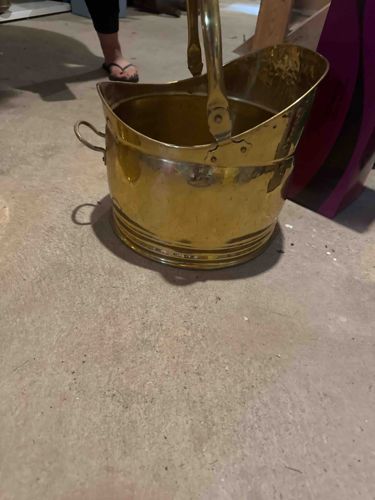
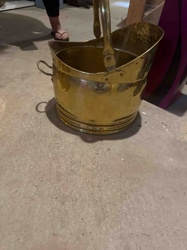
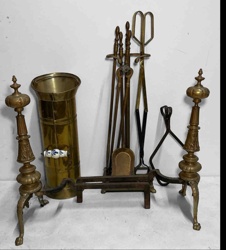
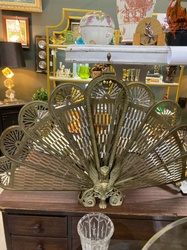
The item is a brass coal hod or scuttle, designed for holding and transporting coal to a fireplace. It features a boat-shaped or helmet-shaped body made of polished brass, exhibiting a warm golden hue. The exterior appears to have a relatively smooth surface with some areas showing a darker patina and minor scratching consistent with age and use. The top rim is gracefully curved and slightly flared, with a practical cut-out section for pouring. Two brass carrying handles are present: a fixed, arced handle spanning across the top, indicative of its primary function for lifting and pouring, and a smaller, fixed loop handle on one side of the body, likely for stability during transport or pouring, or simply for decorative balance. The body is formed from sheet brass, likely seamed and possibly riveted or soldered, though specific construction details are not clearly visible. The base of the hod is reinforced with one or more raised, concentric bands, which also serve as decorative elements, adding visual interest and stability. There are visible signs of wear and tear, including surface scratches, minor dents or dings on the body, and some discoloration or oxidation spots on the brass, particularly along the edges and within crevices. The overall condition suggests it has been a functional piece rather than purely decorative. No explicit maker's marks or signatures are discernible from the image. Given its robust construction and style, typical of such utilitarian fireplace accessories, it likely dates from the late 19th to mid-20th century, a period when coal was a common heating fuel. The quality of craftsmanship appears to be good, with a sturdy build designed for practical use.
AI Appraisal Report
Upon my virtual examination of this brass coal hod/scuttle, I assess its condition as good, consistent with a functional item of its age. The polished brass exhibits a warm hue, with expected patination, minor scratching, and some discoloration spots, particularly along edges, which are typical signs of use and age. The boat-shaped body, reinforced base with concentric bands, and dual handle design—one arced for pouring and a smaller side loop for stability—suggest a well-built, utilitarian piece. Authenticity, based solely on visual evidence, appears high as a genuine historical coal hod rather than a modern reproduction. The style, robust construction, and signs of wear align with pieces from the late 19th to mid-20th century. Market conditions for antique fireplace accessories like this are stable, with a consistent demand from homeowners seeking authentic period decor or functional pieces for traditional hearths. While not exceptionally rare, well-preserved examples with appealing aesthetics like this one hold their value. Factors impacting value include its functional condition, attractive patina, and complete original hardware. The primary limitation in authenticity verification from images alone is the inability to conduct a tactile examination. An in-person inspection would allow for assessing structural integrity, confirming the manufacturing methods (e.g., specific seaming, riveting, or soldering techniques), and detecting any repairs or alterations not visible in the image. Provenance documentation, such as original purchase receipts or family history, would further solidify its authenticity and potentially its value. Scientific testing, like metal analysis, could confirm the brass composition and provide more precise dating, though this is rarely necessary for typical items of this type unless significant value is at stake or forgery is suspected.