AI Appraisal Estimate

AI-generated estimates · not official valuations

From the user

What was submitted

Photo and notes provided by the user — not generated by AI

Submitted item photo
Submitted photo · June 13, 2026

User's notes

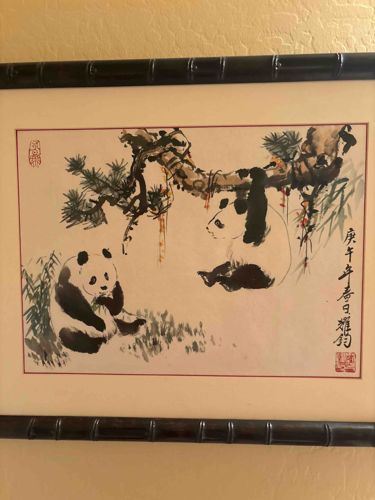
Chinese ink on paper pandas

AI analysis below

AI appraisal

AI analysis & estimate

AI-Generated · Verify before acting

Everything below is generated by AI for informational purposes only. AI can make mistakes — the AI may misidentify items or misattribute them (artist, maker, brand, designer, origin, era). This is not an official valuation and should not be used for insurance, sale, tax, estate, legal, or lending purposes — or any decision requiring a certified appraisal. It is not an authoritative claim about any person, brand, or rights holder — do not share or rely on it as a factual statement about a third party. Always consult qualified professionals before making financial decisions.

Note

This analysis also relies on unverified notes provided by the user, which may be incomplete or inaccurate and could affect the result.

Read the full disclaimer

AI Identification

·Not independently authenticated·Verify before acting

Framed Chinese Ink Wash Panda Painting

Fine Art - Asian Paintings

AI Estimated Value

·Not an official valuation·Verify before acting

$400 - $650

As of June 13, 2026

AI Item Analysis

·AI can make mistakes·Verify before acting
This artwork is a traditional Chinese ink and wash painting (Shuimo) on paper, depicting two giant pandas in a naturalistic setting. One panda is seated on the ground amidst bamboo shoots, while the other is perched playfully on a sturdy pine branch. The piece is executed with classic calligraphic brushwork, using varied ink tones from deep charcoal to light grey to create the pandas' distinct markings and the texture of the flora. The composition includes vertical Chinese calligraphy on the right side, accompanied by two red 'chop' seals—one below the text and one upper left—indicating the artist's signature and studio mark. The painting is housed within a dark-stained wood frame carved to resemble bamboo segments, complementing the subject matter. Based on the style and calligraphy, this likely dates to the late 20th century, approximately 1970-1990. The craftsmanship shows confident, fluid brush strokes characteristic of skilled mid-level regional artists. The paper appears in good condition with minor uniform toning consistent with age, though there is slight unduration suggesting a need for archival mounting. The frame shows minor surface scuffs but remains structurally sound.
AI Appraisal Report

·AI can make mistakes·Verify before acting
I have examined the digital representations of this Chinese ink and wash painting. The work demonstrates the traditional 'Shuimo' technique, showcasing commendable control of ink saturation and tonal gradation. The depiction of the pandas is characteristic of late 20th-century decorative fine art, a period when such motifs became highly popular for international export and regional collections. The 'bamboo' carved wood frame is a thoughtful addition that enhances its aesthetic value. The condition appears stable; while minor toning is present, it does not detract from the central composition. The slight undulation of the paper is a common occurrence in pieces of this age not yet professionally mounted to archival boards. The market for mid-level 20th-century Chinese ink wash remains steady, though it is currently heavily saturated with similar panda motifs, which limits overall rarity. Comparables for works by unidentified regional masters typically fall within this range, as the value is driven primarily by technical execution rather than historical provenance. It is important to note that this appraisal is based on visual examination of images. A definitive valuation would require an in-person inspection to verify the paper's fiber composition, the specific pigments used, and a translation of the calligraphy/seals to identify if a known master produced the piece. Scientific testing of the ink and a physical review of the seals against recorded databases would be necessary to confirm authenticity and rule out high-quality lithographic reproductions.

Get your items appraised

Instant estimates of your treasures with AI-powered appraisals

Browse More Appraisals