AI Appraisal Estimate

AI-generated estimates · not official valuations

From the user

What was submitted

Photo and notes provided by the user — not generated by AI

Submitted item photo
Submitted photo · June 13, 2026

User's notes

No additional notes provided.

AI analysis below

AI appraisal

AI analysis & estimate

AI-Generated · Verify before acting

Everything below is generated by AI for informational purposes only. AI can make mistakes — the AI may misidentify items or misattribute them (artist, maker, brand, designer, origin, era). This is not an official valuation and should not be used for insurance, sale, tax, estate, legal, or lending purposes — or any decision requiring a certified appraisal. It is not an authoritative claim about any person, brand, or rights holder — do not share or rely on it as a factual statement about a third party. Always consult qualified professionals before making financial decisions.

Read the full disclaimer

AI Identification

·Not independently authenticated·Verify before acting

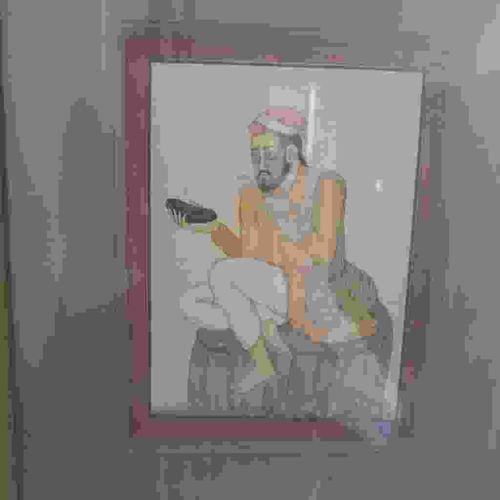
Mughal Style Miniature Portrait of an Intellectual or Noble

Fine Art - Asian Paintings

AI Estimated Value

·Not an official valuation·Verify before acting

$400 - $650

As of June 13, 2026

AI Item Analysis

·AI can make mistakes·Verify before acting
This item is a framed miniature painting executed in the Mughal style, depicting a seated male figure, likely an intellectual, poet, or noble, in a meditative or scholarly pose. The figure is depicted with a beard and a traditional turban in shades of pink and white. He is dressed in an orange-hued tunic over white trousers, seated upon a dark, patterned cushion or low stool. In his right hand, he holds a dark object which appears to be a book or manuscript, suggesting a literary or reflective theme. The background is a stark, neutral cream or off-white, characteristic of contemporary interpretations of Deccan or Mughal miniatures. The artwork is housed within a thin burgundy or dark red border, which is then set into a larger frame with a distressed or antiqued grey finish. The painting shows a meticulous attention to line work, particularly in the drapery of the clothing and the facial features. The condition appears stable, though there is some minor pixelation and color compression in the digital image that may obscure fine brushwork or signatures. The style suggests a 20th-century or modern revival of the 17th-18th century Indian courtly painting tradition. There are no clearly visible maker's marks or signatures on the front of the piece. The craftsmanship reflects a high degree of patience and skill in the miniature tradition, though the simplicity of the background suggests a focused study on the central figure.

AI Appraisal Report

·AI can make mistakes·Verify before acting
I have conducted a visual examination of this Mughal-style miniature portrait. The work depicts a seated scholarly or noble figure, rendered with a high degree of technical precision in the linework, particularly within the folds of the orange jama and the fine detailing of the facial features. The stark, monochromatic background and the specific pigment saturation suggest this is a mid-to-late 20th-century revival piece rather than a 17th or 18th-century courtly original. The condition appears stable with no visible foxing, buckling, or pigment loss, though the distressed grey frame is a modern decorative addition. The market for modern Indo-Persian miniatures is robust yet price-sensitive. High-quality contemporary copies from workshops in Jaipur or Delhi typically achieve these mid-range values at auction. Rarity is limited as these subjects were produced in series for the export and decorative markets, though the quality of the 'finework' on the turban and beard elevates this above souvenir-grade pieces. Limitations to this appraisal: A definitive determination of age and authenticity cannot be made through digital images alone. To confirm if this is a historical artifact versus a modern reproduction, an in-person examination is required to analyze the substrate (wasli paper vs. modern cardstock) and the binding medium of the pigments. Scientific testing, such as infrared reflectography (IRR) or pigment analysis (looking for synthetic versus mineral-based paints), would be necessary for full authentication. Furthermore, provenance documentation tracing the piece back to a specific collection would significantly enhance the valuation. For insurance purposes, this estimate reflects replacement value in a retail gallery context.

Get your items appraised

Instant estimates of your treasures with AI-powered appraisals

Browse More Appraisals