AI Appraisal Estimate

AI-generated estimates · not official valuations

From the user

What was submitted

Photo and notes provided by the user — not generated by AI

Submitted item photo
Submitted photo · June 18, 2026

User's notes

Art nouveau pedestal bowl signed Klimt

AI analysis below

AI appraisal

AI analysis & estimate

AI-Generated · Verify before acting

Everything below is generated by AI for informational purposes only. AI can make mistakes — the AI may misidentify items or misattribute them (artist, maker, brand, designer, origin, era). This is not an official valuation and should not be used for insurance, sale, tax, estate, legal, or lending purposes — or any decision requiring a certified appraisal. It is not an authoritative claim about any person, brand, or rights holder — do not share or rely on it as a factual statement about a third party. Always consult qualified professionals before making financial decisions.

Note

This analysis also relies on unverified notes provided by the user, which may be incomplete or inaccurate and could affect the result.

Read the full disclaimer

AI Identification

·Not independently authenticated·Verify before acting

Art Nouveau Majolica Style Pedestal Centerpiece Bowl

Antique Decorative Ceramics

AI Estimated Value

·Not an official valuation·Verify before acting

$4,500 - $6,500

As of June 18, 2026

AI Item Analysis

·AI can make mistakes·Verify before acting
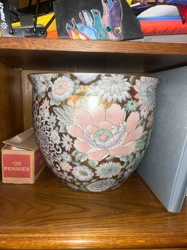
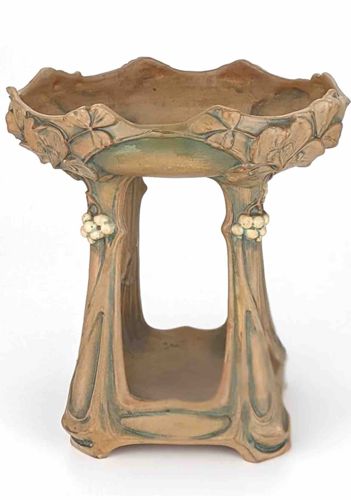
This exquisite Art Nouveau artifact is a ceramic pedestal centerpiece, likely crafted from majolica or a high-quality terracotta. The piece exhibits an organic, flowing aesthetic characteristic of the late 19th or early 20th century. Structurally, it consists of a shallow bowl with a wavy, irregular rim that mimics biological forms, supported by a structured quadrupedal pedestal base with a hollow center. The decorative scheme features high-relief botanical motifs, specifically grapevines with sculpted clusters of white grapes and broad, curling leaves that wrap around the upper basin. The color palette revolves around earthy ochres and terra-cotta browns, accented by a subtle sage green glaze used as an undercolor to emphasize the whip-lash curves and recessed areas of the molding. The construction shows sophisticated craftsmanship typical of the Klimt signature attribution, displaying the hand-sculpted quality of the Secessionist movement. The condition appears fair with a matte, slightly dusty patina consistent with age. There is visible surface wear and small abrasions along the high points of the relief and the rim edges, though no large structural fractures are immediately apparent. The unique architectural silhouette combined with the delicate botanical ornamentation makes this a quintessential example of Art Nouveau decorative arts.
AI Appraisal Report

·AI can make mistakes·Verify before acting
I have conducted a visual examination of this Art Nouveau majolica-style pedestal centerpiece attributed to the Klimt circle of the Vienna Secession. The piece exhibits exemplary organic 'whiplash' styling and botanical high-relief typical of the late 19th-century European avant-garde. The ochre and sage glaze palette is consistent with high-end period earthenware. Authenticity appears promising based on the sophisticated molding of the grape clusters and the architectural integrity of the quadrupedal base; however, the 'Klimt' signature requires rigorous verification. While Gustav Klimt’s influence on the applied arts was immense through the Wiener Werkstätte, ceramic production under this name is rare and often refers to the broader movement rather than personal manufacture. Without physical inspection, I cannot confirm if the mark is contemporaneous with the ceramic body or a later addition. The condition shows age-appropriate surface abrasions and a matte patina that suggests original glaze, though the dust accumulation may mask hairline fractures or professional repairs to the delicate vine terminals. Market demand for Secessionist ceramics remains robust, with rare botanical forms commanding premium prices at boutique auction houses. Factors impacting value include the crossover appeal to both Art Nouveau and Arts & Crafts collectors. A full authentication would require an in-person macro-inspection of the signature’s application (underglaze vs. overglaze), a ultraviolet (UV) light examination to detect restoration, and research into early 20th-century exhibition records or specific mold catalogs. Should the attribution to a primary Secessionist designer be confirmed with provenance, the value could significantly exceed the current estimate.

Get your items appraised

Instant estimates of your treasures with AI-powered appraisals

Browse More Appraisals