AI Appraisal Estimate

AI-generated estimates · not official valuations

From the user

What was submitted

Photo and notes provided by the user — not generated by AI

Submitted item photo
Submitted photo · May 25, 2026

User's notes

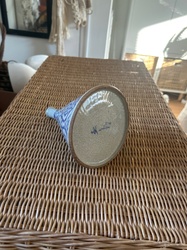
Marking on bottom

AI analysis below

AI appraisal

AI analysis & estimate

AI-Generated · Verify before acting

Everything below is generated by AI for informational purposes only. AI can make mistakes — the AI may misidentify items or misattribute them (artist, maker, brand, designer, origin, era). This is not an official valuation and should not be used for insurance, sale, tax, estate, legal, or lending purposes — or any decision requiring a certified appraisal. It is not an authoritative claim about any person, brand, or rights holder — do not share or rely on it as a factual statement about a third party. Always consult qualified professionals before making financial decisions.

Note

This analysis also relies on unverified notes provided by the user, which may be incomplete or inaccurate and could affect the result.

Read the full disclaimer

AI Identification

·Not independently authenticated·Verify before acting

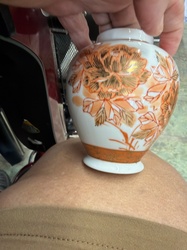
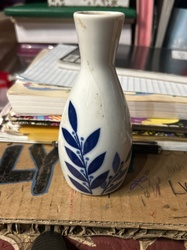
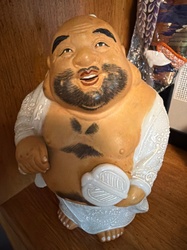
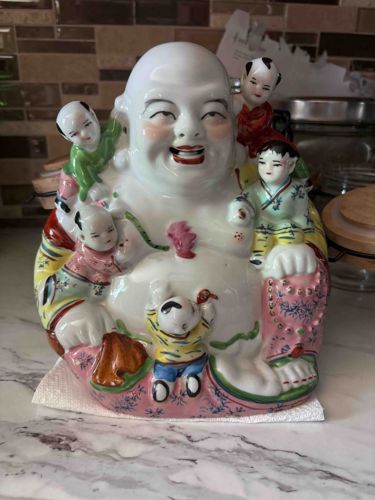
Famille Rose Porcelain Laughing Buddha (Hotei) with Children

Asian Antiques & Decorative Ceramics

AI Estimated Value

·Not an official valuation·Verify before acting

$450.00 - $650.00

As of May 25, 2026

AI Item Analysis

·AI can make mistakes·Verify before acting
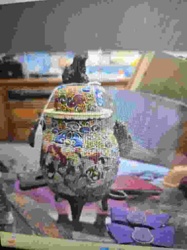
This is a polychrome porcelain figurine depicting the Laughing Buddha, or Hotei (Budai), seated in a relaxed posture while five small children (karako) climb upon him, symbolizing fertility, prosperity, and happiness. Constructed of slip-cast white porcelain, the piece features the 'Famille Rose' palette, characterized by soft pink enamels alongside vibrant greens, yellows, and reds. The Buddha's face is modeled with a joyful expression, featuring an open mouth and squinting eyes, with hand-painted details defining his facial features and the pupils of his eyes. The deity is draped in a yellow and pink robe adorned with floral motifs and patterns; he holds a string of prayer beads (mala) in his left hand. The children are dressed in various colorful garments, each individually modeled with unique poses. Regarding condition, the glaze appears lustrous and well-preserved, though minor shelf wear is visible on the unglazed base. The craftsmanship indicates a mid-to-late 20th-century Chinese production, likely intended for the export market. The mention of a mark on the bottom suggests a factory stamp or 'Zhongguo' mark typical of the Jingdezhen region. There are no immediate signs of chips, cracks, or significant restoration, representing a high-quality decorative ceramic work with traditional auspicious symbolism.
AI Appraisal Report

·AI can make mistakes·Verify before acting
I have examined the provided details and imagery of this 'Famille Rose' polychrome porcelain figurine of Hotei with five children. This piece is a classic representation of 'The Laughing Buddha,' emblematic of mid-to-late 20th-century Chinese production from the Jingdezhen region. The use of the pink-based palette and the 'Zhongguo' mark on the base are strong indicators of a Republic era style or, more likely, a high-quality export piece from the 1960s–1980s. The glaze remains lustrous, and the hand-painted enameling on the robes shows a level of detail typical of experienced factory artisans. The condition appears excellent with only expected shelf wear to the unglazed foot rim. Market demand for these auspicious figures remains steady among collectors of decorative Asian ceramics; however, because this is a slip-cast production likely intended for the global export market rather than a 19th-century 'antique,' its value is primarily decorative rather than historical. Similar comparables at auction typically realize between $400 and $700 depending on size and the specific complexity of the mark. A primary limitation of this appraisal is the inability to physically verify the composition of the porcelain body and the depth of the enamel application. A physical inspection would be required to rule out professionally restored hairline cracks or minor chips disguised by the busy patterns. To finalize authentication, one would need to cross-reference the specific factory number on the base with Jingdezhen production logs from the mid-century period.

Get your items appraised

Instant estimates of your treasures with AI-powered appraisals

Browse More Appraisals