AI Appraisal Estimate

AI-generated estimates · not official valuations

From the user

What was submitted

Photo and notes provided by the user — not generated by AI

Submitted item photo
Submitted photo · May 20, 2026

User's notes

No additional notes provided.

AI analysis below

AI appraisal

AI analysis & estimate

AI-Generated · Verify before acting

Everything below is generated by AI for informational purposes only. AI can make mistakes — the AI may misidentify items or misattribute them (artist, maker, brand, designer, origin, era). This is not an official valuation and should not be used for insurance, sale, tax, estate, legal, or lending purposes — or any decision requiring a certified appraisal. It is not an authoritative claim about any person, brand, or rights holder — do not share or rely on it as a factual statement about a third party. Always consult qualified professionals before making financial decisions.

Read the full disclaimer

AI Identification

·Not independently authenticated·Verify before acting

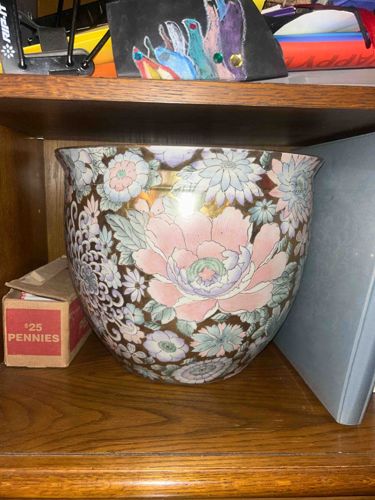
Chinese Porcelain Millefleur Fish Bowl Planter

Antique & Decorative Ceramics

AI Estimated Value

·Not an official valuation·Verify before acting

$450 - $700

As of May 20, 2026

AI Item Analysis

·AI can make mistakes·Verify before acting
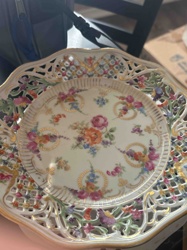
This is a large, deep-welled ceramic vessel, commonly known as a Chinese fish bowl or jardinière, featuring a vibrant decoration in the 'millefleur' (thousand flowers) style. The exterior surface is densely covered with a variety of hand-painted polychrome floral motifs, including prominent pink peonies, chrysanthemums, and lotus blossoms in shades of pastel pink, pale blue, lavender, and white. These floral elements are set against a rich, brownish-gold or bronze-toned gilded ground, which serves to make the colors pop. The bowl features a classic ovoid form with a slightly flared rim and a tapered base. The interior of the rim shows a continuation of the gilded border and floral patterns. The construction appears to be heavy-walled porcelain or high-fire stoneware, indicating substantial weight and durability. The craftsmanship exhibits detailed line work in the leaf veining and petal gradients. In terms of condition, the piece shows visible surface dust and some minor abrasions consistent with use as a household decorative item. There are no large cracks or chips visible in the provided image, though some wear to the gilt finish is evident near the rim. Based on the style and typical production of such export wares, this piece likely dates to the late 20th century. High-quality examples of this type are prized for their decorative impact and density of pattern.
AI Appraisal Report

·AI can make mistakes·Verify before acting
I have conducted a visual examination of this large Chinese porcelain fish bowl featuring the 'millefleur' (thousand flowers) decorative scheme. The vessel displays a dense polychrome floral application on a gilt-bronze ground, characteristic of the late Qing revival style produced during the late 20th century. Based on the saturation of the pigments and the uniform application of the gilding, this is a high-quality decorative export piece rather than an 18th or 19th-century antique. The condition appears structurally sound with no visible hairline fractures, though I noted minor gilt loss and surface abrasions near the rim consistent with age and utility. The market for large-scale Chinese jardinières remains steady due to their significant 'decorator' appeal. Comparable pieces of this size and pattern density typically achieve mid-range decorative arts prices. While the millefleur pattern is labor-intensive, the 20th-century origin places it as a mass-produced luxury item rather than a rare collector’s find. Factors positively impacting the value include the generous scale and the absence of significant chips. Note: This appraisal is based solely on digital images. A definitive valuation is limited by the inability to inspect the base for marks, verify the weight of the porcelain, or check for professional restorations using UV light. To fully authenticate the age and origin, an in-person inspection of the footring and analysis of the glaze's 'orange peel' texture is required. I also recommend checking for a 'Made in China' stamp or a Guangxu apocryphal mark, which would clarify the specific kiln and manufacturing period.

Get your items appraised

Instant estimates of your treasures with AI-powered appraisals

Browse More Appraisals