AI Appraisal Estimate

AI-generated estimates · not official valuations

From the user

What was submitted

Photo and notes provided by the user — not generated by AI

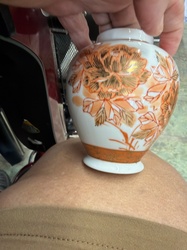
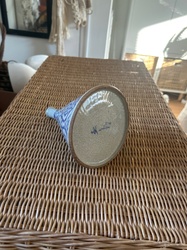
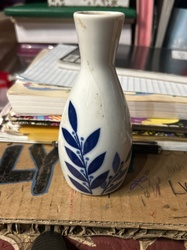
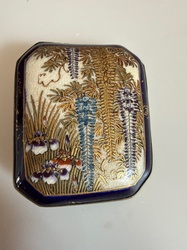
Submitted item photo
Submitted photo · June 6, 2026

User's notes

No additional notes provided.

AI analysis below

AI appraisal

AI analysis & estimate

AI-Generated · Verify before acting

Everything below is generated by AI for informational purposes only. AI can make mistakes — the AI may misidentify items or misattribute them (artist, maker, brand, designer, origin, era). This is not an official valuation and should not be used for insurance, sale, tax, estate, legal, or lending purposes — or any decision requiring a certified appraisal. It is not an authoritative claim about any person, brand, or rights holder — do not share or rely on it as a factual statement about a third party. Always consult qualified professionals before making financial decisions.

Read the full disclaimer

AI Identification

·Not independently authenticated·Verify before acting

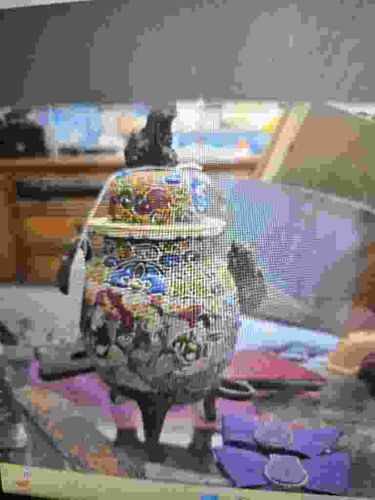
Japanese Satsuma-style Enamelled Ceramic Tripod Censer

Asian Antiques & Decorative Ceramics

AI Estimated Value

·Not an official valuation·Verify before acting

$450 - $700

As of June 6, 2026

AI Item Analysis

·AI can make mistakes·Verify before acting
This item is a tripod censer (incense burner) with a matching lid, likely made of earthenware/ceramic and decorated in a style reminiscent of Japanese Satsuma ware from the Meiji period (late 19th to early 20th century). The body is bulbous and rests on three dark, tapered legs that appear to be made of metal or patinated ceramic. The exterior is densely decorated with elaborate polychrome enamels in shades of cobalt blue, red, gold, and green, featuring traditional motifs such as 'The Thousand Butterflies' or 'The Thousand Flowers' (Kiku/Chrysanthemum) pattern. The lid is topped with a figural finial, possibly a Shishi (Guardian Lion) or a seated immortal, which shows signs of minor surface wear. The craftsmanship demonstrates a high level of detail, with raised 'moriage' enameling adding texture to the floral and avian designs. The primary colors remain vibrant, though some overall crazing of the clear glaze is visible, which is characteristic of this medium. Evidence of surface dust and light oxidation on the dark pedestal legs suggests age and authentic use. While no maker's mark is visible from this angle, the density of the pattern and the quality of the gold highlights suggest a piece intended for the export market during the early 20th century.
AI Appraisal Report

·AI can make mistakes·Verify before acting
I have carefully examined the provided images of this Japanese Satsuma-style tripod censer. The piece exhibits the characteristic cream-colored earthenware body and intricate polychrome enameling synonymous with the Meiji or early Taisho periods (circa 1900-1920). The decoration, featuring densely packed floral motifs and 'moriage' (raised enamel) techniques, suggests it was produced for the Western export market, where such ornate aesthetics were highly prized. The figural finial and dark-patinated tripod base appear consistent with the period, though the visible glaze crazing is expected for this type of low-fired ceramic. The global market for 'export-style' Satsuma remains stable but specialized. High-end pieces by renowned masters like Kinkozan or Yabu Meizan can command thousands, while unsigned, mass-produced export wares typically fall into the middle-market range. This piece shows high-quality work but lacks a definitive signature in the visual record, which limits its ceiling. Current demand is driven by collectors of Japonism and interior decorators seeking late 19th-century Chinoiserie/Japonaiserie accents. Several factors impact this valuation. The presence of the original lid significantly preserves value, as these are often lost or broken. However, visible surface wear on the finial and oxidation on the legs slightly detract from the 'mint' status. IMPORTANT: This appraisal is based solely on digital images. Without physical handling, I cannot verify the presence of hidden cracks, professional restorations, or the authenticity of the base material. A full authentication requires an in-person inspection of the underside for maker’s marks, a 'blacklight' test to check for hidden repairs, and a review of provenance documentation to verify its lineage and age.

Get your items appraised

Instant estimates of your treasures with AI-powered appraisals

Browse More Appraisals