Pair of Japanese Satsuma-style Moriage Vases
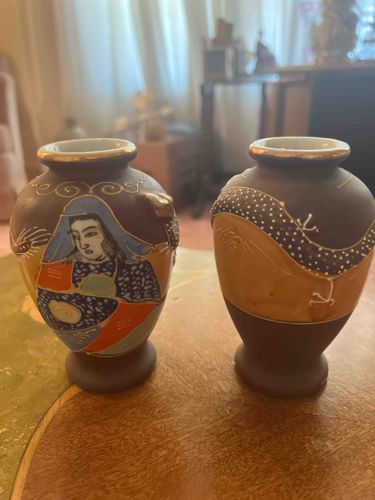
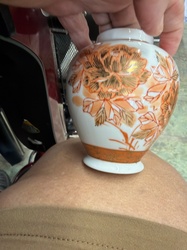
This is a matching pair of small Japanese porcelain bud vases, likely mid-20th-century export ware. The vases feature a matte chocolate-brown or charcoal 'ground' glaze with intricate hand-painted moriage decoration. Moriage is a technique where slip (liquid clay) is applied in layers to create a three-dimensional, raised effect. One vase depicts a traditional seated immortal or scholar (Arhat) wearing a blue hooded robe with fine gold line detailing, while the second vase shows a partial dragon or mythological figure with white raised beading (dotting). The color palette includes earth tones, vibrant oranges, and pops of blue. Each vase is constructed with an inverted pear-shaped body, a short collared neck, and a flared pedestal foot. Notable features include the gilded rim and fine scrollwork along the shoulder. Regarding condition, the vases show signs of age-related wear, including minor loss to the raised enamel beading and slight dulling of the gold gilt on the rims. There are no large chips or cracks visible in the provided image. These items are characteristic of the 'Dragonware' or Satsuma style produced for the Western market between the 1930s and 1950s. The quality indicates mass-produced artisan work intended as souvenir or decorative home goods.
AI-Generated Appraisal Disclaimer
Estimated Value
$45–$85
Basic Information
Category
Asian Antique/Decorative Ceramics
Appraised On
March 31, 2026
Estimated Value
$45–$85
Item Description
This is a matching pair of small Japanese porcelain bud vases, likely mid-20th-century export ware. The vases feature a matte chocolate-brown or charcoal 'ground' glaze with intricate hand-painted moriage decoration. Moriage is a technique where slip (liquid clay) is applied in layers to create a three-dimensional, raised effect. One vase depicts a traditional seated immortal or scholar (Arhat) wearing a blue hooded robe with fine gold line detailing, while the second vase shows a partial dragon or mythological figure with white raised beading (dotting). The color palette includes earth tones, vibrant oranges, and pops of blue. Each vase is constructed with an inverted pear-shaped body, a short collared neck, and a flared pedestal foot. Notable features include the gilded rim and fine scrollwork along the shoulder. Regarding condition, the vases show signs of age-related wear, including minor loss to the raised enamel beading and slight dulling of the gold gilt on the rims. There are no large chips or cracks visible in the provided image. These items are characteristic of the 'Dragonware' or Satsuma style produced for the Western market between the 1930s and 1950s. The quality indicates mass-produced artisan work intended as souvenir or decorative home goods.
Related Tags
Explore similar items and categories:
Get Your Items Appraised
Instant estimates of your treasures with AI-powered instant appraisals