AI Appraisal Estimate

AI-generated estimates · not official valuations

From the user

What was submitted

Photo and notes provided by the user — not generated by AI

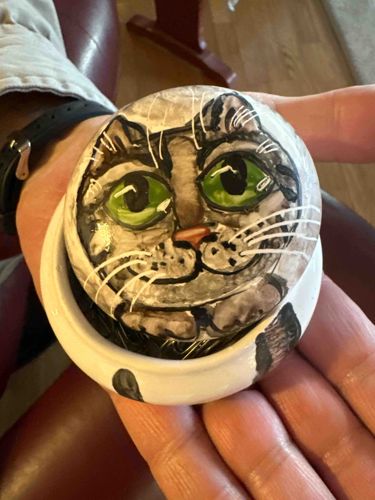
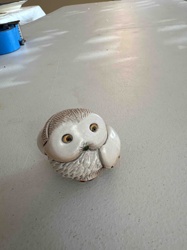
Submitted item photo
Submitted photo · June 30, 2026

User's notes

Small container with lid exhibiting cat in good condition

AI analysis below

AI appraisal

AI analysis & estimate

AI-Generated · Verify before acting

Everything below is generated by AI for informational purposes only. AI can make mistakes — the AI may misidentify items or misattribute them (artist, maker, brand, designer, origin, era). This is not an official valuation and should not be used for insurance, sale, tax, estate, legal, or lending purposes — or any decision requiring a certified appraisal. It is not an authoritative claim about any person, brand, or rights holder — do not share or rely on it as a factual statement about a third party. Always consult qualified professionals before making financial decisions.

Note

This analysis also relies on unverified notes provided by the user, which may be incomplete or inaccurate and could affect the result.

Read the full disclaimer

AI Identification

·Not independently authenticated·Verify before acting

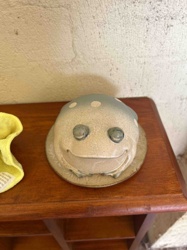
Hand-Painted Folk Art Cat Ceramic Trinket Box

Decorative Arts & Collectibles - Studio Pottery

AI Estimated Value

·Not an official valuation·Verify before acting

$35.00 - $60.00

As of June 30, 2026

AI Item Analysis

·AI can make mistakes·Verify before acting
This item is a small, hand-painted ceramic trinket or pill box featuring a folk-art style depiction of a cat. The piece is circular in shape, designed to fit comfortably in the palm of a hand, and consists of a white-glazed base and a domed lid. The lid is the focal point, showcasing a whimsical, expressive cat face with large, striking green eyes, white whiskers, and black tabby-style markings on a grey and white ground. The painting style is naive and artisanal, characterized by bold brushstrokes and a glossy overglaze. The base of the container repeats the black tabby splotch pattern against a white background. Inside, the container holds several metal paperclips, suggesting its functional use as a desk accessory. The construction appears to be kiln-fired earthenware or ceramic. Condition is excellent with no visible chips, cracks, or crazing in the glaze; the colors remain vibrant and the surface retains a high-gloss finish. While no maker's mark is visible in this view, the style is reminiscent of late 20th-century boutique craft or studio pottery. The craftsmanship shows a high level of charm and individual character rather than industrial uniformity.
AI Appraisal Report

·AI can make mistakes·Verify before acting
I have conducted a visual examination of the hand-painted ceramic cat trinket box. The piece displays a charming folk-art style, consistent with late 20th-century boutique studio pottery or artisan craft work. My assessment of the condition is 'Excellent'; the glaze remains vibrant with a high-gloss finish, and I observe no evidence of crazing, chips, or structural fractures, which often plague small functional ceramics of this age. The naive painting style and brushwork suggest a unique, non-industrial origin, though the lack of a visible maker's mark complicates a specific attribution to a known ceramicist. Market conditions for anonymous studio pottery remain modest but steady, driven primarily by the 'animalier' subject matter and functional appeal to collectors of cat-themed decorative arts. Comparables for unsigned, high-quality decorative ceramic boxes of this size generally realize between $30 and $65 at retail or specialized craft auctions. The primary value drivers here are the expressive quality of the cat's features and the pristine surface condition. Limitation Note: This appraisal is based solely on digital images. A definitive authentication of the clay body and kiln-firing technique would require a hands-on physical inspection. To identify the specific artist or pottery studio, I would need to examine the underside of the base for impressed marks or remnants of maker labels that may not be visible in current views. Provenance documentation regarding the original point of sale—such as a specific artisan fair or boutique gallery—would be necessary to elevate the valuation into a higher 'named artist' category.

Get your items appraised

Instant estimates of your treasures with AI-powered appraisals

Browse More Appraisals