AI estimate as of July 12, 2025 · verify with a professional before acting
AI-Generated · Verify before acting
Everything on this page is generated by AI for informational purposes only. AI can make mistakes — the AI may misidentify items or misattribute them (artist, maker, brand, designer, origin, era). This is not an official valuation and should not be used for insurance, sale, tax, estate, legal, or lending purposes — or any decision requiring a certified appraisal. It is not an authoritative claim about any person, brand, or rights holder — do not share or rely on it as a factual statement about a third party. Always consult qualified professionals before making financial decisions.
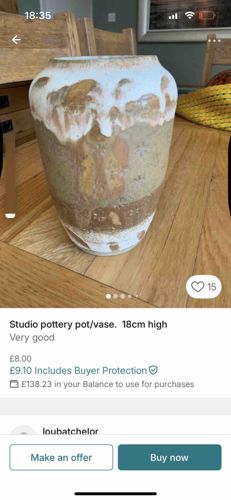
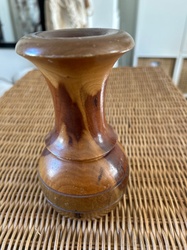
This is a studio pottery pot or vase, measuring approximately 18cm in height. It features an organic, somewhat irregular shape, widening slightly from the base before gently tapering towards the rim. The pottery exhibits a coarse, unrefined texture, characteristic of hand-thrown or hand-built stoneware. The most striking features are its glazes: the upper portion is dominated by a thick, drippy, off-white or cream-colored glaze that cascades down the sides, creating naturalistic rivulets and runs. Below this, the body is primarily a mottled blend of earthy tones, including light brown, beige, and some muted orange or rust hues, suggesting a reactive glaze or a combination of different glaze applications. Near the base, there's another band of the off-white glaze, applied in a somewhat irregular fashion, echoing the top. The foot appears unglazed or thinly glazed, revealing the natural clay body. There are no visible chips, cracks, or significant damage, and the 'very good' condition noted in the accompanying text seems consistent with the visual evidence. The aesthetic suggests a mid-20th century to contemporary studio pottery piece, valuing unique textural and glazing effects over perfect symmetry or polished finishes. The craftsmanship is evident in the controlled randomness of the glaze application, creating a distinct, artisanal look.
AI Appraisal Report
I have carefully examined the image of this studio pottery pot/vase, approximately 18cm in height. The piece exhibits an organic, irregular form with a coarse, unrefined texture, indicative of hand-thrown or hand-built stoneware. The most compelling features are the glazes: a thick, drippy, off-white/cream glaze cascading from the upper portion, creating naturalistic rivulets, over a mottled body of earthy tones. A similar irregular band of off-white glaze is near the base. The foot appears unglazed, revealing the natural clay. Based on visual evidence, the condition appears very good, with no visible chips, cracks, or significant damage. This aligns with the 'very good' condition noted. The aesthetic aligns with mid-20th century to contemporary studio pottery, valuing textural and glazing effects over symmetry.
In terms of market conditions, studio pottery, particularly pieces with unique glazes and artisanal character, continues to attract collectors. Comparables would include works by unidentifiable but skilled studio potters from this period, which typically fetch moderate prices. Demand for such pieces is steady, driven by interior decorators and collectors seeking unique, handcrafted items. Rarity is difficult to assess without knowing the artist, but the unique glazing gives it a distinct character.
Factors significantly impacting value include the attractive glazes and good condition. However, the primary limitation in determining value and authenticity from images alone is the lack of artist identification. Without a signature, mark, or provenance, it's impossible to attribute it to a known potter, which would significantly increase its value. An in-person examination would allow for closer inspection of the clay body, glaze composition, and any subtle firing imperfections or artist's marks not visible in the image. Provenance documentation (e.g., purchase records, exhibition history) would be crucial for full authentication and attribution. Scientific testing of the clay or glaze could pinpoint its origin or age more precisely, if necessary for a higher-value attribution.