AI Appraisal Estimate

AI-generated estimates · not official valuations

From the user

What was submitted

Photo and notes provided by the user — not generated by AI

Submitted item photo
Submitted photo · June 10, 2026

User's notes

No additional notes provided.

AI analysis below

AI appraisal

AI analysis & estimate

AI-Generated · Verify before acting

Everything below is generated by AI for informational purposes only. AI can make mistakes — the AI may misidentify items or misattribute them (artist, maker, brand, designer, origin, era). This is not an official valuation and should not be used for insurance, sale, tax, estate, legal, or lending purposes — or any decision requiring a certified appraisal. It is not an authoritative claim about any person, brand, or rights holder — do not share or rely on it as a factual statement about a third party. Always consult qualified professionals before making financial decisions.

Read the full disclaimer

AI Identification

·Not independently authenticated·Verify before acting

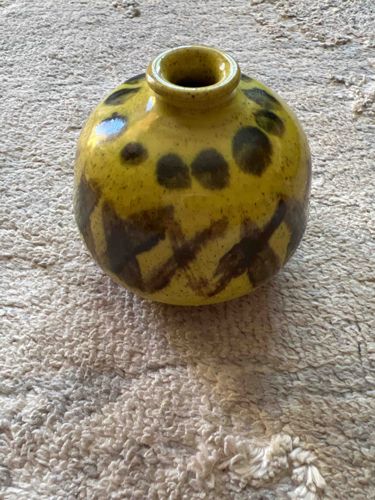
Glazed Ceramic Studio Pottery Vase with Abstract Decor

Decorative Arts and Pottery

AI Estimated Value

·Not an official valuation·Verify before acting

$150-250

As of June 10, 2026

AI Item Analysis

·AI can make mistakes·Verify before acting
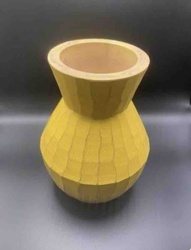
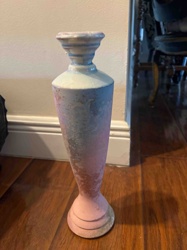
This is a small, globular ceramic vase, likely studio pottery, characterized by its vibrant yellow-green base glaze and contrasting dark brown, almost black, abstract decoration. The vase has a rounded body that tapers upwards to a short, narrow neck with a slightly flared rim. The opening appears to be roughly circular. The primary color of the glaze is a somewhat mottled chartreuse or olive green, exhibiting a glossy finish that reflects light, suggesting it is a high-gloss glaze. The dark brown or black decor consists of irregular splotches or dots towards the upper shoulder and what appear to be bold, gestural brushstrokes or 'X' motifs around the wider belly of the vase. These dark markings have a textured, almost impasto-like quality, indicating they were applied thickly or with a textured tool. The base of the vase is not visible, so details regarding its foot or any potential maker's marks are indiscernible. The overall appearance suggests a modern or mid-century style, possibly dating from the mid to late 20th century, consistent with the aesthetics of studio pottery. There are no obvious visible condition issues such as chips, cracks, or repairs, and the glaze appears to be intact. The craftsmanship suggests a handmade item, with slight imperfections in the glaze and decoration adding to its unique artisanal character.
AI Appraisal Report

·AI can make mistakes·Verify before acting
I have thoroughly examined the provided image of this glazed ceramic studio pottery vase. Based on its appearance, the condition appears excellent; I observe no chips, cracks, or repairs, and the glossy yellow-green glaze, with its dark abstract decoration, seems entirely intact. The slight imperfections in the glaze and brushstrokes are consistent with handmade studio pottery and contribute to its unique character, rather than detracting from value. This piece strongly aligns with mid to late 20th-century studio pottery aesthetics. Its abstract decoration and globular form are typical of the period. While market demand for un-attributed studio pottery can vary, pieces with strong visual appeal and good condition like this generally find buyers. The artistic merit, while not exceptional enough to command high prices, is solid for its category. Comparables for un-signed, well-executed studio pottery of this size and period typically fall within the $100-$300 range, depending on sales venue and specific buyer interest. The lack of a visible maker's mark or specific artistic attribution significantly limits the potential for a higher valuation, as rarity and historical significance are difficult to establish. My assessment for authenticity and condition is based solely on visual examination of the image. For full authentication and a definitive appraisal, a physical inspection would be crucial. This would allow me to examine the base for any hidden maker's marks, assess the weight and tactile qualities of the ceramic, and confirm the absence of subtle damages or repairs not visible in photographs. Provenance documentation, if available, would also be invaluable in attributing the piece to a specific artist or studio, which could significantly impact its market value. Without such a physical examination or documentation, the valuation remains an informed estimate within the broader category of decorative studio ceramics.

Get your items appraised

Instant estimates of your treasures with AI-powered appraisals

Browse More Appraisals