AI Appraisal Estimate

AI-generated estimates · not official valuations

From the user

What was submitted

Photo and notes provided by the user — not generated by AI

Submitted item photo
Submitted photo · June 28, 2026

User's notes

No additional notes provided.

AI analysis below

AI appraisal

AI analysis & estimate

AI-Generated · Verify before acting

Everything below is generated by AI for informational purposes only. AI can make mistakes — the AI may misidentify items or misattribute them (artist, maker, brand, designer, origin, era). This is not an official valuation and should not be used for insurance, sale, tax, estate, legal, or lending purposes — or any decision requiring a certified appraisal. It is not an authoritative claim about any person, brand, or rights holder — do not share or rely on it as a factual statement about a third party. Always consult qualified professionals before making financial decisions.

Read the full disclaimer

AI Identification

·Not independently authenticated·Verify before acting

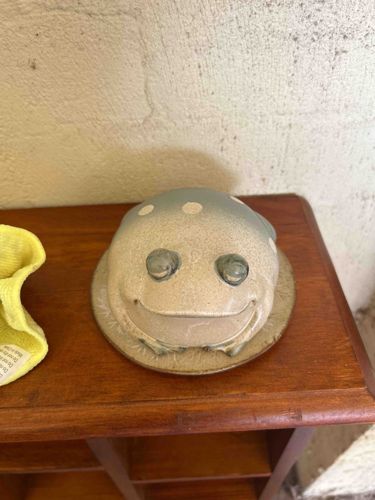
Studio Pottery Frog Figurine on Lily Pad Base

Collectibles / Decorative Arts / Studio Pottery

AI Estimated Value

·Not an official valuation·Verify before acting

$45 - $85

As of June 28, 2026

AI Item Analysis

·AI can make mistakes·Verify before acting
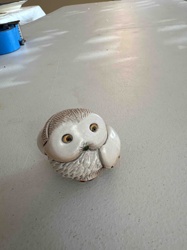
This is a hand-crafted studio pottery figurine depicting a stylized, smiling frog sitting atop a circular base that resembles a lily pad. The piece is constructed from stoneware or a similar heavy ceramic material, featuring a matte finish with a subtle speckled or granular texture throughout the clay body. The frog exhibits a color palette of muted neutral tones, including beige and taupe, with a decorative slate-blue or sage-green wash applied across its back and highlight points like the protruding eyes. Large, light-colored circular spots are painted across the dorsal area to represent typical frog markings. The face is characterized by a wide, incised smile and two large, bulbous eyes that give the piece a whimsical, anthropomorphic quality. The frog is integral to a flat, circular base which features faint incised details around the perimeter, suggesting the veins of a leaf. While no maker's mark is clearly visible from the top-down perspective, the style is consistent with mid-to-late 20th-century decorative art pottery. The condition appears sound with no visible cracks or major chips, though there is a natural aged patina to the unglazed portions of the clay. The craftsmanship indicates it was likely a small-production or unique artisan piece rather than mass-produced cast-ware.
AI Appraisal Report

·AI can make mistakes·Verify before acting
Based on my visual examination of the images provided, this item is a charming example of mid-to-late 20th-century studio pottery. The piece presents as a whimsical frog figurine executed in stoneware with a speckled matte glaze, seated on a stylized lily pad base. The craftsmanship suggests hand-building techniques, likely utilizing a combination of coil or slab construction with applied decorative elements, rather than mass-produced slip-casting. This points toward an individual artisan or small studio production. The condition appears sound; I observe no visible hairline cracks, chips to high points (like the eyes), or restoration work, though handling wear consistent with age is present. The unglazed clay body exhibits a pleasing, natural patina. However, without inspecting the underside for a maker's mark, signature, or stamp, attribution is impossible. This ambiguity significantly affects value, as verified pieces by known potters (e.g., David Gil, Andersen Design, or noted California studio artists) command much higher premiums. Market analysis for unidentified vintage studio pottery of this aesthetic indicates a steady but modest demand. These pieces function primarily as decorative objects or garden accents rather than high-investment collectibles. Comparables for unsigned whimsical animal figures in stoneware generally sell in the $40 to $70 range, perhaps slightly higher ($85) in a curated retail setting or if the aesthetic aligns perfectly with current 'cottagecore' or 1970s revival trends. To provide a higher valuation, I would need to physically handle the object to check for subtle impressed marks often obscured by glaze, weigh the piece to assess clay density, and review provenance documents to link it to a specific regional artist or studio.

Get your items appraised

Instant estimates of your treasures with AI-powered appraisals

Browse More Appraisals