AI estimate as of September 6, 2025 · verify with a professional before acting
AI-Generated · Verify before acting
Everything on this page is generated by AI for informational purposes only. AI can make mistakes — the AI may misidentify items or misattribute them (artist, maker, brand, designer, origin, era). This is not an official valuation and should not be used for insurance, sale, tax, estate, legal, or lending purposes — or any decision requiring a certified appraisal. It is not an authoritative claim about any person, brand, or rights holder — do not share or rely on it as a factual statement about a third party. Always consult qualified professionals before making financial decisions.
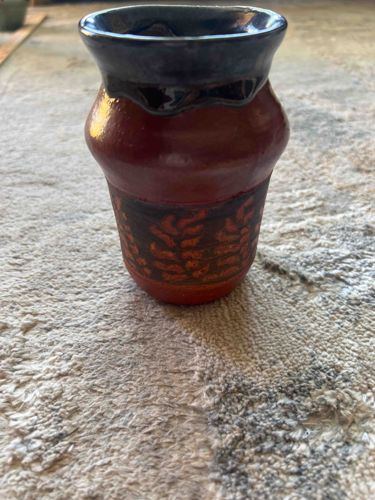
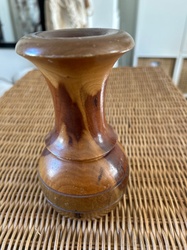
This is a small, handcrafted ceramic vase, likely studio pottery, exhibiting a rustic yet decorative aesthetic. The vase features a squat, bulbous upper body that transitions into a slightly flaring base. Its dimensions suggest it is a smaller piece, perhaps suitable for a single flower or as a decorative accent. The primary material is ceramic, possibly terracotta or earthenware, given its reddish-brown color in certain areas. The surface is adorned with various glazes and finishes. The rim and the neck of the vase are glazed in a dark, almost black, glossy finish which appears to have a slight blue or grey undertone in certain lighting, creating a striking contrast with the body. Below this dark neck, the upper body is a rich, deep reddish-brown with a subtle sheen, suggestive of a clear glaze over a darker clay body or a colored glaze. A distinctive decorative band encircles the lower part of the body, featuring an etched or incised botanical pattern resembling fern fronds or leafy motifs. This pattern is rendered in a dark tone over an orange-red background, possibly achieved through sgraffito or a multi-layered glazing technique where the top layer is scraped away to reveal a contrasting color underneath. The craftsmanship appears to be artisanal, characterized by slight imperfections that are common in handmade items, such as minor irregularities in the glaze application or the curvature of the form. There are no visible chips, cracks, or significant damage, though without handling, minor surface wear cannot be entirely ruled out. The underside, though not clearly visible, likely shows raw ceramic or a maker's mark if present. The style suggests it could be mid-20th century to contemporary, reflecting a handmade, craft-oriented approach to ceramics. The overall impression is one of sturdy, handcrafted quality with an intentional, earthy appeal.
AI Appraisal Report
Having visually examined this studio pottery vase, I assess its condition as very good, showing no apparent chips, cracks, or significant damage from the provided images. The artisanal craftsmanship is evident, and the slight irregularities are typical of handmade pieces and contribute to its character rather than detracting from its value. Based purely on visual cues, authenticity as a handcrafted studio pottery piece appears sound; it exhibits the expected characteristics of such an item. Without physical inspection, however, I cannot definitively rule out minor surface abrasions or imperfections not visible in the images.
In terms of market conditions, studio pottery, especially pieces with unique decorative elements like the botanical etching seen here, generally maintains steady demand within the decorative arts market. This piece's earthy aesthetic and hand-decorated nature appeal to collectors of handcrafted ceramics. Comparables for similar small, decorative studio pottery vases with unique glazes or incised designs typically range from $50 to $150. Pieces attributed to well-known potters or with documented provenance could command significantly higher prices, but without a visible maker's mark or accompanying documentation, this piece is valued as un-attributed studio pottery.
Demand for well-executed, aesthetically pleasing studio pottery remains consistent, though this specific item does not appear to possess inherent rarity that would dramatically inflate its value. Factors impacting its value include its good condition, charming design, and perceived artisanal quality. The lack of a visible maker's mark significantly limits its upper valuation, as does the absence of provenance. For full authentication and to ascertain a premium value, a physical examination would be necessary to inspect for a maker's mark (often on the base), assess tactile quality, and verify materials. Provenance documentation, if available, would also be crucial.