AI identification & appraisal estimate

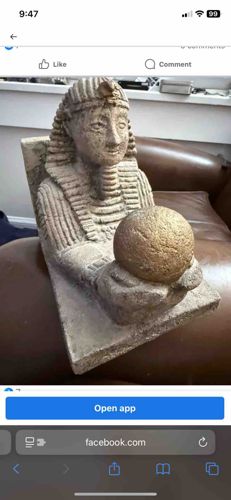
Egyptian Style Bust with Sphere

Submitted photo of Egyptian Style Bust with Sphere
Photo submitted by the user — not generated by AI

AI Estimated Value

Not an official valuation

$50 - $150

AI estimate as of June 16, 2025 · verify with a professional before acting

AI-Generated · Verify before acting

Everything on this page is generated by AI for informational purposes only. AI can make mistakes — the AI may misidentify items or misattribute them (artist, maker, brand, designer, origin, era). This is not an official valuation and should not be used for insurance, sale, tax, estate, legal, or lending purposes — or any decision requiring a certified appraisal. It is not an authoritative claim about any person, brand, or rights holder — do not share or rely on it as a factual statement about a third party. Always consult qualified professionals before making financial decisions.

Read the full disclaimer

AI Item Analysis

The item is a concrete or stone cast bust depicting a figure in ancient Egyptian style, specifically resembling a pharaoh or sphinx. It is rendered in a relatively rough-cast material, likely concrete or a similar composite, with a textured surface and visible aggregate. The predominant color is a light grey or beige, consistent with aged concrete or stone. The figure is shown from the waist up, wearing a traditional Egyptian headdress that appears striated. A broad, similarly striated collar or necklace is depicted around the neck and upper chest. The arms extend forward, bent at the elbows, and the hands are cupped together to hold a spherical object. This sphere is a bright, metallic gold color and has a rough, possibly textured surface, suggesting it could be a painted stone, globe, or other ornamental object. The figure's face is detailed with defined eyes, nose, and mouth, though the casting process has resulted in some loss of fine detail and a somewhat pitted surface. The base is a rectangular block, integrated into the sculpture. There are visible signs of wear, potentially weathering or age, with some surface abrasion and discoloration, particularly on raised areas. The overall aesthetic is reminiscent of garden statuary or decorative pieces influenced by Egyptian revival style, rather than a precise historical reproduction. The quality of craftsmanship suggests it was mass-produced or produced as a decorative item rather than fine art. There are no discernible manufacturer's marks or signatures visible in the image. The style suggests it could be from the late 20th or early 21st century, intended for indoor or outdoor decoration.

AI Appraisal Report

Based on my visual examination of the provided image, this appears to be a concrete or cast stone bust in the Egyptian Revival style, holding a gold-colored sphere. The casting shows a good level of detail for this type of material, though the rough surface and visible aggregate indicate it is not fine art quality. The overall condition appears fair, with signs of age and weathering consistent with likely outdoor or indoor decorative use. There are visible abrasions and some loss of surface detail, but no apparent significant breaks or structural damage that can be seen from the image. Authenticity in terms of historical accuracy or the piece being an antique is not suggested by the style or material; it is clearly a modern decorative item. Without physical examination, I cannot confirm the material composition definitively, nor can I check for manufacturer's marks, which are not visible in the image. An in-person inspection would allow for a hands-on feel of the texture and weight, closer examination for any markings, assessment of the sphere's material, and a more precise evaluation of wear and tear. Market conditions for decorative Egyptian-style garden or indoor statuary are generally modest. Similar concrete or composite pieces are commonly available at garden centers, home improvement stores, and online retailers. Demand is steady but not high, concentrated among individuals looking for themed decor. Rarity is low as these items are typically mass-produced. The primary value drivers are its decorative appeal and condition. The concrete material and casting method limit value compared to bronze, stone, or ceramic. Limitations: My assessment of authenticity is limited to what is conveyed by the image's visual cues. Full confirmation of material, age, provenance, and potential manufacturer requires physical inspection and documentation.

Keep exploring

More sculpture/figurine appraisals

Get your items appraised

Instant AI-powered appraisal estimates from a photo

Browse More Appraisals