AI Appraisal Estimate

AI-generated estimates · not official valuations

From the user

What was submitted

Photo and notes provided by the user — not generated by AI

Submitted item photo
Submitted photo · June 12, 2026

User's notes

No additional notes provided.

AI analysis below

AI appraisal

AI analysis & estimate

AI-Generated · Verify before acting

Everything below is generated by AI for informational purposes only. AI can make mistakes — the AI may misidentify items or misattribute them (artist, maker, brand, designer, origin, era). This is not an official valuation and should not be used for insurance, sale, tax, estate, legal, or lending purposes — or any decision requiring a certified appraisal. It is not an authoritative claim about any person, brand, or rights holder — do not share or rely on it as a factual statement about a third party. Always consult qualified professionals before making financial decisions.

Read the full disclaimer

AI Identification

·Not independently authenticated·Verify before acting

Hand-Painted Rawhide Southwestern Style Parfleche Bowl

Art & Collectibles / Indigenous-Style Rawhide Craft

AI Estimated Value

·Not an official valuation·Verify before acting

$175 - $250

As of June 12, 2026

AI Item Analysis

·AI can make mistakes·Verify before acting
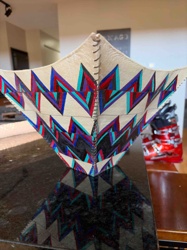
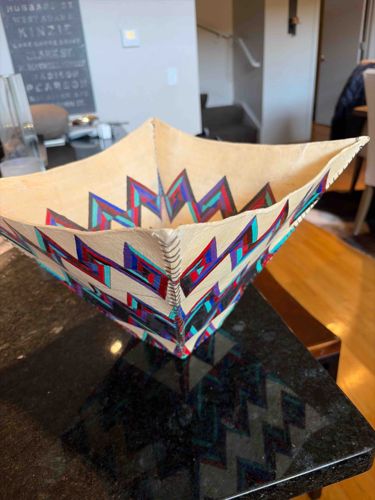
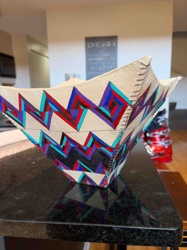
This is a contemporary decorative bowl crafted from rawhide, utilizing traditional parfleche assembly techniques. The object features an inverted four-sided pyramidal shape with a square base, tapering upward to a wide, scalloped rim. The rawhide material is a natural cream-beige color, showing characteristic organic texture and slight translucency. The four corner seams are hand-stitched with thin cordage or sinew-like material in a cross-stitch pattern, which is a structural hallmark of Indigenous-inspired rawhide work. The exterior is decorated with vibrant, hand-painted geometric patterns including stepped mountains, zig-zags, and diamond motifs in shades of turquoise, burgundy, deep purple, and black. These motifs reflect a modern take on Plains or Southwestern Native American design aesthetics. Regarding condition, the rawhide appears stiff and well-preserved, though there is minor edge wear and some pigment fading at the rim edges consistent with age and display. The piece lacks visible maker's marks on the exterior, suggesting it may be a boutique artisan piece or high-quality souvenir craft from the late 20th century. The craftsmanship is high, with even stitching and precise, though deliberately hand-rendered, geometric painting.
AI Appraisal Report

·AI can make mistakes·Verify before acting
I have virtually examined this contemporary parfleche-style bowl, which demonstrates commendable skill in traditional rawhide manipulation and hand-painting. The piece showcases a four-panel construction joined by cross-stitched cordage, mimicking the sinew techniques of Plains and Plateau peoples. Based on the pigment saturation and the specific geometric mountain motifs, I categorize this as a decorative artisan piece, likely dating from the 1980s or 1990s. The condition is good, with some expected dehydration of the rawhide and slight pigment loss at the scalloped edges, which is typical for organic materials of this age. Market demand for non-tribally enrolled contemporary 'Indigenous-style' crafts remains stable for interior design purposes, though it lacks the premium value of authenticated 19th-century ledger art or historic parfleche. Comparables for high-end boutique rawhide work typically move within the $150 to $300 range at auction. The absence of a signature or 'touchmark' suggests it was produced for a regional gallery or high-end souvenir market rather than as a numbered fine art piece. Limitations to this appraisal include the inability to physically tactilely verify the material (to ensure it is true rawhide versus heavy parchment) or chemically test the pigments. A definitive valuation would require an in-person inspection of the stitching tension and any hidden markers on the interior floor of the bowl. Provenance documentation or a Certificate of Indian Blood (CIB) from the maker would be necessary to reclassify this as 'Native American Made' under the Indian Arts and Crafts Act, which would significantly increase its marketability and value.

Get your items appraised

Instant estimates of your treasures with AI-powered appraisals

Browse More Appraisals