AI estimate as of November 13, 2025 · verify with a professional before acting
AI-Generated · Verify before acting
Everything on this page is generated by AI for informational purposes only. AI can make mistakes — the AI may misidentify items or misattribute them (artist, maker, brand, designer, origin, era). This is not an official valuation and should not be used for insurance, sale, tax, estate, legal, or lending purposes — or any decision requiring a certified appraisal. It is not an authoritative claim about any person, brand, or rights holder — do not share or rely on it as a factual statement about a third party. Always consult qualified professionals before making financial decisions.
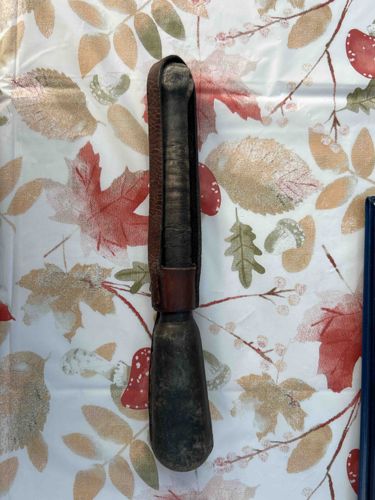
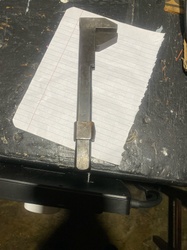
This appears to be a vintage or antique club-like tool, possibly a specialized mallet or a defensive weapon, featuring a rawhide or hardened leather striking head and a wooden or similar material handle. The overall length of the item is substantial, likely exceeding a foot. The striking head, which is broader and tapers towards the handle, exhibits a dark, almost black, color and a textured, worn surface consistent with aged rawhide or very dense, compressed leather. Its shape suggests it was designed for impact. The handle portion, narrower and elongated, is encased within a robust, dark brown leather sheath or holster. This sheath is secured around the handle, and a smaller leather strap or loop is visible towards the base of the handle, likely for securing the item or attaching it to a belt. The visible portion of the handle, where it emerges from the leather casing, shows a natural, aged wood grain or similar organic material with visible wear, suggesting extensive use. The leather casing itself shows signs of age, with some creasing and slight discoloration, but appears to be in relatively good structural condition, indicating quality craftsmanship. The item exhibits a significant patina, particularly on the striking head, which looks heavily used and somewhat pitted, hinting at its age and functional history. There are no immediate visible maker's marks or signatures, but the construction suggests a handcrafted or small-batch manufacturing origin. The style is utilitarian and rustic, placing its potential age in the late 19th to mid-20th century, though dating without further context is challenging. The craftsmanship, particularly the thick leather and sturdy construction, suggests it was built for durability and purpose.
AI Appraisal Report
This Vintage Leather-Bound Rawhide Mallet/Club appears to be a functional, utilitarian tool from the late 19th to mid-20th century. Its overall condition, as seen in the image, is consistent with its age and intended use, showing significant wear, a rich patina, and some discoloration on both the rawhide head and leather handle casing. The robust construction and handcrafted aesthetic suggest durability.
From a market perspective, similar vintage tools or rustic implements of this nature typically appeal to collectors of Americana, Western memorabilia, or those interested in historical trades. Demand is moderate, driven by niche interest rather than broad appeal. Rarity is difficult to assess without more information; while custom-made, it doesn't appear to possess unique features that would make it exceptionally rare.
Factors impacting value include its good structural integrity despite age, the authentic wear and patina, and the quality of the leatherwork. The lack of maker's marks, however, limits its value as there's no identifiable craftsman or origin story. The primary limitation in this appraisal is the reliance on images alone. I have not been able to inspect it in person. A physical examination would allow for tactile assessment of the rawhide's hardness and material, the handle's wood type, and a more thorough check for any hidden marks or repairs. Provenance documentation could significantly increase its value if it links the item to a notable owner or specific historical context. Without this, it remains a well-preserved antique tool.