AI estimate as of August 31, 2025 · verify with a professional before acting
AI-Generated · Verify before acting
Everything on this page is generated by AI for informational purposes only. AI can make mistakes — the AI may misidentify items or misattribute them (artist, maker, brand, designer, origin, era). This is not an official valuation and should not be used for insurance, sale, tax, estate, legal, or lending purposes — or any decision requiring a certified appraisal. It is not an authoritative claim about any person, brand, or rights holder — do not share or rely on it as a factual statement about a third party. Always consult qualified professionals before making financial decisions.
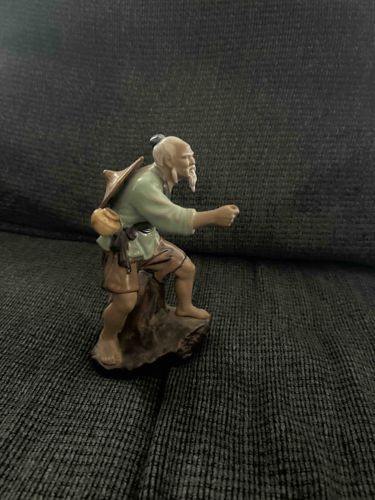
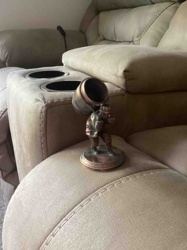
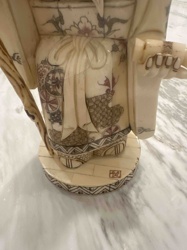
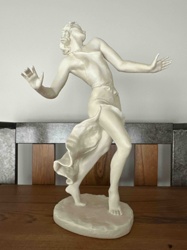
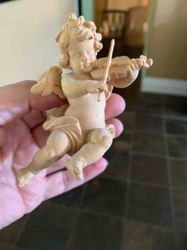
This is a detailed ceramic or porcelain figurine depicting an elderly East Asian man, likely a fisherman or traveler. The figure is rendered with realistic features, including a long white beard and mustache, and hair tied into a topknot with a blue accent. He wears a light greenish-blue tunic, brown shorts, and a traditional conical straw hat (known as a 'nón lá' in Vietnam or 'sedge hat' in China) slung on his back. A gourd or similar rounded object is attached to his side, presumably for water or provisions. The man is depicted in a dynamic pose, stepping forward with his left leg raised and his right hand extended as if casting something or gesturing. His right foot rests upon a textured, dark brown base shaped like a rock or natural terrain, suggesting an outdoor setting. The colors are muted and earthy, typical of traditional ceramic glazes. The craftsmanship appears to be of good quality, with fine details visible in the facial features, clothing folds, and the texture of the base. There are no immediate visible signs of significant damage like chips or cracks, and the glaze appears intact, suggesting good overall condition. The style points to an Asian cultural influence, likely Chinese or Japanese, and could date from the mid-20th century to contemporary production, given the level of detail and color application. No specific maker's marks are visible in the provided images.
AI Appraisal Report
Based on my visual examination of the provided image, this elderly East Asian fisherman/traveler figurine appears to be in very good condition. I observe no obvious chips, cracks, or significant glaze loss. The intricate details in the beard, clothing, and the textured base suggest good craftsmanship. The muted, earthy tones are typical of ceramic glazes from the mid-20th century onwards.
Regarding authenticity, from images alone, it's challenging to confirm the exact origin or age. Without visible maker's marks, it's difficult to attribute this piece to a specific artist, workshop, or period. This style is consistent with decorative ceramic production from various East Asian countries, particularly China or Japan, dating from the mid-20th century to more contemporary times.
In terms of market conditions, figurines of this type, unless attributed to a renowned artist or historically significant manufacturer, generally fall into the decorative arts category with moderate demand. Similar pieces can be found in antique malls, online marketplaces, and estate sales. Rarity is low for generic pieces of this style. Factors impacting value include the lack of a known maker, which prevents it from entering a higher-tier collector's market, and its likely mass-produced or studio-produced nature rather than being a unique artistic sculpture.
For full authentication and a more precise valuation, an in-person examination would be crucial. This would allow for inspection of the base for hidden marks, assessment of the ceramic body's quality and weight, and examination of glaze characteristics under magnification. Provenance documentation, such as original purchase receipts or family history, would significantly aid in establishing its origin and potential value drivers. Chemical analysis of the materials could confirm age, but this is typically reserved for higher-value items. Without these, my appraisal is based purely on the visual information available.