AI Appraisal Estimate

AI-generated estimates · not official valuations

From the user

What was submitted

Photo and notes provided by the user — not generated by AI

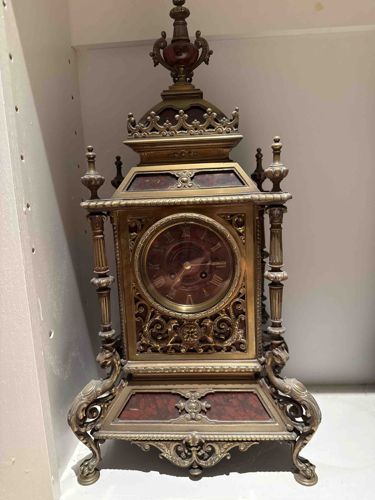
Submitted item photo
Submitted photo · May 26, 2026

User's notes

No additional notes provided.

AI analysis below

AI appraisal

AI analysis & estimate

AI-Generated · Verify before acting

Everything below is generated by AI for informational purposes only. AI can make mistakes — the AI may misidentify items or misattribute them (artist, maker, brand, designer, origin, era). This is not an official valuation and should not be used for insurance, sale, tax, estate, legal, or lending purposes — or any decision requiring a certified appraisal. It is not an authoritative claim about any person, brand, or rights holder — do not share or rely on it as a factual statement about a third party. Always consult qualified professionals before making financial decisions.

Read the full disclaimer

AI Identification

·Not independently authenticated·Verify before acting

French Renaissance Revival Gilt Bronze and Marble Mantel Clock

Antique Horology / Clocks

AI Estimated Value

·Not an official valuation·Verify before acting

$1,500 - $2,500

As of May 26, 2026

AI Item Analysis

·AI can make mistakes·Verify before acting
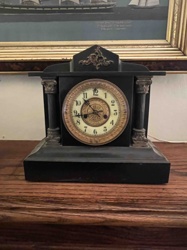
This is an ornate mantel clock designed in the French Renaissance Revival style, likely dating from the mid-to-late 19th century (circa 1870-1890). The clock case is primarily constructed from cast gilt bronze with decorative inlays of reddish-brown variegated marble or faux-marble porphyry panels. The structure features a complex architectural form with an elaborate tiered top topped by an urn-shaped finial and openwork gallery. The main body is flanked by fluted Corinthian-style columns and rests on an integral flared base with intricate scrolling foliate feet. The clock face features a brass or bronze dial with Roman numerals set against a recessed reddish-brown center, protected by a glass crystal. The overall metalwork is highly detailed, showcasing master craftsmanship in the pierced scrollwork and decorative friezes. Condition-wise, the piece shows a significant age-related patina with some dulling of the original gilt finish and surface dust in recessed areas. There are no major visible cracks in the marble panels, but there is noticeable tarnishing on the columns and base consistent with handled bronze. The movement functionality is undetermined from the image, but the presence of two winding holes indicates a strike and time-keeping mechanism, likely of French origin given the stylization. The clock stands as a prime example of eclectic 19th-century luxury horology designed for high-end domestic interiors.
AI Appraisal Report

·AI can make mistakes·Verify before acting
Based on my visual examination of the provided images, this is a handsome French Renaissance Revival mantel clock, circa 1870-1890. The architectural case, utilizing gilt bronze (ormolu) and reddish-brown variegated marble (likely griotte or rouge marble), is characteristic of the Napoleon III period's eclectic tastes. The craftsmanship of the pierced scrollwork and Corinthian columns suggests a high-quality Parisian workshop, although no maker's mark is visible in the photos. Condition appears fair to good for its age; the gilt finish shows significant oxidation and loss of luster, which is expected but affects value compared to pristine examples. The marble panels appear intact, which is crucial as repairs to stone are difficult to hide. I note standard tarnishing on handling points. The market for heavy 19th-century French clocks has softened slightly from its peak but remains stable for decorative, architectural pieces like this. Similar examples typically hammer at auction between $1,200 and $2,000, with retail prices reaching higher. Crucially, my appraisal assumes the movement is original and complete (including pendulum and key). Without physical inspection, I cannot verify the maker of the movement (e.g., Japy Frères or Marti), testing for mechanical functionality is impossible, and I cannot confirm if the gilt is genuine fire-gilding or a later electroplate. An in-person inspection is necessary to check the backplate for foundry marks and to assess the movement's servicing needs, which could significantly alter the final valuation.

Get your items appraised

Instant estimates of your treasures with AI-powered appraisals

Browse More Appraisals