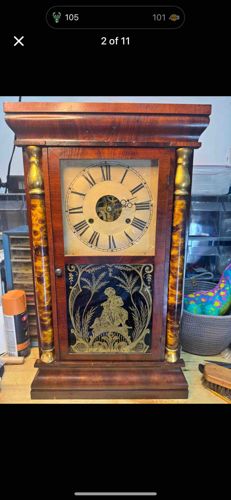
American Empire Mahogany Shelf Clock with Faux Tortoiseshell Columns
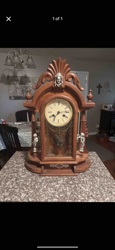
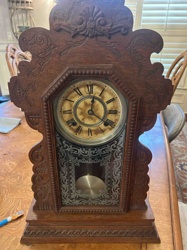
This is an American mantel or shelf clock, likely dating from the mid-19th century (circa 1830-1850), featuring a mahogany or mahogany-veneered wood case. The clock features a rectangular 'Column and Cornice' silhouette with a prominent molded top pediment and a stepped plinth base. A distinctive design element is the pair of flanking pilasters finished with a yellow and brown faux tortoiseshell or scagliola-style paint effect, topped with metallic-gold painted gesso capitals. The clock door is split into two panels: the upper glass protects a white dial with Roman numerals and an open escapement window showing the brass gears, while the lower 'eclomise' glass panel features an etched or stencil-painted scene in gold and black depicting a classical figure amongst palm-like foliage. Condition-wise, the wood shows a warm, aged patina with minor scuffing and small chips consistent with age, particularly along the base. The dial displays some foxing and discoloration. The quality of the joinery and the ornate nature of the painted columns suggest a production origin from the Connecticut clockmaking region, possibly by manufacturers such as Seth Thomas or Terry & Andrews. The clock appears to retain its original hardware, including the small pull knob on the door.
AI-Generated Appraisal Disclaimer
Estimated Value
$450 - $650
Basic Information
Category
Antique Horology / Clocks
Appraised On
January 11, 2026
Estimated Value
$450 - $650
Item Description
This is an American mantel or shelf clock, likely dating from the mid-19th century (circa 1830-1850), featuring a mahogany or mahogany-veneered wood case. The clock features a rectangular 'Column and Cornice' silhouette with a prominent molded top pediment and a stepped plinth base. A distinctive design element is the pair of flanking pilasters finished with a yellow and brown faux tortoiseshell or scagliola-style paint effect, topped with metallic-gold painted gesso capitals. The clock door is split into two panels: the upper glass protects a white dial with Roman numerals and an open escapement window showing the brass gears, while the lower 'eclomise' glass panel features an etched or stencil-painted scene in gold and black depicting a classical figure amongst palm-like foliage. Condition-wise, the wood shows a warm, aged patina with minor scuffing and small chips consistent with age, particularly along the base. The dial displays some foxing and discoloration. The quality of the joinery and the ornate nature of the painted columns suggest a production origin from the Connecticut clockmaking region, possibly by manufacturers such as Seth Thomas or Terry & Andrews. The clock appears to retain its original hardware, including the small pull knob on the door.
Get Your Items Appraised
Instant estimates of your treasures with AI-powered instant appraisals