Victorian Gingerbread Mantle Clock (Kitchen Clock)
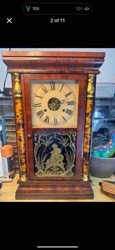
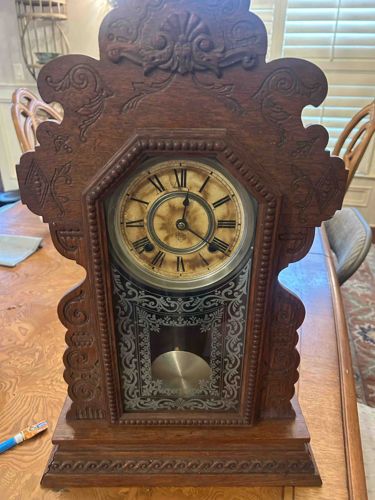
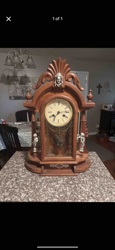
This is a classic American Victorian 'gingerbread' style mantle clock, also commonly referred to as a kitchen clock, dating from approximately 1880 to 1910. The case is constructed from solid oak or ash and features elaborate pressed or steam-embossed wood carvings typical of the period. The crest is adorned with a central shell motif flanked by foliate scrolls and recessed stippled patterns. The clock face is protected by a rectangular glass door featuring a decorative silver-toned frosted or etched transfer pattern that surrounds a clear viewing pane for the pendulum bob. The dial is a circular paper or tin-backed face with Roman numerals and two winding holes, exhibiting significant age-related yellowing, staining, and foxing which may indicate moisture exposure or natural parchment degradation. The clock rests on a stepped rectangular base with a carved wave-pattern molding. Notable features include the ornate fretwork along the sides and the original-style spade hands. Condition-wise, while the wood case appears structurally sound with a warm patina, the dial shows heavy wear, and there is minor dust accumulation. These clocks were mass-produced by American manufacturers such as E. Ingraham, Seth Thomas, or Ansonia, though a specific maker's mark would likely be found on the brass movement inside or the back of the case.
AI-Generated Appraisal Disclaimer
Estimated Value
$150 - $250
Basic Information
Category
Antique Horology / Clocks
Appraised On
January 14, 2026
Estimated Value
$150 - $250
Item Description
This is a classic American Victorian 'gingerbread' style mantle clock, also commonly referred to as a kitchen clock, dating from approximately 1880 to 1910. The case is constructed from solid oak or ash and features elaborate pressed or steam-embossed wood carvings typical of the period. The crest is adorned with a central shell motif flanked by foliate scrolls and recessed stippled patterns. The clock face is protected by a rectangular glass door featuring a decorative silver-toned frosted or etched transfer pattern that surrounds a clear viewing pane for the pendulum bob. The dial is a circular paper or tin-backed face with Roman numerals and two winding holes, exhibiting significant age-related yellowing, staining, and foxing which may indicate moisture exposure or natural parchment degradation. The clock rests on a stepped rectangular base with a carved wave-pattern molding. Notable features include the ornate fretwork along the sides and the original-style spade hands. Condition-wise, while the wood case appears structurally sound with a warm patina, the dial shows heavy wear, and there is minor dust accumulation. These clocks were mass-produced by American manufacturers such as E. Ingraham, Seth Thomas, or Ansonia, though a specific maker's mark would likely be found on the brass movement inside or the back of the case.
Get Your Items Appraised
Instant estimates of your treasures with AI-powered instant appraisals