AI Appraisal Estimate

AI-generated estimates · not official valuations

From the user

What was submitted

Photo and notes provided by the user — not generated by AI

Submitted item photo
Submitted photo · June 17, 2026

User's notes

No additional notes provided.

AI analysis below

AI appraisal

AI analysis & estimate

AI-Generated · Verify before acting

Everything below is generated by AI for informational purposes only. AI can make mistakes — the AI may misidentify items or misattribute them (artist, maker, brand, designer, origin, era). This is not an official valuation and should not be used for insurance, sale, tax, estate, legal, or lending purposes — or any decision requiring a certified appraisal. It is not an authoritative claim about any person, brand, or rights holder — do not share or rely on it as a factual statement about a third party. Always consult qualified professionals before making financial decisions.

Read the full disclaimer

AI Identification

·Not independently authenticated·Verify before acting

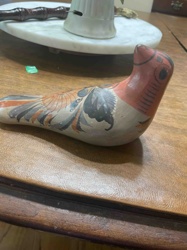
Mid-Century Textured Ceramic Owl Figurine

Collectibles / Decorative Arts / Art Pottery

AI Estimated Value

·Not an official valuation·Verify before acting

$45 - $85

As of June 17, 2026

AI Item Analysis

·AI can make mistakes·Verify before acting
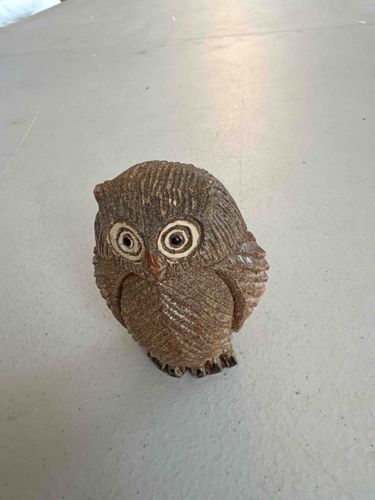
This item is a decorative owl figurine crafted from stoneware or heavy ceramic. It stands approximately 4 to 6 inches in height and features a highly stylized, rotund form characteristic of mid-20th-century decorative arts. The piece is finished in a variegated brown and tan earth-tone glaze with a distinctive sgraffito or incised texture that mimics the appearance of feathers through deep, vertical grooves across the head and wings. The eyes are a focal point, rendered as large, concentric white circles with dark pupils, creating a bold 'wide-eyed' expression typical of the period. The beak is a small, pointed projection in a slightly darker terracotta hue. The base of the figurine shows representational talons in a dark, almost black pigment. Condition appears good with no visible major cracks or large chips in the provided image, though there is a natural aged patina and minor surface dust consistent with shelf display. The style is reminiscent of Scandinavian or Japanese folk-art pottery from the 1960s or 1970s. While no maker's mark is visible from this angle, the quality of the incised texture and the balance of the glaze application suggest a studio pottery origin or a high-quality commercial line like those produced by Bitossi or similar artisanal factories.
AI Appraisal Report

·AI can make mistakes·Verify before acting
Based on my visual examination, this owl figurine is a charming example of Mid-Century Modern (MCM) decorative pottery, likely dating to the late 1960s or early 1970s. The piece exhibits the quintessential aesthetic of the era, characterized by its heavy stoneware body, earth-tone glazes, and deep sgraffito texturing that mimics plumage. The stylized 'wide-eyed' look was popularized by designers like Aldo Londi for Bitossi, though this particular piece feels more aligned with Japanese export ware (such as Otagiri) or Scandinavian-influenced studio pottery rather than Italian production. The glaze application is competent, and the incised detailing is sharp, suggesting a quality production line rather than crude hobbyist work. The condition appears excellent for its age, with no immediate evidence of structural cracks, repairs, or significant chips visible in the image. The surface shows an appropriate patina consistent with vintage shelf display. The market for general MCM animal figurines remains steady, driven by collectors seeking affordable shelf decor that fits the 'boho-chic' interior design trend. While the lack of a visible maker's mark limits the potential for a high-end valuation, the specific aesthetic appeal of owls—a pervasive motif of the 1970s—adds to its desirability. It is important to note that without physical handling, I cannot verify the weight of the clay body or check the underside for faint impressed marks, stickers, or felt residue that might hide origin stamps. Definitive attribution to a specific studio would require checking the base for clay color and texture. As it stands, the value is based on its decorative merit and condition as a vintage object.

Get your items appraised

Instant estimates of your treasures with AI-powered appraisals

Browse More Appraisals