AI estimate as of October 1, 2025 · verify with a professional before acting
AI-Generated · Verify before acting
Everything on this page is generated by AI for informational purposes only. AI can make mistakes — the AI may misidentify items or misattribute them (artist, maker, brand, designer, origin, era). This is not an official valuation and should not be used for insurance, sale, tax, estate, legal, or lending purposes — or any decision requiring a certified appraisal. It is not an authoritative claim about any person, brand, or rights holder — do not share or rely on it as a factual statement about a third party. Always consult qualified professionals before making financial decisions.
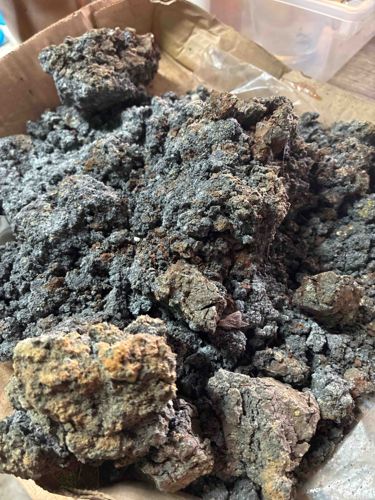
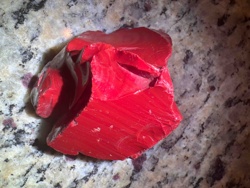
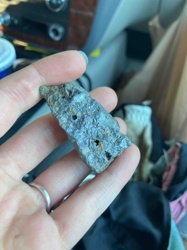
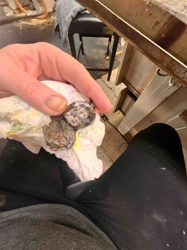
The item consists of a substantial quantity of dark, irregularly shaped, and highly porous material consistent with industrial slag or furnace waste. The individual pieces vary considerably in size, ranging from small granular fragments to larger chunks several centimeters across. The predominant color is a dark, mottled grey, often with significant rust-brown and reddish-brown coloration, indicating the presence of oxidized iron or other metallic impurities. Some pieces exhibit a somewhat glassy or vitrified texture, characteristic of quickly cooled molten material. Others appear more granular and friable. The surface is rough and uneven, with numerous indentations, vesicles, and sharp edges, suggesting a high-temperature origin. There are no discernible markings, deliberate shaping, or artistic elements, reinforcing its identification as a byproduct rather than a manufactured object. The material is contained within what appears to be a cardboard box or container lined with clear plastic, protecting the surface beneath. The overall appearance suggests metallurgical or industrial processing waste, possibly from smelting, casting, or incineration. The condition is as expected for industrial residue, showing natural weathering and oxidation but no specific 'damage' in the traditional sense for a finished product.
AI Appraisal Report
Based on my visual examination of the provided image, the item consists of a substantial quantity of dark, irregularly shaped, and highly porous material, which I assess to be authentic industrial slag or furnace waste. The variable sizing, mottled grey with rust-brown coloration, glassy and granular textures, and rough, vesicular surfaces are all highly consistent with a byproduct of high-temperature industrial processes such as smelting or casting. The condition is entirely consistent with its nature as industrial residue; 'damage' in the typical sense does not apply here, as its current state reflects its origin. There are no indications of deliberate shaping or artistic intent.
Market conditions for such material are extremely limited. Industrial slag is generally considered waste, and its value is typically negative, meaning there's a cost associated with its disposal. While some specialized uses exist (e.g., as aggregate in construction, or for educational/scientific samples), the quantity and presentation seen here do not suggest it is graded or prepared for such applications. Demand for unrefined, bulk industrial slag is virtually non-existent in collectible markets and very low even in industrial contexts unless specific chemical properties or processing have been applied. Rarity is not a factor; this material is a common byproduct of industrial activity globally.
Factors significantly impacting value are negative: it's a byproduct, not a product, and has no intrinsic aesthetic, historical, or material value in this raw form. Its primary cost would be for disposal.
My assessment for authenticity is strong based on visual cues; however, definitive authentication of its precise origin (e.g., type of furnace, specific industrial process) and chemical composition would require physical examination and scientific testing (e.g., X-ray fluorescence, spectrography). Visual inspection alone cannot confirm the exact metallic content or source industry, though its overall appearance is unequivocally that of industrial waste.