Yellow and Orange Multi-Colored Cullet (Slag Glass)
Decorative Glass / Industrial Byproducts

Yellow and Orange Multi-Colored Cullet (Slag Glass)

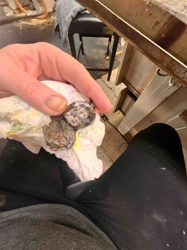
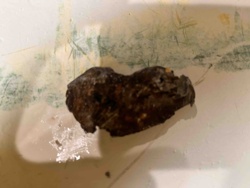
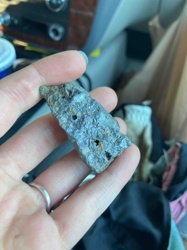
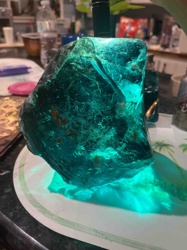
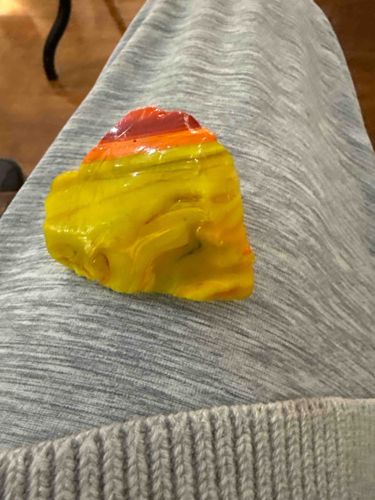
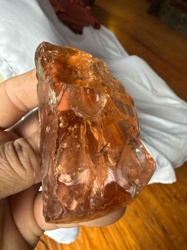
This item is a chunk of cullet, commonly referred to as slag glass, which is a byproduct of the industrial glass-making process. The specimen displays a vibrant, non-homogenous color profile featuring primary saturation in bright canary yellow, with distinct swirled layers of orange and a reddish-brown cap at the apex. Its physical structure is characteristic of glass breakage, exhibiting conchoidal (shell-like) fractures, sharp angular edges, and a vitreous, glossy luster that reflects light across its undulating surface. The internal composition shows 'swirl' patterns where different colored molten glasses met but did not fully mix, creating a marbled or agitator effect typical of mid-20th-century decorative glass production. The piece appears roughly palms-sized and lacks any official maker's marks or signatures, as it is a waste product rather than a finished artistic vessel. Condition-wise, it shows minor surface scuffing and micro-chipping along the sharpest ridges, which is standard for raw glass cullet. The clarity is opaque to semi-translucent. While not a natural mineral or rock, such pieces are highly collectible for their aesthetic 'folk art' appeal and are often found near historical glass factory sites in regions like West Virginia, Ohio, or Pennsylvania, likely dating from the 1940s to the 1970s.
Estimated Value

$45.00 - $65.00

Basic Information

Category

Decorative Glass / Industrial Byproducts

Appraised On

January 11, 2026

Estimated Value

$45.00 - $65.00

Additional Details Provided By Owner

User Provided Information

Rock

Item Description

This item is a chunk of cullet, commonly referred to as slag glass, which is a byproduct of the industrial glass-making process. The specimen displays a vibrant, non-homogenous color profile featuring primary saturation in bright canary yellow, with distinct swirled layers of orange and a reddish-brown cap at the apex. Its physical structure is characteristic of glass breakage, exhibiting conchoidal (shell-like) fractures, sharp angular edges, and a vitreous, glossy luster that reflects light across its undulating surface. The internal composition shows 'swirl' patterns where different colored molten glasses met but did not fully mix, creating a marbled or agitator effect typical of mid-20th-century decorative glass production. The piece appears roughly palms-sized and lacks any official maker's marks or signatures, as it is a waste product rather than a finished artistic vessel. Condition-wise, it shows minor surface scuffing and micro-chipping along the sharpest ridges, which is standard for raw glass cullet. The clarity is opaque to semi-translucent. While not a natural mineral or rock, such pieces are highly collectible for their aesthetic 'folk art' appeal and are often found near historical glass factory sites in regions like West Virginia, Ohio, or Pennsylvania, likely dating from the 1940s to the 1970s.
Get Your Items Appraised

Instant estimates of your treasures with AI-powered instant appraisals

Browse More Appraisals