AI Appraisal Estimate

AI-generated estimates · not official valuations

From the user

What was submitted

Photo and notes provided by the user — not generated by AI

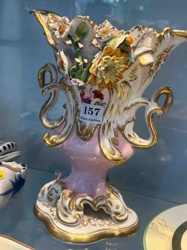
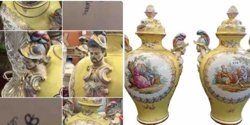
Submitted item photo
Submitted photo · June 27, 2026

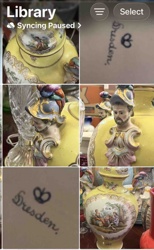
User's notes

Dresden

AI analysis below

AI appraisal

AI analysis & estimate

AI-Generated · Verify before acting

Everything below is generated by AI for informational purposes only. AI can make mistakes — the AI may misidentify items or misattribute them (artist, maker, brand, designer, origin, era). This is not an official valuation and should not be used for insurance, sale, tax, estate, legal, or lending purposes — or any decision requiring a certified appraisal. It is not an authoritative claim about any person, brand, or rights holder — do not share or rely on it as a factual statement about a third party. Always consult qualified professionals before making financial decisions.

Note

This analysis also relies on unverified notes provided by the user, which may be incomplete or inaccurate and could affect the result.

Read the full disclaimer

AI Identification

·Not independently authenticated·Verify before acting

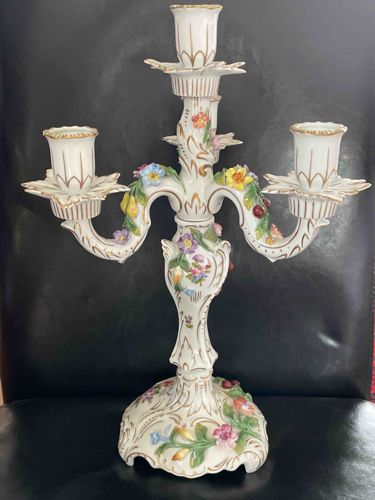
Dresden German Porcelain Three-Light Candelabrum

Antique European Porcelain

AI Estimated Value

·Not an official valuation·Verify before acting

$450 - $650

As of June 27, 2026

AI Item Analysis

·AI can make mistakes·Verify before acting
This is a fine German porcelain three-light candelabrum, attributed to the Dresden tradition of fine ceramic manufacturing. The piece is constructed from white glazed hard-paste porcelain, featuring a central column supporting one elevated candle holder, flanked by two lower splayed arms terminating in matching sockets. The design is characterized by elaborate Rococo-style scrolling and relief-molded acanthus leaves, heavily accented with hand-applied gilded highlights. A defining feature is the intricate floral encrustation, consisting of 'snowball' style multi-colored blossoms (yellow, purple, blue, and pink) and applied foliage and fruit clusters (including cherries and pears) that wind around the stem and base. The base is domed and scalloped, mirroring the motif of the petal-form drip pans. While no maker's mark is visible in the photograph, the style and 'Dresden' context suggest late 19th to early 20th-century production, likely by manufacturers such as Potschappel (Carl Thieme) or Sitzendorf. The condition appears fair to good; however, close inspection reveals common structural vulnerabilities in such delicate work, including likely nicks or chips to the thin-edged applied floral petals and potential wear to the gilt rims of the candle cups. The craftsmanship is highly detailed, representing the ornate Victorian-era appetite for floral Meissen-influenced decorative arts.
AI Appraisal Report

·AI can make mistakes·Verify before acting
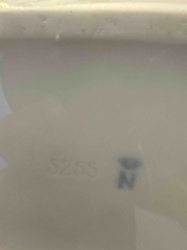
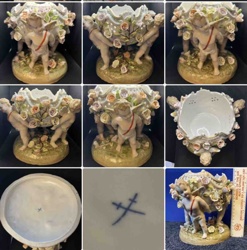
I have carefully examined the provided images of this German porcelain three-light candelabrum. Based on the style, material, and 'snowball' floral encrustations, this piece represents late 19th-century Dresden production, likely from the workshops of Carl Thieme at Potschappel or similar Thuringian manufacturers. The Rococo-revival form and applied fruit motifs (cherries/pears) are consistent with the 'Schneeballen' style popularized by Meissen but widely adapted for the export market. Upon visual inspection, the item displays the high-level craftsmanship expected of the era. However, pieces of this complexity are notoriously fragile. I note visible structural vulnerabilities in the applied foliate elements; minor chips to petal edges and leaves are apparent, which is typical for 'cold-to-the-touch' porcelain of this age but serves to temper the market value. The gilding on the candle cups shows moderate thinning from historic cleaning. The market for ornate Dresden-style porcelain remains steady among traditional collectors, though it has softened from its peak in the 1990s. Comparable sales of single candelabra in this condition range between $400 and $700; a matched pair would command a significant premium. Limitations to this appraisal: A primary limitation is the absence of a visible maker’s mark (such as the crossed 'T' or blue crown). To fully authenticate this as a Tier-1 manufacturer, an in-person inspection of the underside and interior sockets is required. Furthermore, UV-light (blacklight) testing is necessary to detect professional restorations to the splayed arms, which are prone to snapping. This valuation assumes the piece has no major undetected repairs or structural cracks.

Get your items appraised

Instant estimates of your treasures with AI-powered appraisals

Browse More Appraisals