Capodimonte Marked Imari Pattern Porcelain Platter
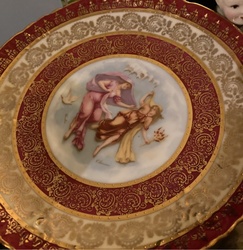
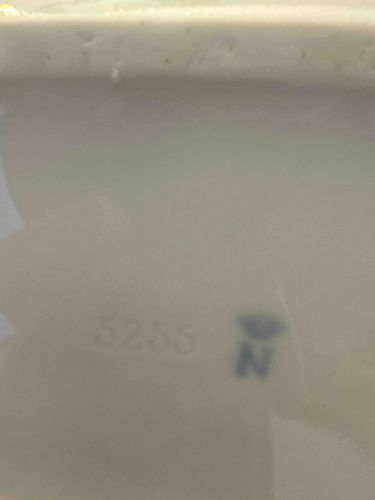
This is a detailed view of the underside of a porcelain platter, specifically showing the maker's marks on a fine white glazed body. The key identifying feature is an underglaze blue crowned 'N' mark, which historically signifies the Doccia factory in Florence or the Royal Factory in Naples (Capodimonte style). To the left of this mark is an impressed four-digit number, '5255', which serves as a mold or pattern number used for inventory and production tracking. The porcelain material appears dense and high-quality with a slightly creamy white glaze. The visible foot rim is unglazed (bisque), showing a clean, smooth texture indicative of refined clay preparation. There are minor visible imperfections within the glaze, such as tiny pinholes or firing specks (often called 'pepper spots'), which are characteristic of 19th-century European porcelain production. The platter follows the Imari style, which suggests the top surface is decorated with a sophisticated palette of cobalt blue underglaze, iron-red overglaze, and gilt highlights in a traditional Japanese-inspired floral or geometric arrangement. The condition seen in the mark area is excellent, with sharp legibility of both the stamped and impressed marks and no immediate signs of structural cracks or significant chips on the visible rim edge.
AI-Generated Appraisal Disclaimer
Estimated Value
$450 - $650
Basic Information
Category
Antique European Porcelain
Appraised On
March 13, 2026
Estimated Value
$450 - $650
Additional Details Provided By Owner
User Provided Information
Imari platter
Item Description
This is a detailed view of the underside of a porcelain platter, specifically showing the maker's marks on a fine white glazed body. The key identifying feature is an underglaze blue crowned 'N' mark, which historically signifies the Doccia factory in Florence or the Royal Factory in Naples (Capodimonte style). To the left of this mark is an impressed four-digit number, '5255', which serves as a mold or pattern number used for inventory and production tracking. The porcelain material appears dense and high-quality with a slightly creamy white glaze. The visible foot rim is unglazed (bisque), showing a clean, smooth texture indicative of refined clay preparation. There are minor visible imperfections within the glaze, such as tiny pinholes or firing specks (often called 'pepper spots'), which are characteristic of 19th-century European porcelain production. The platter follows the Imari style, which suggests the top surface is decorated with a sophisticated palette of cobalt blue underglaze, iron-red overglaze, and gilt highlights in a traditional Japanese-inspired floral or geometric arrangement. The condition seen in the mark area is excellent, with sharp legibility of both the stamped and impressed marks and no immediate signs of structural cracks or significant chips on the visible rim edge.
Get Your Items Appraised
Instant estimates of your treasures with AI-powered instant appraisals