AI identification & appraisal estimate

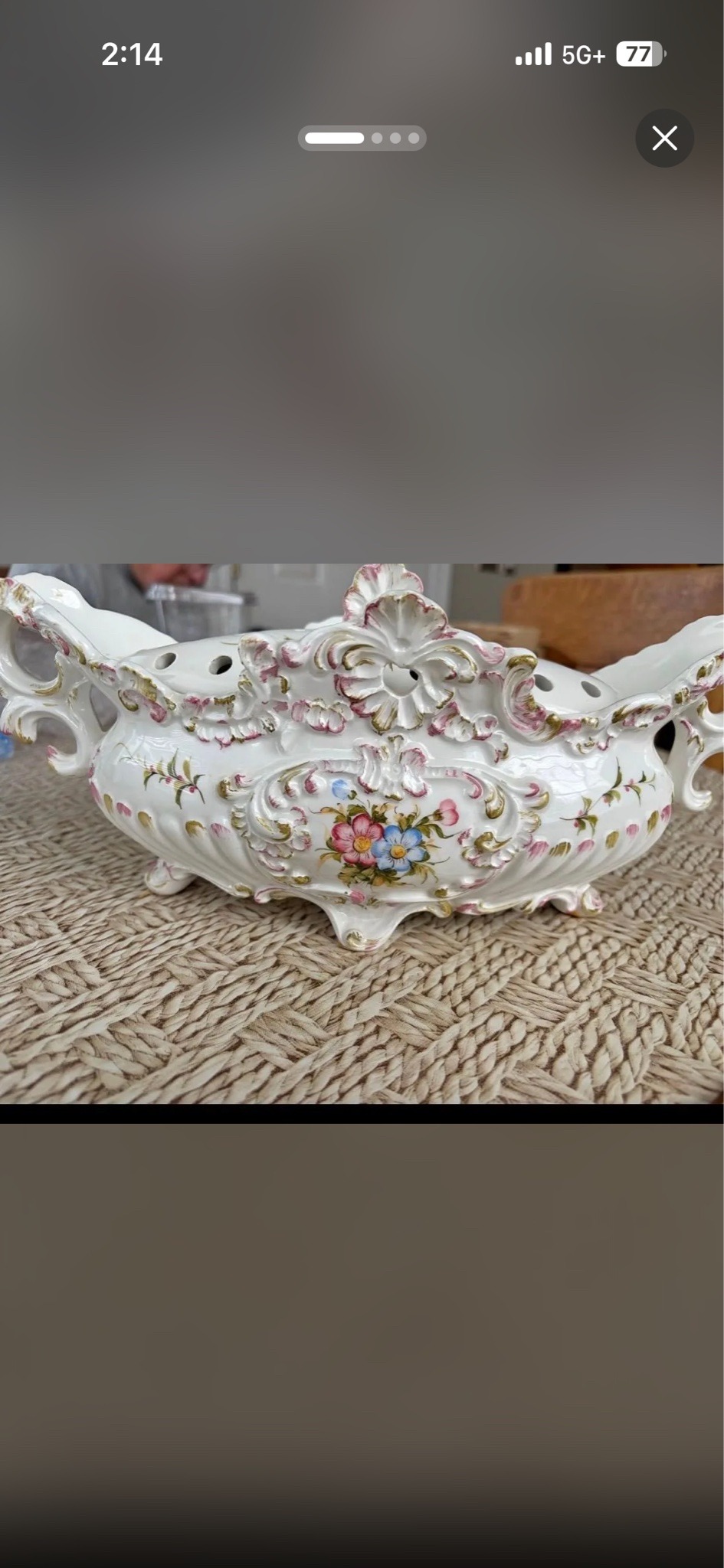
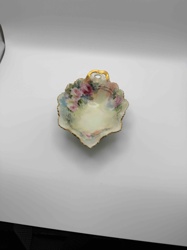
Rococo-Style Porcelain Centerpiece Flower Frog / Jardinière

Submitted photo of Rococo-Style Porcelain Centerpiece Flower Frog / Jardinière
Photo submitted by the user — not generated by AI

AI Estimated Value

Not an official valuation

$450 - $650

AI estimate as of April 17, 2026 · verify with a professional before acting

AI-Generated · Verify before acting

Everything on this page is generated by AI for informational purposes only. AI can make mistakes — the AI may misidentify items or misattribute them (artist, maker, brand, designer, origin, era). This is not an official valuation and should not be used for insurance, sale, tax, estate, legal, or lending purposes — or any decision requiring a certified appraisal. It is not an authoritative claim about any person, brand, or rights holder — do not share or rely on it as a factual statement about a third party. Always consult qualified professionals before making financial decisions.

Read the full disclaimer

AI Item Analysis

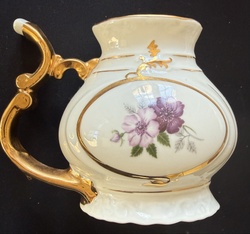
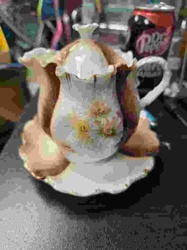
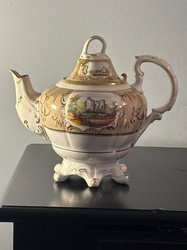
This is a decorative porcelain jardinière or centerpiece bowl, likely functioning as a flower frog due to the visible perforated lid design in the background. The vessel is crafted in an ornate Neo-Rococo style, characterized by a bulbous, white-glazed body with high-relief scrollwork and shell-like (rocaille) moldings. The exterior is adorned with hand-painted polychrome floral bouquets featuring pink, blue, and yellow blossoms, flanked by delicate spray greenery. The edges and molded scroll accents are highlighted with pink and gilded (gold) trimming, though the gilding shows significant signs of rubbing and age-related wear. The piece sits on four short, integrated scroll feet. Construction features include pierced openwork along the top rim and a heavily scalloped, shell-shaped decorative pediment at the center. The style suggests a late 19th-century to early 20th-century European manufacture, possibly in the vein of Meissen, Dresden, or Sitzendorf, though a specific maker's mark is not visible in this angle. Condition appears fair to good; there are no catastrophic cracks visible, but there is noticeable grazing to the glaze and significant fading of the gold leaf along the high points of the relief carving. The level of detail in the hand-painted florals and the complexity of the molded porcelain indicate high-quality craftsmanship intended for a formal decorative setting.
AI Appraisal Report

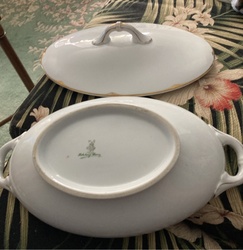
I have carefully examined the high-resolution images of this Rococo-style porcelain jardinière centerpiece. The piece exhibits characteristic hallmarks of late 19th-century German porcelain manufacturing, likely originating from firms such as Dresden or Sitzendorf. The relief-molded 'rocaille' scrollwork is well-executed, and the hand-painted floral cartouches demonstrate a professional level of artistry consistent with high-end European decorative arts of the period. Condition-wise, I note significant 'rubbing' to the gilded accents, particularly on the shell-shaped pediments and feet, which is expected for its age but reduces the premium grade. The glaze crazing suggests the piece has been exposed to temperature fluctuations. Market demand for ornate Victorian-era porcelain is currently stable but selective; collectors prioritize condition and clear attribution. Comparable sales for unmarked 19th-century German centerpieces of this size and complexity typically range from $400 to $700 depending on the prestige of the auction house. Several limitations exist in this remote appraisal. Authenticity cannot be fully confirmed without a physical inspection of the underside to identify a maker's mark or 'factory strikes.' I would also require a tactile examination of the floral work to distinguish between transfer-ware and true hand-painting, as well as a UV-light (blacklight) inspection to detect professional restorations to the delicate scrollwork or feet. To reach a definitive valuation for insurance or estate purposes, provenance documentation or a confirmed blue-underglaze crossed-swords mark (Meissen) or crowned-N mark (Capodimonte) would be necessary, which could double or triple the current estimate.

Keep exploring

More antique european porcelain & ceramics appraisals

Get your items appraised

Instant AI-powered appraisal estimates from a photo

Browse More Appraisals