AI Appraisal Estimate

AI-generated estimates · not official valuations

From the user

What was submitted

Photo and notes provided by the user — not generated by AI

Submitted item photo
Submitted photo · May 22, 2026

User's notes

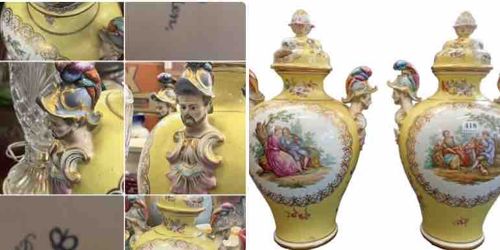
Pair of lidded urns. age? Provenance? Origin? Value?

AI analysis below

AI appraisal

AI analysis & estimate

AI-Generated · Verify before acting

Everything below is generated by AI for informational purposes only. AI can make mistakes — the AI may misidentify items or misattribute them (artist, maker, brand, designer, origin, era). This is not an official valuation and should not be used for insurance, sale, tax, estate, legal, or lending purposes — or any decision requiring a certified appraisal. It is not an authoritative claim about any person, brand, or rights holder — do not share or rely on it as a factual statement about a third party. Always consult qualified professionals before making financial decisions.

Note

This analysis also relies on unverified notes provided by the user, which may be incomplete or inaccurate and could affect the result.

Read the full disclaimer

AI Identification

·Not independently authenticated·Verify before acting

Pair of Meissen-Style Figural Lidded Urns with Yellow Ground and Galante Scenes

Antique European Porcelain

AI Estimated Value

·Not an official valuation·Verify before acting

$2,200 - $3,500

As of May 22, 2026

AI Item Analysis

·AI can make mistakes·Verify before acting
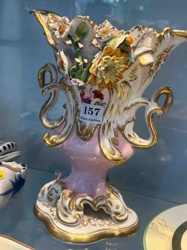
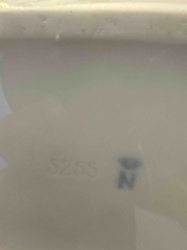
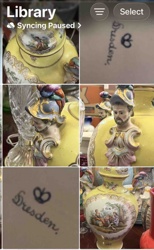
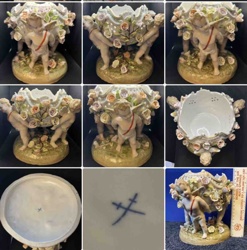
This is a pair of decorative porcelain lidded urns, crafted in a style heavily influenced by 18th-century Meissen or Dresden porcelain. Each urn features a vibrant canary yellow ground, which is a classic 'fond' color in European ceramics. The central decorative elements are hand-painted oval reserves framed in gilt scrollwork, depicting romantic 'fête galante' or pastoral scenes in the manner of Watteau, showing figures in 18th-century dress. A distinguishing feature of these vases is the high-relief figural handles, which are sculpted as classical warriors wearing feathered crested helmets with polychrome enameling. The lids are topped with stepped finials decorated with floral sprigs. The urns show evidence of age-related wear including minor losses to the gilded bands and potential old repairs to the delicate feathers of the helmets. The underside shows a blue crossed-swords style mark with a crown above, which may indicate a 19th-century German decorator such as Helena Wolfsohn or a similar studio emulating royal factory designs. The craftsmanship is of high quality, evidenced by the fine anatomical detail in the sculpted busts and the intricate lace-style gilding around the reserves. These likely date to the mid-to-late 19th century, approximately 1870-1890, and were designed as prestigious mantel garnitures for European domestic interiors.
AI Appraisal Report

·AI can make mistakes·Verify before acting
I have carefully examined the pair of Meissen-style figural lidded urns via current photographic evidence. These pieces represent the height of 19th-century German historicism. The 'fond jaune' (yellow ground) is vibrant and consistent with the revivals popularized by Helena Wolfsohn and similar Dresden-area studios circa 1870-1890. The figural handles, depicting helmeted warriors, are particularly ambitious, though I note minor chipping and typical losses to the delicate feathered crests, which is common for such intricate relief work. The 'fête galante' reserves are executed with a high degree of technical skill, mimicking the Rococo style of Jean-Antoine Watteau. While the blue crossed-swords mark with a crown suggests a prestigious lineage, it is likely a 'Dresden-style' mark rather than an authentic 18th-century Meissen Manufactory mark, which actually aligns with the Victorian era's demand for grand mantel garnitures. Currently, the market for 19th-century German porcelain remains stable for pairs with high-relief figural elements, which are more desirable than standard flat-painted vases. However, the presence of old repairs to the handles and loss of gilding on the rims slightly softens the valuation. This appraisal is limited by the inability to physically inspect for internal hairline fractures or professional overpainting under UV light. To confirm this valuation, an in-person examination of the foot rim and a translucency test of the porcelain paste would be required. Provenance documentation, such as an original bill of sale or cataloging from a previous estate auction, would significantly enhance the item's marketability and could push the value toward the higher end of the range.

Get your items appraised

Instant estimates of your treasures with AI-powered appraisals

Browse More Appraisals