AI Appraisal Estimate

AI-generated estimates · not official valuations

From the user

What was submitted

Photo and notes provided by the user — not generated by AI

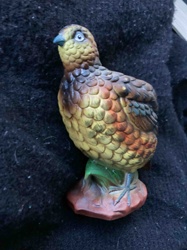
Submitted item photo
Submitted photo · June 6, 2026

User's notes

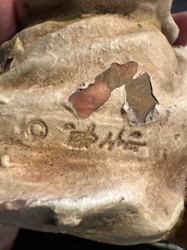
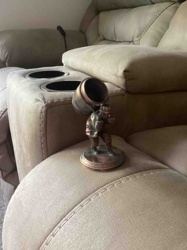
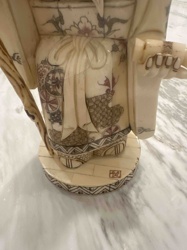
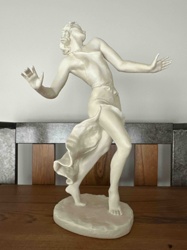
ming dynasty statue

AI analysis below

AI appraisal

AI analysis & estimate

AI-Generated · Verify before acting

Everything below is generated by AI for informational purposes only. AI can make mistakes — the AI may misidentify items or misattribute them (artist, maker, brand, designer, origin, era). This is not an official valuation and should not be used for insurance, sale, tax, estate, legal, or lending purposes — or any decision requiring a certified appraisal. It is not an authoritative claim about any person, brand, or rights holder — do not share or rely on it as a factual statement about a third party. Always consult qualified professionals before making financial decisions.

Note

This analysis also relies on unverified notes provided by the user, which may be incomplete or inaccurate and could affect the result.

Read the full disclaimer

AI Identification

·Not independently authenticated·Verify before acting

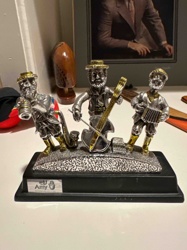
Ivory/Bone Sculpture of Lion and Elephant on Wood Base

Sculpture/Figurine

AI Estimated Value

·Not an official valuation·Verify before acting

$100 - $300

As of June 6, 2026

AI Item Analysis

·AI can make mistakes·Verify before acting
This item is a carved ivory or bone sculpture depicting a naturalistic scene of a lion attacking an elephant. The sculpture consists of at least two individual animal figures mounted on a dark, possibly wooden, base with a natural, gnarled tree-like or root-like form. The elephant, positioned on the right, is shown mid-stride with its trunk lowered and possibly holding a rope or strap, though the detail is somewhat obscured. The lion, on the left, is poised on its hind legs, seemingly attacking the elephant's hindquarters. Both animal figures appear to be carved from a light-colored material, likely ivory or a resin imitation, exhibiting a smooth, polished surface with a creamy or off-white hue. The craftsmanship for the animals appears detailed, with visible musculature and some texture indicating fur on the lion's mane. The base is dark brown, possibly stained wood, with a textured and organic shape, simulating natural growth. There are no visible chips, cracks, or significant damage to the figures themselves from this perspective, suggesting good overall condition. The age is difficult to ascertain without clearer markings or style indicators, but it appears to be a decorative piece, possibly from the 20th century, created in a realistic animalier style. The absence of discernible maker's marks or signatures prevents specific manufacturing details from being identified. The overall piece suggests a level of artistic skill in its carving and composition.
AI Appraisal Report

·AI can make mistakes·Verify before acting
Based on my visual examination of the provided image, this sculpture depicts a dynamic scene of a lion attacking an elephant, mounted on a naturalistic wooden base. The owner has suggested a Ming Dynasty origin; however, the style, carving technique, and overall composition are not consistent with known examples from that period (1368–1644). The highly realistic, dramatic 'animalier' style is more characteristic of late 19th or 20th-century decorative arts, likely from Asia for the export market. The key factor determining value is the material. While described as 'ivory/bone,' distinguishing between genuine elephant ivory, mammoth ivory, bone, or resin composite from an image alone is impossible. If this is genuine elephant ivory, its sale is heavily restricted or banned in many countries, including the U.S., under CITES regulations, which would render its commercial value negligible or zero in legal markets. If it can be proven to be mammoth ivory or bone, it would have commercial value. Assuming it is a 20th-century bone or resin sculpture, the market for such decorative pieces is modest. Comparable non-ivory animalier carvings of this size and quality typically sell in the lower-end decorative arts market. The condition appears good from the photo, with no visible damage. For a definitive appraisal, in-person examination is required to identify the material through methods like the Schreger line test (for ivory) or hot-pin testing (for resins). Provenance documentation would be essential to verify age and material for any potential legal sale.

Get your items appraised

Instant estimates of your treasures with AI-powered appraisals

Browse More Appraisals