AI estimate as of July 16, 2025 · verify with a professional before acting
AI-Generated · Verify before acting
Everything on this page is generated by AI for informational purposes only. AI can make mistakes — the AI may misidentify items or misattribute them (artist, maker, brand, designer, origin, era). This is not an official valuation and should not be used for insurance, sale, tax, estate, legal, or lending purposes — or any decision requiring a certified appraisal. It is not an authoritative claim about any person, brand, or rights holder — do not share or rely on it as a factual statement about a third party. Always consult qualified professionals before making financial decisions.
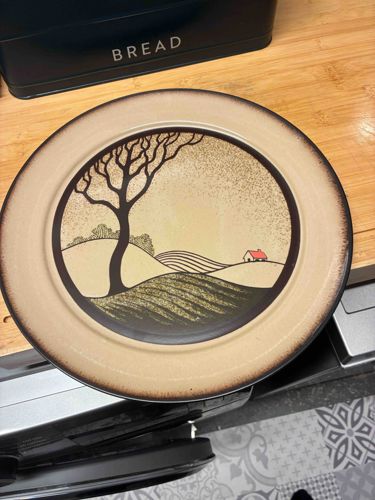
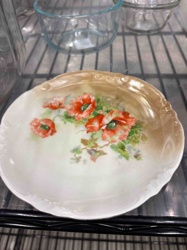
This is a round ceramic plate, likely made of earthenware or stoneware, featuring a distinctive stylized landscape design. The plate has an outer diameter that appears to be standard dinner plate size, approximately 10-12 inches. The rim of the plate is a mottled dark brown, transitioning to a lighter beige or cream color on the main surface. This color transition suggests a reactive glaze or a hand-painted rim. The central design depicts a stark but artistic landscape. A large, dark brown, bare tree with intricate, spreading branches dominates the left side of the scene. The ground beneath the tree and in the foreground is rendered in shades of dark brown and green with a textured, almost speckled or cross-hatched effect, giving the impression of earth or grass. In the mid-ground, rolling hills are depicted with horizontal lines suggesting terraced fields or contours. On the right side, nestled atop one of these hills, is a small, simple house with a prominent red roof, providing a splash of contrasting color. The sky behind the landscape is a warm, light beige or yellow, with a subtle stippled texture. The overall color palette is earthy and subdued, primarily browns, beiges, and muted greens, with the notable accent of the red roof. The craftsmanship appears to be rustic yet refined, with clear lines and a consistent application of glazes. There are no obvious signs of chips, cracks, or significant wear visible from the provided image, suggesting good to excellent condition. The style is somewhat reminiscent of mid-century modern or folk art, suggesting an estimated age from the mid-20th century onwards. The lack of visible maker's marks or signatures prevents further details on manufacturing origin.
AI Appraisal Report
Upon visual examination of the provided image, this stoneware dinner plate displays a distinctive stylized landscape motif. The condition appears to be good to excellent, with no visible chips, cracks, or significant wear. The earthy color palette of browns, beiges, and muted greens, accented by the red roof, suggests a rustic yet refined craftsmanship, possibly mid-century modern or folk art in origin. The reactive glaze on the rim and textured surface contribute to its aesthetic appeal.
Market conditions for artisan-crafted dinnerware and decorative plates with unique designs remain stable. Comparables for plates of this quality, especially those with an artistic landscape, typically range from $30-$70. While the design is compelling, the absence of a visible maker's mark or signature limits specific attribution to a known artist or pottery, which would significantly increase its value. Demand for unique, well-preserved pieces like this is moderate, driven by collectors of rustic pottery or those seeking distinctive home decor.
Factors impacting value include its good condition and attractive design. However, the lack of provenance, maker's marks, and the inherent difficulty in assessing authenticity and material composition from images alone are significant limitations. To fully authenticate and establish a definitive value, an in-person examination would be critical to assess the ceramic body, glaze application, and search for faint marks. Scientific testing for material composition or dating would further enhance authentication, and provenance documentation, if available, would be invaluable.