AI estimate as of August 22, 2025 · verify with a professional before acting
AI-Generated · Verify before acting
Everything on this page is generated by AI for informational purposes only. AI can make mistakes — the AI may misidentify items or misattribute them (artist, maker, brand, designer, origin, era). This is not an official valuation and should not be used for insurance, sale, tax, estate, legal, or lending purposes — or any decision requiring a certified appraisal. It is not an authoritative claim about any person, brand, or rights holder — do not share or rely on it as a factual statement about a third party. Always consult qualified professionals before making financial decisions.
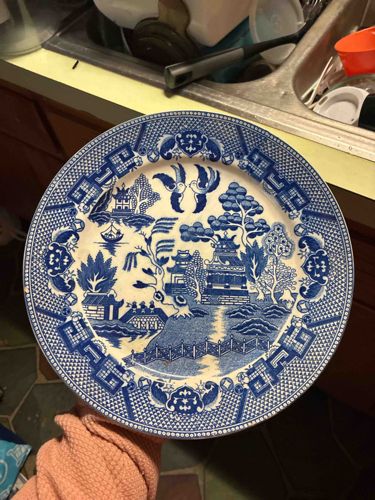
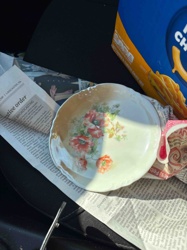
This item is a round ceramic plate featuring the iconic blue and white 'Willow Pattern' design. The design, executed in underglaze cobalt blue on a white or cream-colored ground, depicts a stylized romanticized Chinese landscape. Key elements visible in the pattern include: a large Pagoda or Tea House structure on an island, a bridge with three figures crossing it, a small boat with a figure, a pair of doves or birds flying above, and a profusion of trees, including weeping willow trees. The border of the plate features a geometric pattern, often referred to as a 'fretwork' or 'cellular' border, interspersed with cartouches containing floral or decorative motifs. The plate appears to be of standard dinner plate size. The overall condition suggests that it is a used item; while no obvious chips or cracks are discernible from the image, there may be some surface wear, crazing, or utensil marks consistent with its age and use. The specific shade of blue and the crispness of the transfer print indicate good quality, although without a clear view of the reverse, manufacturing marks are not discernible. The Willow Pattern was originally developed in England in the late 18th century as an imitation of hand-painted Chinese porcelain and became incredibly popular, being produced by countless potteries throughout the 19th and 20th centuries. This particular piece appears to be a common domestic dinner plate from the mid-20th century, though it could date earlier depending on the specific manufacturer.
AI Appraisal Report
Based on my visual examination of the Blue and White Willow Pattern Dinner Plate, I can offer the following appraisal. The plate features the classic 'Willow Pattern' design, executed in underglaze cobalt blue, depicting the iconic pagoda, bridge with figures, boat, doves, and willow trees. The border's 'fretwork' pattern with cartouches is typical. The condition appears to be used; while no obvious chips or cracks are visible in the image, surface wear, crazing, or utensil marks are likely present, consistent with a used domestic item. The blue shade and transfer crispness suggest reasonable quality.
Authenticity: The pattern is clearly the ubiquitous Willow Pattern. Due to its popularity, countless potteries produced this design, making origin difficult to ascertain from images alone. I cannot determine the specific manufacturer or exact age without viewing the reverse for maker's marks or feeling the ceramic body.
Market Conditions & Demand: Willow Pattern ware is highly common. While there's steady demand from collectors and those furnishing period homes, its widespread availability means individual common domestic pieces like this dinner plate typically command modest prices. Rarity is not a factor here; this is a mass-produced item. Factors impacting value include condition (any damage significantly reduces value), manufacturer (known makers fetch slightly more), and exact age (very early pieces sometimes fare better).
Limitations: My appraisal is limited by the inability to physically inspect the item. A hands-on examination would reveal hidden chips, cracks, repairs, the extent of crazing and surface wear, and allow for identification of maker's marks, which are crucial for precise dating and attributing to a specific pottery. Without this, I cannot fully authenticate origin or provide a definitive age, thus impacting the precise value.