AI estimate as of October 4, 2025 · verify with a professional before acting
AI-Generated · Verify before acting
Everything on this page is generated by AI for informational purposes only. AI can make mistakes — the AI may misidentify items or misattribute them (artist, maker, brand, designer, origin, era). This is not an official valuation and should not be used for insurance, sale, tax, estate, legal, or lending purposes — or any decision requiring a certified appraisal. It is not an authoritative claim about any person, brand, or rights holder — do not share or rely on it as a factual statement about a third party. Always consult qualified professionals before making financial decisions.
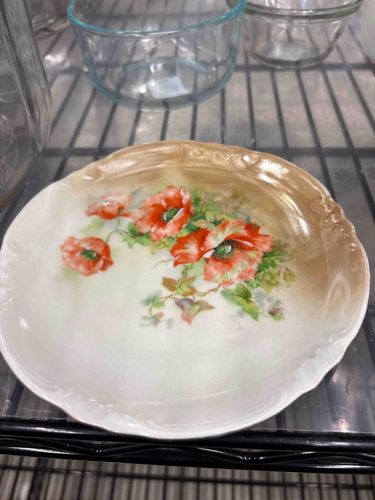
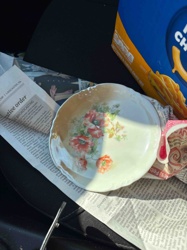
This item is a decorative plate, likely made of porcelain or fine ceramic, featuring a vibrant hand-painted poppy motif. The plate has a scalloped or gently ruffled edge, a common characteristic in tableware from the late 19th to early 20th century. The central area of the plate is adorned with a cluster of bright orange and red poppies with dark centers, accompanied by green foliage and delicate tendrils. The painting style appears to be freehand, with visible brushstrokes adding to its artistic quality. Surrounding the hand-painted floral design, the rim transitions to a warm, earthy tone, possibly a muted brown or beige, which is also decorated with raised, embossed scrollwork or beading, enhancing its ornamental appeal. The plate's surface exhibits a glossy finish, typical of glazed ceramics. While specific dimensions are not provided, it appears to be of a standard size for a luncheon or dessert plate, approximately 8-10 inches in diameter. There are no visible manufacturer's marks or signatures in the provided image, which would typically be on the underside. Given the style of decoration and the scalloped edge with embossed details, this plate likely dates from the Edwardian era through the Art Nouveau period, roughly 1890s to 1920s. The condition appears good from the angle shown, with no obvious chips, cracks, or significant wear to the painted decoration, suggesting it may have been primarily used for display rather than daily dining. The quality of the hand-painting, particularly the blending of colors in the poppies, indicates a level of skilled craftsmanship.
AI Appraisal Report
Upon visual examination of the provided image, I have assessed this hand-painted decorative plate. The item presents as a fine ceramic or porcelain plate, likely dating from the Edwardian or Art Nouveau period (circa 1890-1920), based on its stylistic elements such as the scalloped, embossed rim and the freehand poppy motif. The condition appears to be very good, with no visible chips, cracks, or crazing from this perspective, and the hand-painted decoration remains vibrant. The absence of a visible maker's mark or artist's signature is a significant factor limiting its value; such marks from well-regarded factories like RS Prussia or Limoges would dramatically increase its worth. The market for unsigned, hand-painted porcelain of this era is relatively soft but stable. Comparable plates by unknown artists or amateur painters typically sell in the range of $50 to $150, depending on the quality of the artistry and condition. The skilled execution of the poppy design places this piece at the higher end of that amateur/unsigned spectrum. Its primary value lies in its decorative appeal. For a definitive authentication, a physical, in-person examination is required. This would allow me to inspect the underside for any faint or hidden manufacturer's marks, examine the piece under UV light to detect repairs, and assess the quality of the porcelain paste and glaze more accurately. Without this direct inspection, this appraisal is based on the visible artistic and stylistic characteristics alone.