AI Appraisal Estimate

AI-generated estimates · not official valuations

From the user

What was submitted

Photo and notes provided by the user — not generated by AI

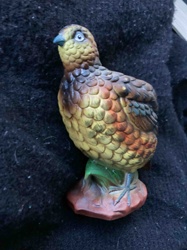
Submitted item photo
Submitted photo · June 6, 2026

User's notes

No additional notes provided.

AI analysis below

AI appraisal

AI analysis & estimate

AI-Generated · Verify before acting

Everything below is generated by AI for informational purposes only. AI can make mistakes — the AI may misidentify items or misattribute them (artist, maker, brand, designer, origin, era). This is not an official valuation and should not be used for insurance, sale, tax, estate, legal, or lending purposes — or any decision requiring a certified appraisal. It is not an authoritative claim about any person, brand, or rights holder — do not share or rely on it as a factual statement about a third party. Always consult qualified professionals before making financial decisions.

Read the full disclaimer

AI Identification

·Not independently authenticated·Verify before acting

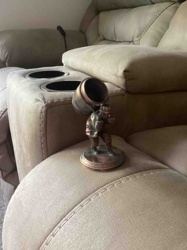
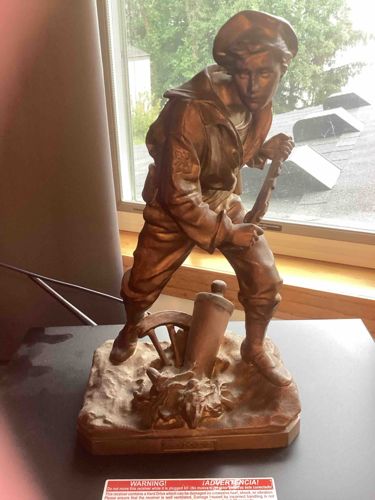
Sailor Operating Artillery Sculpture

Sculpture/Figurine

AI Estimated Value

·Not an official valuation·Verify before acting

$300-500

As of June 6, 2026

AI Item Analysis

·AI can make mistakes·Verify before acting
This item is a bronze or bronze-patinated metal sculpture depicting a young male figure, likely a sailor or naval cadet, in an active pose. The figure is shown wearing what appears to be a traditional naval uniform, including a cap, an overcoat or jacket with what looks like a sailor's collar, and trousers. He is engaged in an activity that involves a large, heavy object, possibly a cannon or mortar, and is holding a tool that resembles a rammer or a large lever, suggesting he is loading or operating artillery. The sculpture has a rich, warm brown patina, indicating either bronze material or a finish designed to mimic aged bronze. The details of the uniform, facial features, and the equipment are rendered with a moderate level of detail, showing good craftsmanship. The base of the sculpture is rectangular and integrated into the overall design, with molded details suggesting rugged terrain or a ship's deck, complete with what appears to be a cannon wheel. There are no immediately visible signs of significant damage like cracks or large chips, but the overall patina suggests age and perhaps some minor wear consistent with its assumed vintage. The specific age is not discernible without markings, but the style suggests early to mid-20th century. The craftsmanship indicates a commercial production quality rather than fine art foundry work, likely intended as a decorative or commemorative piece.
AI Appraisal Report

·AI can make mistakes·Verify before acting
Based on my visual examination of the provided image, this 'Sailor Operating Artillery' sculpture appears to be a bronze or bronze-patinated metal piece. The condition seems good, with a warm brown patina consistent with age and no obvious signs of significant damage like cracks or chips. The detail level suggests commercial production rather than a unique art foundry piece. Authenticity as a genuine bronze cannot be definitively confirmed without in-hand inspection; it could be a spelter or pot-metal casting with a bronze finish. In terms of market conditions, similar decorative military-themed sculptures from the early to mid-20th century typically appeal to collectors of militaria, maritime art, or historical ephemera. Demand is generally moderate, driven by niche interest, rather than broad appeal, limiting its rarity. Comparable sales for bronze or bronze-finished sculptures of this size and detail, particularly those without a prominent artist's signature, typically fall within the decorative art category. Factors significantly impacting value include the actual material (solid bronze commands a higher price than bronze-patinated alloys), the exact age, and any artist's signature or foundry marks which are not visible here. Without these, it's valued as a decorative object rather than a fine art collectible. Limitations in authenticity verification from images alone are substantial. I cannot confirm the metal composition, precise weight, or detect subtle surface imperfections or repairs. An in-person examination is crucial to confirm the material (e.g., specific gravity testing, magnet test), assess tactile details, and search for hidden marks. Provenance documentation, if available, would significantly aid in verifying its history and origin.

Get your items appraised

Instant estimates of your treasures with AI-powered appraisals

Browse More Appraisals