AI Appraisal Estimate

AI-generated estimates · not official valuations

From the user

What was submitted

Photo and notes provided by the user — not generated by AI

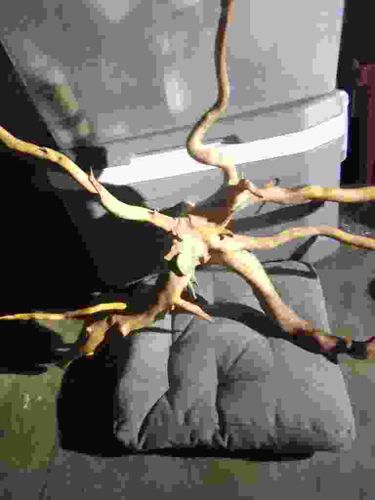
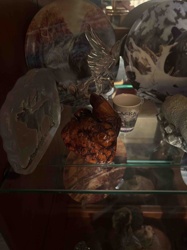
Submitted item photo
Submitted photo · June 18, 2026

User's notes

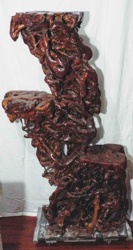
Manzanita roots wood carving wood art

AI analysis below

AI appraisal

AI analysis & estimate

AI-Generated · Verify before acting

Everything below is generated by AI for informational purposes only. AI can make mistakes — the AI may misidentify items or misattribute them (artist, maker, brand, designer, origin, era). This is not an official valuation and should not be used for insurance, sale, tax, estate, legal, or lending purposes — or any decision requiring a certified appraisal. It is not an authoritative claim about any person, brand, or rights holder — do not share or rely on it as a factual statement about a third party. Always consult qualified professionals before making financial decisions.

Note

This analysis also relies on unverified notes provided by the user, which may be incomplete or inaccurate and could affect the result.

Read the full disclaimer

AI Identification

·Not independently authenticated·Verify before acting

Sculptural Manzanita Root Wood Carving

Fine Art - Wood Sculpture / Decorative Arts

AI Estimated Value

·Not an official valuation·Verify before acting

$450 - $850

As of June 18, 2026

AI Item Analysis

·AI can make mistakes·Verify before acting
This item is a sculptural wood art piece crafted from the base and radiating root system of a Manzanita plant. It exhibits a complex, organic form with multiple contorted branches and root tendrils extending from a central burl-like hub. The wood has been sandblasted or hand-stripped of its outer bark to reveal the smooth, undulating hardwood surface beneath, which typically ranges in color from light tan to warm reddish-brown, though the lighting in the image suggests a pale amber patina. The construction is entirely natural, utilizing the inherent twists and turns characteristic of slow-growing Manzanita. Based on the uniform texture, the piece appears to be expertly finished with a fine sanding process, likely intended for use as a decorative centerpiece or a base for a glass-topped accent table. The piece shows high-quality craftsmanship in the cleaning and preservation of the delicate thinner limbs, which are often prone to snapping during harvesting. Condition appears stable with no visible major cracks or rot, showing the natural durability of this dense hardwood species. It likely dates from the late 20th century to the present day, following the tradition of organic modernism and desert-inspired rustic decor found in the American West.
AI Appraisal Report

·AI can make mistakes·Verify before acting
I have conducted a visual examination of this sculptural Manzanita root assembly. The piece displays the characteristic density and twisting morphology of the Arctostaphylos genus, featuring a well-preserved radiating root system and central burl hub. The surface indicates professional sandblasting and fine-grit sanding, reaching a smooth, consistent patina that enhances the wood's natural amber tones. Condition appears excellent; the survival of the terminal branch ends suggests careful harvesting and a stable moisture environment, minimizing checking or structural brittle failure. The market for 'Organic Modern' and 'Desert Chic' decorative arts remains strong, particularly for specimens of this scale that function as sculptural centerpieces or furniture bases. Comparable hand-finished Manzanita specimens of similar width and complexity typically realize between $400 for hobbyist-level cleaning to $1,200 for signed pieces by recognized wood artists. The lack of a visible artist's mark or provenance documentation currently places the valuation in the mid-range of decorative arts rather than the high-end fine art category. Limitations: This appraisal is based solely on high-resolution imagery. A physical inspection is necessary to verify the structural integrity of the internal grain and to confirm the absence of hidden fills or repairs. Full authentication would require provenance paperwork or a signature to elevate it to a specific artist's oeuvre. Furthermore, I cannot definitively confirm the absence of subtle wood-boring insect damage or the specific type of finish (oil vs. wax) without a tactile assessment. For insurance purposes, a formal in-person valuation is recommended to observe the piece under UV light and verify its exact dimensions.

Get your items appraised

Instant estimates of your treasures with AI-powered appraisals

Browse More Appraisals