East African Carved Bone and Ebony Wood Sculpture of the "Big Five" Animals
Decorative Arts/Carvings

East African Carved Bone and Ebony Wood Sculpture of the "Big Five" Animals

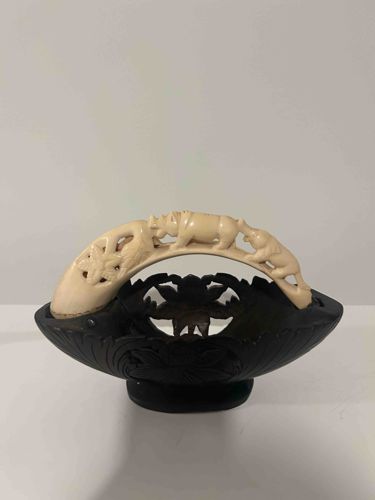
This is a decorative table-top sculpture featuring a curved handle piece intricately carved from bone, possibly bovine bone, depicting the 'Big Five' safari animals in a continuous line. The animals show stylized yet recognizable forms including a rhino, lion, and buffalo. This handle is set into a boat-shaped base hand-carved from dark ebony-type wood. The wooden base features high-relief floral and foliage piercings throughout the sides and center, resting on a pedestal foot. The bone element displays a warm, creamy-yellow patina consistent with age and natural oils, while the ebony base is finished in a deep matte black. There are visible cross-hatching and grain patterns in the bone, indicating an organic origin rather than synthetic. Structurally, the piece shows some separation at the joints where the bone inserts into the wood, which is a common occurrence with organic materials expanding and contracting at different rates over time. This item likely dates to the mid-20th century, approximately 1950-1970, and is a classic example of East African tourist art or 'curio' craftsmanship intended for the export market. The carving demonstrates significant manual skill, particularly in the delicate open-work of the wooden base, though it follows a folk-art aesthetic rather than a formal academic style.
Estimated Value

$150 - $250

Basic Information

Category

Decorative Arts/Carvings

Appraised On

December 29, 2025

Estimated Value

$150 - $250

Item Description

This is a decorative table-top sculpture featuring a curved handle piece intricately carved from bone, possibly bovine bone, depicting the 'Big Five' safari animals in a continuous line. The animals show stylized yet recognizable forms including a rhino, lion, and buffalo. This handle is set into a boat-shaped base hand-carved from dark ebony-type wood. The wooden base features high-relief floral and foliage piercings throughout the sides and center, resting on a pedestal foot. The bone element displays a warm, creamy-yellow patina consistent with age and natural oils, while the ebony base is finished in a deep matte black. There are visible cross-hatching and grain patterns in the bone, indicating an organic origin rather than synthetic. Structurally, the piece shows some separation at the joints where the bone inserts into the wood, which is a common occurrence with organic materials expanding and contracting at different rates over time. This item likely dates to the mid-20th century, approximately 1950-1970, and is a classic example of East African tourist art or 'curio' craftsmanship intended for the export market. The carving demonstrates significant manual skill, particularly in the delicate open-work of the wooden base, though it follows a folk-art aesthetic rather than a formal academic style.

Get Your Items Appraised

Instant estimates of your treasures with AI-powered instant appraisals

Browse More Appraisals