AI Appraisal Estimate

AI-generated estimates · not official valuations

From the user

What was submitted

Photo and notes provided by the user — not generated by AI

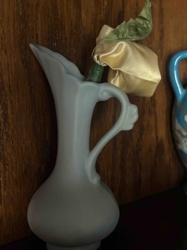
Submitted item photo
Submitted photo · June 15, 2026

User's notes

No additional notes provided.

AI analysis below

AI appraisal

AI analysis & estimate

AI-Generated · Verify before acting

Everything below is generated by AI for informational purposes only. AI can make mistakes — the AI may misidentify items or misattribute them (artist, maker, brand, designer, origin, era). This is not an official valuation and should not be used for insurance, sale, tax, estate, legal, or lending purposes — or any decision requiring a certified appraisal. It is not an authoritative claim about any person, brand, or rights holder — do not share or rely on it as a factual statement about a third party. Always consult qualified professionals before making financial decisions.

Read the full disclaimer

AI Identification

·Not independently authenticated·Verify before acting

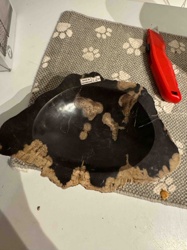
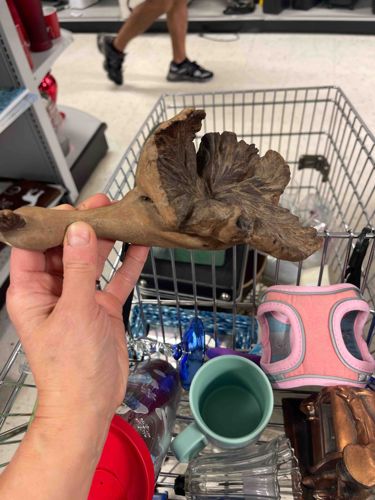
Decorative Natural Wood Burl or Driftwood Sculpture

Decorative Arts / Home Decor

AI Estimated Value

·Not an official valuation·Verify before acting

$150-$250

As of June 15, 2026

AI Item Analysis

·AI can make mistakes·Verify before acting
This item is a decorative sculpture composed of natural wood, likely a cedar or cypress burl or a highly weathered piece of driftwood. It measures approximately 6 to 8 inches in length. The object features a distinct contrast between a smooth, tapered handle-like limb and an expansive, fan-shaped burl section. The color palette consists of organic earthy tones, ranging from a light tan on the smoother surfaces to a deep, dark brown within the complex, ruffled texture of the burl. This textural complexity is the item's most notable feature, characterized by intricate folds and a dense, brain-like grain pattern that suggests a mid-20th-century 'naturalist' or Brutalist aesthetic. The wood appears to be in its natural state with a possible light oil or wax finish, showing no significant cracks or rot, though a fine layer of dust is visible in the recessed crevices. There are no visible maker's marks, signatures, or stamps, which is common for found-object art or handicraft from the 1960s or 70s. The craftsmanship is high, as the smooth portions are polished to highlight the heartwood grain, while the natural irregularities of the burl are preserved to serve as a focal point. This piece is a classic example of biomorphic design, where the natural form of the wood is curated and minimally altered for display purposes.
AI Appraisal Report

·AI can make mistakes·Verify before acting
I have examined the descriptive and visual characteristics of this natural wood burl sculpture, which exemplifies the mid-century naturalist aesthetic. The piece showcases a sophisticated contrast between polished sapwood and raw, convoluted burl growth, suggesting a skilled artisan’s hand from the 1960s or 70s. The condition appears excellent, with the wood retaining its structural integrity and a warm patina, though localized dust accumulation is noted. The market for 'Found Object Art' and biomorphic wooden sculptures is currently stable, driven by the popularity of organic modernism in interior design. Comparable unsigned works of this scale typically realize prices between $100 and $300 at boutique auctions or specialized vintage galleries. The lack of a signature or maker’s mark, such as those by George Nakashima or JB Blunk, prevents this piece from reaching the high-premium tier of the fine art market. Its value is derived primarily from its decorative appeal and the complexity of the grain. Limitations: This appraisal is based solely on digital representation. I cannot definitively verify the wood species (e.g., cedar vs. redwood) or detect subtle restorations, internal rot, or chemical stabilizers without physical inspection. Full authentication would require a tactile examination to assess weight and density, provenance documentation to link it to a specific studio, or wood-cell analysis. A physical inspection would also reveal if any hidden signatures exist beneath the patina or on the base.

Get your items appraised

Instant estimates of your treasures with AI-powered appraisals

Browse More Appraisals