AI Appraisal Estimate

AI-generated estimates · not official valuations

From the user

What was submitted

Photo and notes provided by the user — not generated by AI

Submitted item photo
Submitted photo · June 21, 2026

User's notes

Unknown artist, untitled sculpture

AI analysis below

AI appraisal

AI analysis & estimate

AI-Generated · Verify before acting

Everything below is generated by AI for informational purposes only. AI can make mistakes — the AI may misidentify items or misattribute them (artist, maker, brand, designer, origin, era). This is not an official valuation and should not be used for insurance, sale, tax, estate, legal, or lending purposes — or any decision requiring a certified appraisal. It is not an authoritative claim about any person, brand, or rights holder — do not share or rely on it as a factual statement about a third party. Always consult qualified professionals before making financial decisions.

Note

This analysis also relies on unverified notes provided by the user, which may be incomplete or inaccurate and could affect the result.

Read the full disclaimer

AI Identification

·Not independently authenticated·Verify before acting

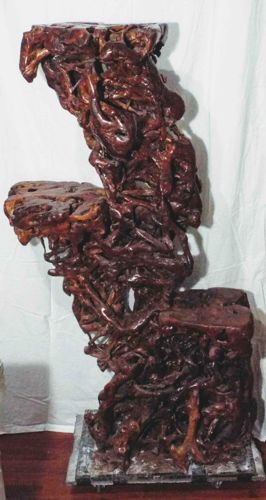
Carved Rootwood Multi-Tiered Pedestal Sculpture

Decorative Arts/Furniture

AI Estimated Value

·Not an official valuation·Verify before acting

$800 - $1,400

As of June 21, 2026

AI Item Analysis

·AI can make mistakes·Verify before acting
This is a large-scale, vertical sculpture and functional pedestal set crafted from natural rootwood, likely dating from the mid to late 20th century. The piece features a complex, chaotic network of intertwined roots, branches, and burls that have been extensively hand-carved and sanded to create a series of three distinct, flat horizontal platforms. The wood displays a rich, deep reddish-brown mahogany-toned patina with a high-gloss lacquer finish that emphasizes the swirling grain patterns and natural growth nodules. Standing on a low-profile base, the construction utilizes the structural integrity of the root system to support asymmetrical cantilevered shelves. Visually, the piece is in good condition, showing character-defining cracks and fissures natural to the drying of dense root systems, but no structural instability is visible. The craftsmanship demonstrates a high degree of labor, involving the cleaning of organic debris from within the negative spaces of the root ball and precision leveling of the display surfaces. While no specific maker's mark is visible, the style is consistent with high-end organic modernism or traditional Chinese root carving (Langyan), designed to bridge the gap between natural form and functional interior design.
AI Appraisal Report

·AI can make mistakes·Verify before acting
Based on my visual examination of this carved rootwood pedestal, the piece is a striking example of the "organic modern" aesthetic, highly compatible with styles ranging from traditional Asian interiors to mid-century modern décor. The craftsmanship appears competent; the unknown artisan has successfully tamed a chaotic root system into functional, leveled tiers without sacrificing the raw, kinetic energy of the natural form. The rich mahogany-toned patina and high-gloss lacquer finish are consistent with Chinese root carving traditions (Langyan) likely produced in the mid-to-late 20th century for export markets. Condition appears stable. The visible fissures and checking are typical behavior for dense burl wood as it dries over decades and do not suggest structural failure, though the high-gloss finish can sometimes obscure modern repairs. Market demand for these biomorphic functional sculptures remains steady, particularly large-scale pieces that serve dual purposes as art and display pedestals. Comparables in the current market—typically categorized under "Asian Kinetic Root Wood" or "Organic Modern Stands"—regularly fetch between $800 and $1,400 at auction, depending on complexity and scale. A definitive valuation is limited by the lack of physical inspection. To confirm the higher end of this range, I would need to verify the joinery methods (checking for hidden dowels or modern glues versus solid single-piece construction) and assess the weight and density of the wood to determine the species, likely teak or cedar. Without provenance or a maker's mark, the piece relies entirely on its decorative appeal rather than artist significance.

Get your items appraised

Instant estimates of your treasures with AI-powered appraisals

Browse More Appraisals