AI estimate as of August 26, 2025 · verify with a professional before acting
AI-Generated · Verify before acting
Everything on this page is generated by AI for informational purposes only. AI can make mistakes — the AI may misidentify items or misattribute them (artist, maker, brand, designer, origin, era). This is not an official valuation and should not be used for insurance, sale, tax, estate, legal, or lending purposes — or any decision requiring a certified appraisal. It is not an authoritative claim about any person, brand, or rights holder — do not share or rely on it as a factual statement about a third party. Always consult qualified professionals before making financial decisions.
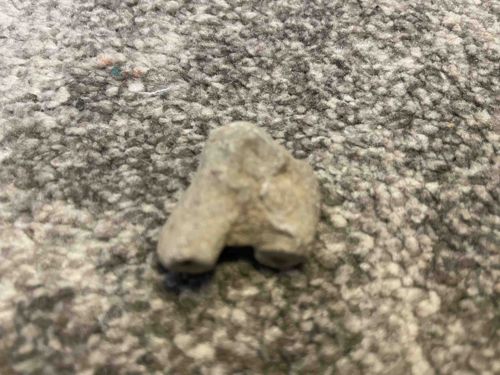
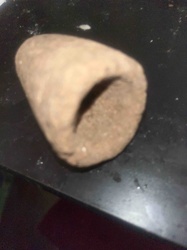
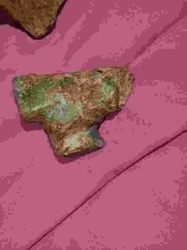
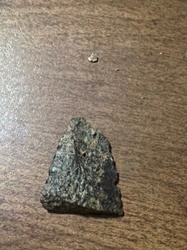
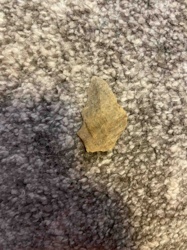
The item appears to be a small, weathered fragment of a much larger figurine or sculpture, likely crafted from stone or similar mineral material given its color and texture. It features a mottled grey to light beige color with natural variations and darker specks, consistent with aged rock or pottery that has been exposed to elements. The form is irregular but suggests a once-rounded or shaped part, possibly an animal leg, a stylized human limb, or the base of a small statue. There are several visible indentations and smoothed surfaces, indicating a degree of human shaping, although specific details are obscured by wear and possibly mineral deposits. One end clearly shows two rounded, almost foot-like protrusions, which are relatively smooth and symmetrical compared to the rest of the object. The overall texture is rough and granular, typical of unpolished stone or unglazed ceramic. The item exhibits significant signs of wear, including chips, abrasions, and a heavy patination that suggests considerable age and environmental exposure. There are no discernible maker's marks, signatures, or decorative elements visible in the provided image. The primitive carving and considerable weathering point towards an ancient or possibly prehistoric origin, reflecting basic craftsmanship of the period. Its small size, irregular breaks, and substantial patina indicate it is a remnant rather than a complete item, likely discovered as an archaeological find.
AI Appraisal Report
I have carefully examined the provided image of the 'Fragment of an Ancient Stone Figurine (Possible Animal Leg/Base)'. Based on its visual characteristics, the item appears to be a genuine archaeological artifact, likely stone or a dense ceramic. The significant weathering, patination, and crude, yet distinct, shaping strongly suggest considerable age and exposure, consistent with an ancient origin. The "foot-like" protrusions are particularly intriguing and point towards a zoomorphic or anthropomorphic representation, even if highly stylized or worn.
Regarding condition, it is a fragment, suffering from notable chips, abrasions, and loss of original form, as expected for an ancient item of this nature. This fragmentation severely impacts its aesthetic and informational value, as the original context and complete form are lost. Authenticity, based solely on imagery, seems probable due to the consistent signs of age, but I must emphasize the limitations of this assessment. Without physical examination, I cannot definitively rule out modern geological formations mimicking ancient artifacts, or even sophisticated fakes.
In terms of market conditions, fragmented ancient artifacts, especially those lacking clear identifiable features or provenance, generally command lower prices than complete or highly diagnostic pieces. Comparables would include other undiagnostic stone fragments from ancient cultures, which primarily appeal to very niche collectors or academic institutions for study rather than display. Demand is low for such items beyond specialized archaeological interests. Its rarity lies in its age, not necessarily its unique aesthetic or historical significance in this fragmented state. Factors significantly impacting value include its status as a fragment, the lack of definitive origin or cultural attribution, and the general wear.
For full authentication and a more precise valuation, an in-person examination is crucial. This would allow for tactile assessment, detailed photography under various lighting conditions, and potential stratigraphic analysis of the patina. Most importantly, provenance documentation, detailing its discovery and ownership history, is paramount. Scientific testing, such as elemental composition analysis or thermoluminescence dating (if ceramic), would definitively verify its age and material, significantly enhancing its value for academic and potentially collecting purposes.