Chert or Basalt Projectile Point Fragment
Archaeological Artifacts

Chert or Basalt Projectile Point Fragment

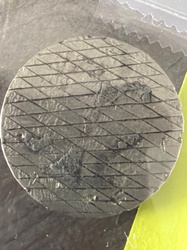
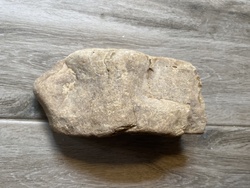
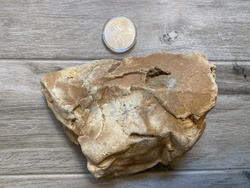
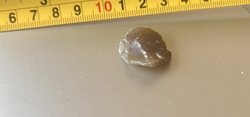
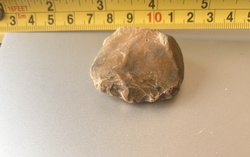
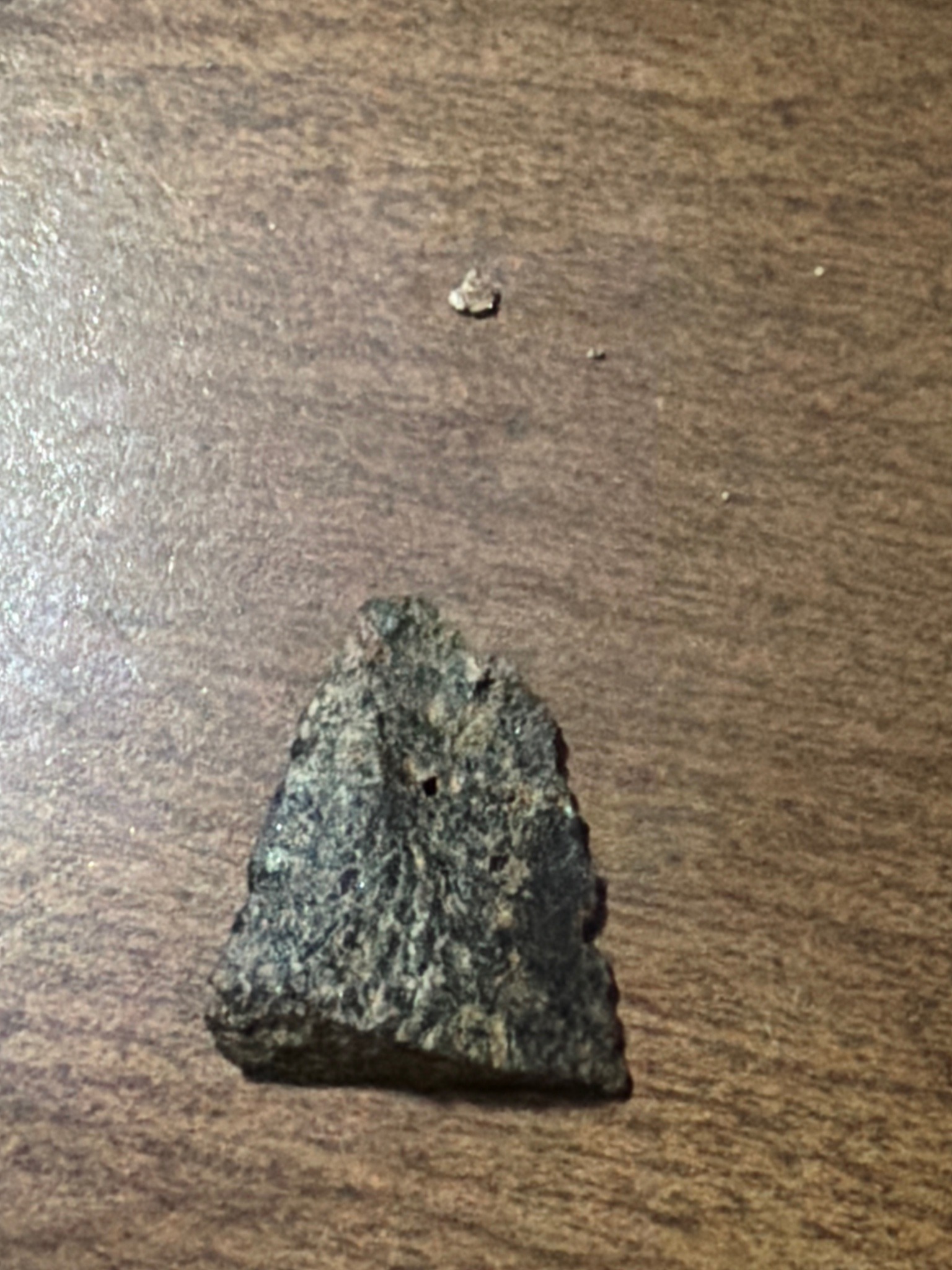
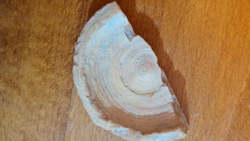
This item is a lithic artifact, specifically a fragment of a projectile point or stone tool. It exhibits a roughly triangular shape with a wider, snapped base and a tapering tip. The material appears to be a dark, fine-grained igneous or metamorphic rock, possibly basalt, andesite, or a dark variety of chert, characterized by a mottled grayish-black surface with lighter mineral inclusions. The object shows clear evidence of percussion and pressure flaking along its lateral edges, resulting in a serrated or scalloped perimeter typical of knapped tools. The surface is textured with 'flake scars' where material was removed during its manufacture. In terms of condition, the piece is incomplete; the base appears to have a clean, possibly modern or ancient break (snap fracture), and the extreme tip shows some blunting. There is a visible accumulation of soil or mineral patina in the recessed areas of the flaking, suggesting it has been buried or exposed to the elements for a significant period. While a precise date is difficult without geographical context, the craftsmanship suggests a prehistoric origin, likely from an indigenous lithic industry. The irregular but intentional shaping indicates a functional tool rather than a natural rock formation.
Estimated Value

$40-$75

Basic Information

Category

Archaeological Artifacts

Appraised On

May 5, 2026

Estimated Value

$40-$75

Item Description

This item is a lithic artifact, specifically a fragment of a projectile point or stone tool. It exhibits a roughly triangular shape with a wider, snapped base and a tapering tip. The material appears to be a dark, fine-grained igneous or metamorphic rock, possibly basalt, andesite, or a dark variety of chert, characterized by a mottled grayish-black surface with lighter mineral inclusions. The object shows clear evidence of percussion and pressure flaking along its lateral edges, resulting in a serrated or scalloped perimeter typical of knapped tools. The surface is textured with 'flake scars' where material was removed during its manufacture. In terms of condition, the piece is incomplete; the base appears to have a clean, possibly modern or ancient break (snap fracture), and the extreme tip shows some blunting. There is a visible accumulation of soil or mineral patina in the recessed areas of the flaking, suggesting it has been buried or exposed to the elements for a significant period. While a precise date is difficult without geographical context, the craftsmanship suggests a prehistoric origin, likely from an indigenous lithic industry. The irregular but intentional shaping indicates a functional tool rather than a natural rock formation.
Get Your Items Appraised

Instant estimates of your treasures with AI-powered instant appraisals

Browse More Appraisals