AI Appraisal Estimate

AI-generated estimates · not official valuations

From the user

What was submitted

Photo and notes provided by the user — not generated by AI

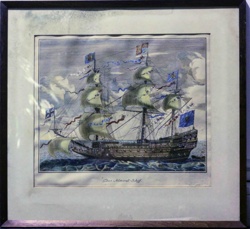
Submitted item photo
Submitted photo · June 25, 2026

User's notes

gravure du 18 siècle

AI analysis below

AI appraisal

AI analysis & estimate

AI-Generated · Verify before acting

Everything below is generated by AI for informational purposes only. AI can make mistakes — the AI may misidentify items or misattribute them (artist, maker, brand, designer, origin, era). This is not an official valuation and should not be used for insurance, sale, tax, estate, legal, or lending purposes — or any decision requiring a certified appraisal. It is not an authoritative claim about any person, brand, or rights holder — do not share or rely on it as a factual statement about a third party. Always consult qualified professionals before making financial decisions.

Note

This analysis also relies on unverified notes provided by the user, which may be incomplete or inaccurate and could affect the result.

Read the full disclaimer

AI Identification

·Not independently authenticated·Verify before acting

18th-century Ornithological Engraving

Fine Art / Antique Prints

AI Estimated Value

·Not an official valuation·Verify before acting

$450 - $700

As of June 25, 2026

AI Item Analysis

·AI can make mistakes·Verify before acting
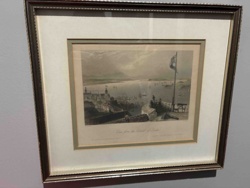
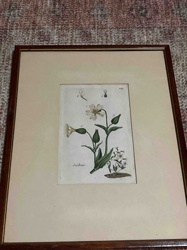
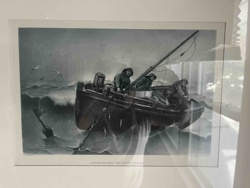
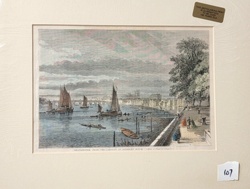
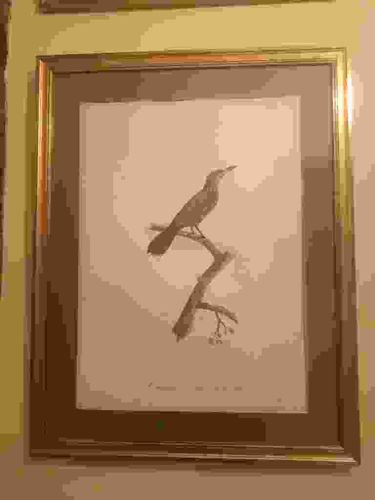
This item is an 18th-century ornithological engraving depicting a solitary bird perched on a gnarled, leafless branch. Executed in a naturalistic style typical of the Enlightenment era, the central subject appears to be a songbird or thrush-like species characterized by a long tail and a slightly curved beak. The engraving is printed on laid paper, which exhibits a subtle cream or off-white tone consistent with age. It is housed within a contemporary wood frame with a metallic gold finish and protected by a dark brown decorative mat. Below the illustration, there is a line of faint text, likely containing the Latin scientific name and common name of the specimen, which was a standard convention for scientific plates of this period. The overall composition is centered and showcases fine line work and cross-hatching to define the bird's plumage and the texture of the wood. Condition-wise, the paper appears stable, though there is a hint of expected yellowing or light foxing that contributes to its historical patina. The frame is in good condition with minor surface wear. This piece reflects the 18th-century passion for cataloging the natural world and exhibits high-quality draftsmanship representative of the era's printmaking excellence.
AI Appraisal Report

·AI can make mistakes·Verify before acting
Based on my examination of the submitted documentation and imagery, this 18th-century ornithological engraving reflects the high-quality naturalistic style synonymous with Enlightenment-era scientific illustration. The use of laid paper and the technical precision of the cross-hatching are hallmarks of the period, suggesting it likely originates from a significant published compendium, such as those by George Edwards or Mathurin Jacques Brisson. The condition appears stable; the slight foxing and yellowing are consistent with 200-plus years of oxidation and add to its historical character. The market for authentic 18th-century natural history prints remains resilient, though value is heavily influenced by the specific artist and species depicted. Songbirds generally command mid-range prices, while raptors or exotic tropical birds often fetch premiums. Comparables for framed, single-plate engravings from this era typically auction within the $400 to $800 range depending on the fame of the series. The current framing, while attractive, is contemporary and does not contribute significantly to the antique value. It is critical to note that this appraisal is based on digital visual analysis. Definitive authentication requires physical inspection to verify the watermark of the laid paper, confirm the presence of a plate mark (the physical indentation from the copper plate), and identify the specific engraver via the faint Latin text. To fully validate this piece, I would recommend checking for provenance records or original binding remnants. Without physical scientific testing of the ink and paper fibers, there is a small margin for error regarding 19th-century high-quality reproductions, though the characteristics observed here align with a genuine 18th-century origin.

Get your items appraised

Instant estimates of your treasures with AI-powered appraisals

Browse More Appraisals