AI Appraisal Estimate

AI-generated estimates · not official valuations

From the user

What was submitted

Photo and notes provided by the user — not generated by AI

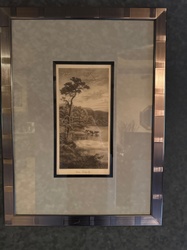
Submitted item photo
Submitted photo · June 28, 2026

User's notes

No additional notes provided.

AI analysis below

AI appraisal

AI analysis & estimate

AI-Generated · Verify before acting

Everything below is generated by AI for informational purposes only. AI can make mistakes — the AI may misidentify items or misattribute them (artist, maker, brand, designer, origin, era). This is not an official valuation and should not be used for insurance, sale, tax, estate, legal, or lending purposes — or any decision requiring a certified appraisal. It is not an authoritative claim about any person, brand, or rights holder — do not share or rely on it as a factual statement about a third party. Always consult qualified professionals before making financial decisions.

Read the full disclaimer

AI Identification

·Not independently authenticated·Verify before acting

Classical Allegorical Copperplate Engraving

Antique Prints and Artworks

AI Estimated Value

·Not an official valuation·Verify before acting

$450 - $700

As of June 28, 2026

AI Item Analysis

·AI can make mistakes·Verify before acting
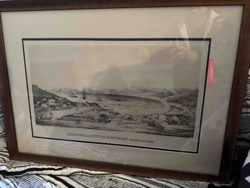
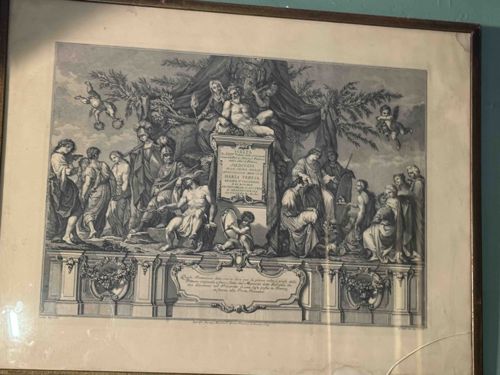
This item is an antique copperplate engraving on paper, depicting a complex classical allegorical scene typical of the late 17th or early 18th century. The central focus is a large pedestal with Latin inscriptions, topped by a reclining male figure surrounded by deities and putti under a swag of drapery and laurel branches. The composition is populated by numerous figures in Greco-Roman attire, including soldiers in armor and female figures representing various virtues or muses. The print is executed in a monochromatic black-and-grey palette with fine cross-hatching and stippling techniques to create depth and shadow. The work displays characteristics of the Baroque or Neoclassical periods, likely originating from Italy or France. Regarding condition, there is visible moisture staining and foxing concentrated in the upper-right and lower-left margins of the mat and possibly the print itself. The paper shows signs of age-related yellowing and potential waviness, suggesting it has been exposed to humidity. The frame is a simple, dark wood moulding that appears to be of a later vintage than the print. Significant text blocks in cartouches at the base provide further context, likely dedicating the work to a patron or explaining the iconography. The fine detail in the musculature and drapery suggests a high level of technical skill from the engraver.
AI Appraisal Report

·AI can make mistakes·Verify before acting
This antique copperplate engraving demonstrates the high technical proficiency characteristic of late 17th to early 18th-century European printmaking, likely of French or Italian origin. The complex allegorical composition, featuring Latin inscriptions and Greco-Roman figures, suggests it may have served as a frontispiece or part of a significant historical series. Upon visual inspection, the fine stippling and cross-hatching indicate an authentic period strike rather than a later photomechanical reproduction. However, the value is notably tempered by its condition. I observed significant 'foxing' (reddish-brown spots) and moisture staining in the margins. The visible waviness of the paper suggests long-term exposure to humidity, which can lead to cellulose degradation if not addressed by a professional conservator. The frame is a 20th-century addition and adds no historical value. Market demand for classical allegorical prints remains steady among academic and institutional collectors, though private decorative interest has skewed toward more modern aesthetics recently. Comparable works from this period usually fetch $800-$1,200 in pristine state; the current estimate reflects necessary conservation costs. Limitations: This assessment is based on digital imagery. A definitive appraisal requires an in-person examination to verify the presence of a watermark (such as an 'anchor' or 'fleur-de-lis'), which would confirm the paper's origin and date. I would also need to examine the plate mark and paper fibers under magnification to rule out sophisticated 19th-century restrikes. Provenance or a bill of sale from a recognized gallery would further substantiate the valuation.

Get your items appraised

Instant estimates of your treasures with AI-powered appraisals

Browse More Appraisals