AI Appraisal Estimate

AI-generated estimates · not official valuations

From the user

What was submitted

Photo and notes provided by the user — not generated by AI

Submitted item photo
Submitted photo · May 22, 2026

User's notes

Chambelain

AI analysis below

AI appraisal

AI analysis & estimate

AI-Generated · Verify before acting

Everything below is generated by AI for informational purposes only. AI can make mistakes — the AI may misidentify items or misattribute them (artist, maker, brand, designer, origin, era). This is not an official valuation and should not be used for insurance, sale, tax, estate, legal, or lending purposes — or any decision requiring a certified appraisal. It is not an authoritative claim about any person, brand, or rights holder — do not share or rely on it as a factual statement about a third party. Always consult qualified professionals before making financial decisions.

Note

This analysis also relies on unverified notes provided by the user, which may be incomplete or inaccurate and could affect the result.

Read the full disclaimer

AI Identification

·Not independently authenticated·Verify before acting

Lieutenant Henry Chamberlain 'Views and Costumes of the City and Neighbourhood of Rio de Janeiro'

Fine Art - Antique Prints and Engravings

AI Estimated Value

·Not an official valuation·Verify before acting

$1,200 - $1,800 USD

As of May 22, 2026

AI Item Analysis

·AI can make mistakes·Verify before acting
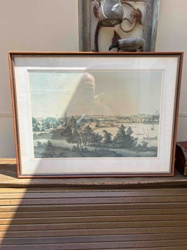
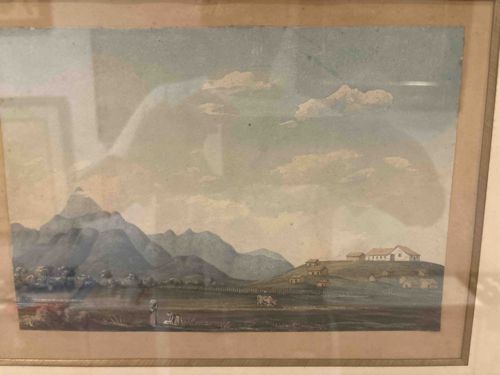
This item is an original hand-colored aquatint engraving from the well-known series by Lieutenant Henry Chamberlain (1796–1844), likely produced around 1822. The scene depicts a tranquil Brazilian landscape featuring a cluster of white-walled, red-roofed buildings situated on a gentle grassy hill, set against a backdrop of majestic, blue-tinged mountains and a soft atmospheric sky with cumulus clouds. In the foreground, small figures are seen working or tending to livestock, showcasing Chamberlain's interest in the local customs and everyday life of colonial Brazil. The color palette consists of muted earthy tones, soft blues, and subtle greens, which are characteristic of 19th-century English aquatinting techniques. The work is physically housed in a classic rectangular wooden frame with a neutral-toned mat. Regarding condition, the paper shows visible signs of age-related foxing and light brown spotting and discoloration across the sky area. The edges of the paper appear slightly trimmed to fit the frame. The presence of the sky's varied textures indicates the intricate tonal gradations typical of the aquatint process, reflecting high-quality craftsmanship from the late Georgian era. This piece is a significant historical document of South American topography during the early 19th century.

AI Appraisal Report

·AI can make mistakes·Verify before acting
I have examined the digital representation of the hand-colored aquatint from Lieutenant Henry Chamberlain’s 'Views and Costumes of the City and Neighbourhood of Rio de Janeiro' (c. 1822). Authenticity is indicated by the characteristic tonal depth of the aquatint process and the precision of the hand-applied watercolors, which align with the production standards of Thomas M’Lean of London. Chamberlain's work is a vital record of Brazilian topography and social customs in the early 19th century, making it highly collectible. The condition grade is fair to good. I observed significant foxing and oxidation across the sky and margins, which is common in 19th-century paper but detracts from the aesthetic and long-term stability. The trimming to accommodate the frame is a negative factor, as full margins are preferred by serious collectors. In the current market, single plates from this series typically realize between $1,000 and $2,500 depending on the specific view and condition. The 'Costume' plates generally fetch less than the expansive 'View' panoramas. Limitations of this digital appraisal: I cannot verify the paper's watermark (likely 'J. Whatman') or detect signs of modern lithographic reproduction without a high-magnification physical inspection. A full valuation requires removal from the frame to assess the verso for repairs or thinning. Verification of provenance or a bill of sale from a reputable dealer would strengthen this assessment. Scientific testing of the pigment composition could definitively rule out modern synthesized colors, though visual indicators suggest period-correct materials.

Get your items appraised

Instant estimates of your treasures with AI-powered appraisals

Browse More Appraisals