AI Appraisal Estimate

AI-generated estimates · not official valuations

From the user

What was submitted

Photo and notes provided by the user — not generated by AI

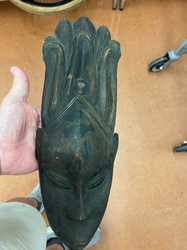
Submitted item photo
Submitted photo · June 22, 2026

User's notes

No additional notes provided.

AI analysis below

AI appraisal

AI analysis & estimate

AI-Generated · Verify before acting

Everything below is generated by AI for informational purposes only. AI can make mistakes — the AI may misidentify items or misattribute them (artist, maker, brand, designer, origin, era). This is not an official valuation and should not be used for insurance, sale, tax, estate, legal, or lending purposes — or any decision requiring a certified appraisal. It is not an authoritative claim about any person, brand, or rights holder — do not share or rely on it as a factual statement about a third party. Always consult qualified professionals before making financial decisions.

Read the full disclaimer

AI Identification

·Not independently authenticated·Verify before acting

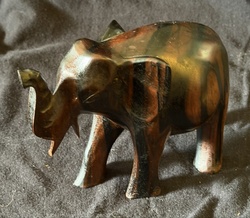
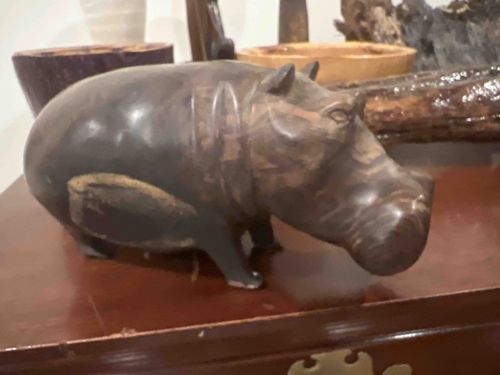
Hand-Carved African Ebony Wood Hippopotamus Sculpture

Decorative Arts / African Wood Carvings

AI Estimated Value

·Not an official valuation·Verify before acting

$125 - $225

As of June 22, 2026

AI Item Analysis

·AI can make mistakes·Verify before acting
This is a vintage or contemporary hand-carved wildlife sculpture depicting a hippopotamus, likely of East African origin (Kenya or Tanzania). The piece is meticulously carved from what appears to be a single block of dense, heavy hardwood, most likely African ebony (Diospyros mespiliformis). The sculpture features a striking duo-tone finish, taking advantage of the natural contrast between the dark, near-black heartwood and the lighter, caramel-colored sapwood. This material selection is common in fine Makonde-style carvings. Physically, the hippo exhibits a rotund, stylized body with smoothed contours. Notable features include carved neck folds, small upright ears, and a broad muzzle. The artisan has captured the animal's powerful proportions through a minimalist yet descriptive aesthetic. In terms of condition, the piece shows a lustrous surface patina, suggesting handle-wear or a polished wax finish. There are visible light abrasions and minor scuffs consistent with age, particularly along the lower base and legs. No significant cracks or structural repairs are immediately apparent, though the wood grain shows natural variegation. This item represents mid-to-late 20th-century artisan craftsmanship, often created for the decorative arts market or as high-quality tourist trade souvenirs. The weight and smoothness of the finish indicate high-quality density and professional carving skill.
AI Appraisal Report

·AI can make mistakes·Verify before acting
I have virtually examined this hand-carved African ebony hippopotamus sculpture. The piece exhibits the classic hallmarks of East African craftsmanship, specifically the 'duo-tone' style often associated with the Makonde or Kamba carvers of Kenya and Tanzania. The use of Diospyros mespiliformis is evident in the stark contrast between the dense, dark heartwood and the lighter sapwood used to highlight the muzzle and underbelly. The carving shows a high level of technical proficiency, with well-executed anatomical proportions and a smooth, waxy patina suggesting mid-to-late 20th-century origin. The condition appears 'Good,' with minor surface abrasions consistent with age and no visible radial checking (cracking), which often plagues dense hardwoods. The market for African hardwoods remains stable but is currently saturated with contemporary tourist-trade imports. High-quality vintage examples like this one carry a premium due to the weight (density) and the more meticulous hand-finishing compared to modern, mass-produced versions. Comparables for animal figures of this size (assumed 8-12 inches) typically hammer between $100 and $250 at regional decorative arts auctions. Limitations: This appraisal is based solely on digital images. Without an in-person inspection, I cannot verify the exact species of wood or the presence of internal structural repairs masked by wax. A physical examination would be required to weigh the piece—density is a primary indicator of genuine ebony versus stained generic hardwoods. Furthermore, provenance or a carver’s mark (though rare on such pieces) would be necessary to elevate the value into a fine arts category. The value provided represents a fair market estimate for a high-quality decorative specimen.

Get your items appraised

Instant estimates of your treasures with AI-powered appraisals

Browse More Appraisals