AI Appraisal Estimate

AI-generated estimates · not official valuations

From the user

What was submitted

Photo and notes provided by the user — not generated by AI

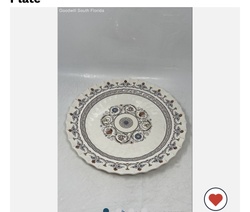
Submitted item photo
Submitted photo · June 23, 2026

User's notes

No additional notes provided.

AI analysis below

AI appraisal

AI analysis & estimate

AI-Generated · Verify before acting

Everything below is generated by AI for informational purposes only. AI can make mistakes — the AI may misidentify items or misattribute them (artist, maker, brand, designer, origin, era). This is not an official valuation and should not be used for insurance, sale, tax, estate, legal, or lending purposes — or any decision requiring a certified appraisal. It is not an authoritative claim about any person, brand, or rights holder — do not share or rely on it as a factual statement about a third party. Always consult qualified professionals before making financial decisions.

Read the full disclaimer

AI Identification

·Not independently authenticated·Verify before acting

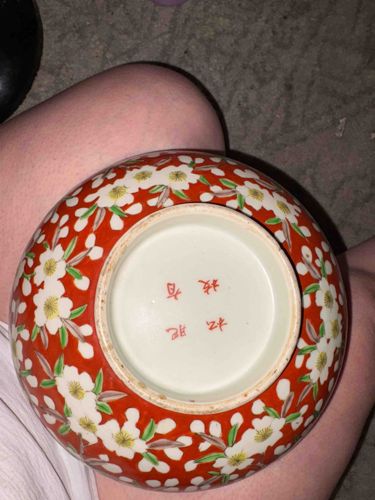
Japanese Imari-Style Porcelain Bowl with Cherry Blossom Motif

Porcelain Dinnerware/Decorative Arts

AI Estimated Value

·Not an official valuation·Verify before acting

$100 - $200

As of June 23, 2026

AI Item Analysis

·AI can make mistakes·Verify before acting
This item is a Japanese Imari-style porcelain bowl, characterized by its vibrant and intricate hand-painted decoration. The dominant color scheme features a striking persimmon or brick-red background, liberally adorned with white and pale yellow cherry blossoms (sakura) and green leaves. The blossoms are rendered with delicate detail, showcasing individual petals and stamens, creating a sense of depth and naturalism against the bold red ground. The bowl appears to be circular with a raised footring, evident from the underside visible in the image. The interior of the footring is unglazed but clean, suggesting good care. The visible base of the bowl, within the footring, is a creamy off-white color and features red calligraphic markings, likely a maker's mark or reign mark, which are inverted in the current image orientation but appear to be in traditional Chinese characters often used in Japanese porcelain to denote the period or kiln. These markings are a crucial detail for attributing the piece. The rim of the footring itself shows some minor discoloration or dirt, indicating age and handling, but no significant chips or cracks are immediately apparent. The craftsmanship appears to be of high quality, typical of Imari ware, known for its detailed polychrome enameling. The bowl exhibits a glossy glaze over the painted surfaces, which is characteristic of such porcelain. Based on the style and general appearance, it likely dates from the Meiji period (1868-1912) or early 20th century, a time when Imari ware was highly popular for export and domestic use. The red and white palette with floral motifs is a classic Imari design element.
AI Appraisal Report

·AI can make mistakes·Verify before acting
Upon visual examination of the provided images, this object is a Japanese Imari-style porcelain bowl. The piece exhibits the characteristic Imari palette, with a bold iron-red ground decorated with polychrome enamel cherry blossoms. The craftsmanship appears to be of good quality, consistent with production from the late Meiji (1868-1912) to Taisho (1912-1926) periods. The condition, as seen in the images, is good, showing signs of age-appropriate wear, such as minor discoloration on the footring, but no visible chips, cracks, or significant glaze loss. The red calligraphic mark on the base is a key element for attribution, but its specific details cannot be fully deciphered or authenticated from the inverted image alone. The market for Japanese Imari porcelain of this type is generally stable. While earlier Edo period pieces command high prices, items from the Meiji and Taisho periods are more common, having been produced in large quantities for export. Comparable bowls from this era, with similar size and decorative quality but without a particularly rare maker's mark, typically sell in the $100 to $200 range at auction and in retail settings. Demand exists among collectors of Japanese ceramics and those seeking decorative Asian art. The value is primarily influenced by its decorative appeal and good condition. However, this appraisal is limited by the inability to physically inspect the piece. A full authentication would require in-person examination to assess the porcelain body's quality, the feel of the glaze, the precise execution of the enameling, and to properly identify the maker's mark. Without provenance or further research into the mark, I am appraising it as a representative example of 20th-century Imari-style ware.

Get your items appraised

Instant estimates of your treasures with AI-powered appraisals

Browse More Appraisals