AI Appraisal Estimate

AI-generated estimates · not official valuations

From the user

What was submitted

Photo and notes provided by the user — not generated by AI

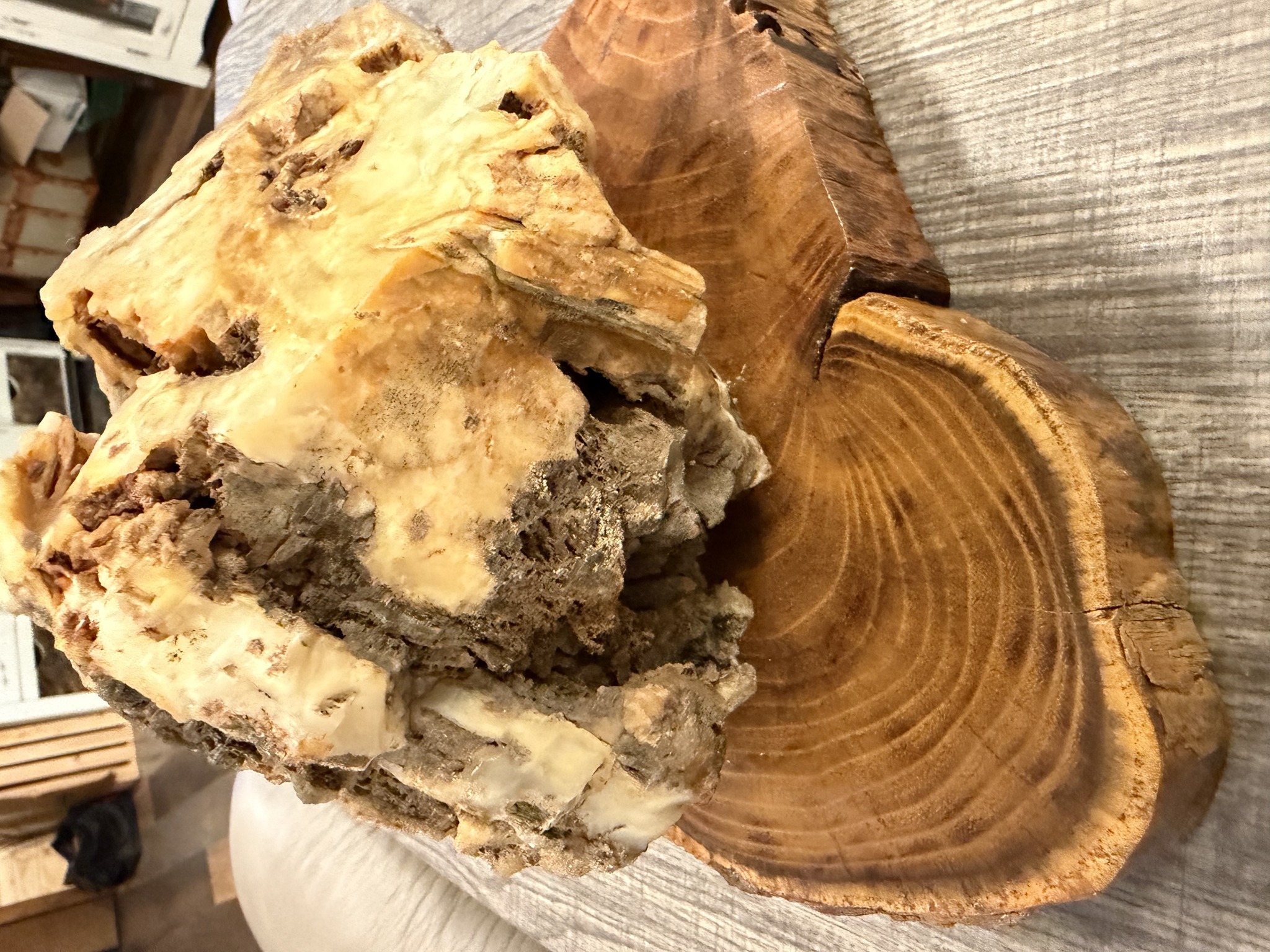
Submitted item photo
Submitted photo · June 10, 2026

User's notes

No additional notes provided.

AI analysis below

AI appraisal

AI analysis & estimate

AI-Generated · Verify before acting

Everything below is generated by AI for informational purposes only. AI can make mistakes — the AI may misidentify items or misattribute them (artist, maker, brand, designer, origin, era). This is not an official valuation and should not be used for insurance, sale, tax, estate, legal, or lending purposes — or any decision requiring a certified appraisal. It is not an authoritative claim about any person, brand, or rights holder — do not share or rely on it as a factual statement about a third party. Always consult qualified professionals before making financial decisions.

Read the full disclaimer

AI Identification

·Not independently authenticated·Verify before acting

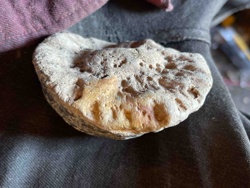
Petrified Wood Specimen and Polished Cross-Section Log

Geological Specimens / Fossils

AI Estimated Value

·Not an official valuation·Verify before acting

$450 - $650

As of June 10, 2026

AI Item Analysis

·AI can make mistakes·Verify before acting
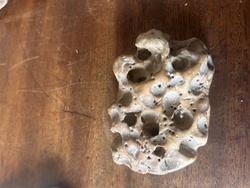
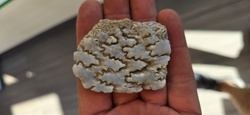
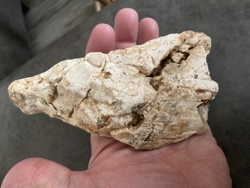
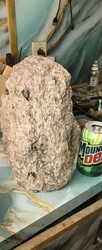
This item consists of two distinct components of petrified wood: a large, raw, three-dimensional specimen and a polished cross-section slice. The raw specimen displays a complex coloration varying from creamy beige and off-white to deep brownish-greys, suggesting silica replacement (chalcedony) of the original organic material. It exhibits significant internal texture, with cavities, crystalline pockets, and rough, uneven fractured surfaces that indicate a natural, unpolished state. Adjacent is a polished cross-section slab, showcasing exceptionally clear growth rings with a deep honey-colored hue and a semi-glossy finish. The polished side reveals the concentric circular patterns inherent to the original tree's biology, featuring a dense grain and several naturally occurring cracks or fissures radiating from the center, which are typical for ancient fossilized wood. The surface of the slice appears smooth and professionally buffed, contrasting sharply with the rugged, bark-like exterior of the larger chunk. There are no visible maker's marks, as this is a natural geological object. The item is likely millions of years old, potentially dating to the Cenozoic or Mesozoic eras. The overall condition is good, with some natural edge wear and structural cracks that are expected in fossilized organic matter. The high level of detail in the growth rings and the combination of raw and polished textures indicate a high-quality display specimen for geological collection.
AI Appraisal Report

·AI can make mistakes·Verify before acting
I have completed a visual examination of the petrified wood specimen and polished cross-section. The pieces exhibit hallmark characteristics of silicified wood, likely from the Triassic or Cenozoic periods. The raw specimen displays excellent chalcedony replacement with visible crystalline druzy pockets, while the polished slab shows exceptional preservation of the xylem structure and concentric growth rings. The preservation of the cellular detail is high, which is a primary driver for value in the fossil market. The market for petrified wood remains stable, with high demand for sets that show both the 'rough' and 'finished' states of the material. Comparables for similar-sized specimens from notable regions like the Arizona Petrified Forest (Chinle Formation) or Madagascar typically fall within this price bracket. The honey-colored mineralization in the polished slice is particularly desirable for interior decor and private geological collections. Factors impacting value include the lack of significant artificial fillers or resins; this set appears largely natural, though some stabilization is common. However, definitive authentication is limited by the digital format of this inspection. A physical examination is required to confirm the density, check for synthetic enhancements, and accurately measure the Mohs hardness to ensure it is true silica replacement rather than a softer mineral. To establish a 'museum-grade' valuation, I would require provenance documentation regarding the collection site and legal extraction, as locality significantly influences rarity. Without 360-degree tactile inspection, structural integrity and the depth of internal fissures cannot be fully guaranteed.

Get your items appraised

Instant estimates of your treasures with AI-powered appraisals

Browse More Appraisals