Fossilized Petrified Wood Specimen
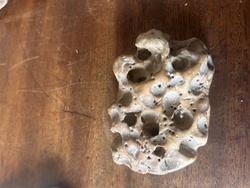
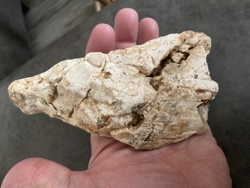
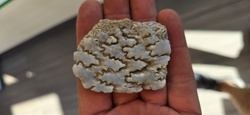
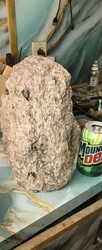
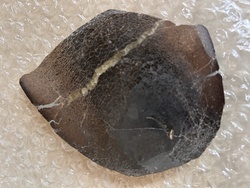
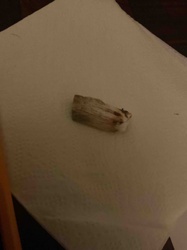
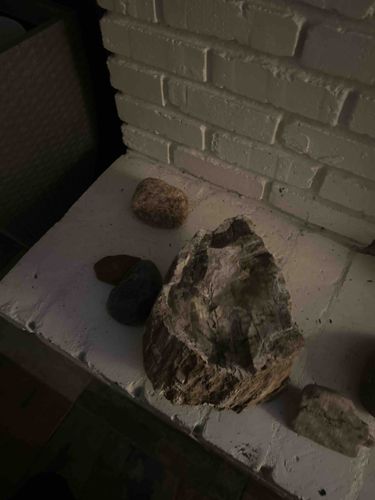
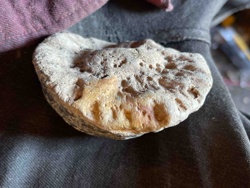
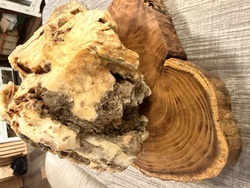
This item is a significant geological specimen of petrified wood, categorized by its distinct fossilized appearance and preserved organic structures. The specimen measures approximately 6 to 8 inches in height and possesses a rugged, conical shape. Its color palette is a complex mix of earthy tones, including deep browns, tans, and cream-colored mineral deposits that have replaced the original cellulose of the tree. The surface texture is highly characteristic of petrified wood, featuring vertical striations and bark-like ridges that indicate the original wood grain. One side shows a relatively flat, lighter-colored face, possibly where the stone was fractured or cut to reveal the inner mineralized core. There are no visible maker's marks, as this is a natural formation; however, the level of mineralization suggests a specimen that is millions of years old, likely originating from the Permian or Triassic periods. The condition is raw and unpolished, showing natural weathering and jagged edges typical of field-collected specimens. Other smaller stones are present in the periphery, including a rounded granite-like cobble and a dark, smooth river rock, but the petrified wood remains the central focus. The craftsmanship here is purely natural, defined by the slow permineralization process where silica or calcite filled the cellular voids of the ancient plant record.
AI-Generated Appraisal Disclaimer
Estimated Value
$45-75
Basic Information
Category
Geological Specimens / Fossils
Appraised On
February 17, 2026
Estimated Value
$45-75
Item Description
This item is a significant geological specimen of petrified wood, categorized by its distinct fossilized appearance and preserved organic structures. The specimen measures approximately 6 to 8 inches in height and possesses a rugged, conical shape. Its color palette is a complex mix of earthy tones, including deep browns, tans, and cream-colored mineral deposits that have replaced the original cellulose of the tree. The surface texture is highly characteristic of petrified wood, featuring vertical striations and bark-like ridges that indicate the original wood grain. One side shows a relatively flat, lighter-colored face, possibly where the stone was fractured or cut to reveal the inner mineralized core. There are no visible maker's marks, as this is a natural formation; however, the level of mineralization suggests a specimen that is millions of years old, likely originating from the Permian or Triassic periods. The condition is raw and unpolished, showing natural weathering and jagged edges typical of field-collected specimens. Other smaller stones are present in the periphery, including a rounded granite-like cobble and a dark, smooth river rock, but the petrified wood remains the central focus. The craftsmanship here is purely natural, defined by the slow permineralization process where silica or calcite filled the cellular voids of the ancient plant record.
Related Tags
Get Your Items Appraised
Instant estimates of your treasures with AI-powered instant appraisals