Fossilized Bone or Matrix-Based Geologic Specimen
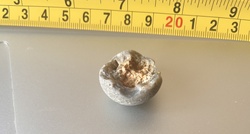
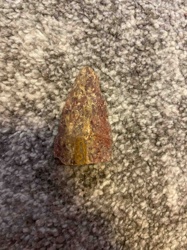
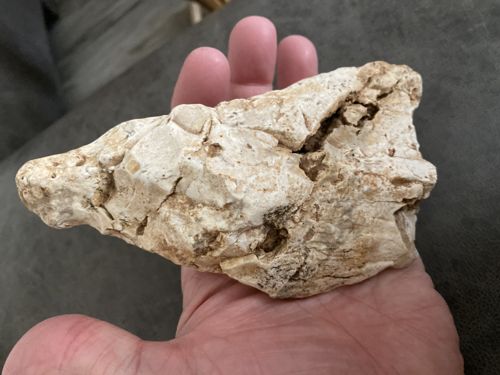
This item is a porous, light-tan to off-white mineralized specimen that appears to be a fossilized bone fragment or a heavily encrusted geologic formation. Measuring approximately 5 to 6 inches in length, the object exhibits a dense, irregular surface with significant calcification. The physical characteristics include a tapered, triangular shape with a rough, pitted texture and visible deep fissures and cavitations. The exterior color is predominantly a creamy beige with darker ochre and brown earthy staining within the crevices. Notably, the specimen lacks the rhythmic knapping marks associated with lithic tools, suggesting a natural formation rather than a man-made artifact. There are no visible maker's marks or signatures, which is consistent with its origin as a fossil or rock. The condition is weathered and raw, featuring significant surface erosion and mineral buildup that may obscure internal cell structures commonly found in fossilized marrow. The age is indeterminate without stratigraphic context, but such mineralization typically occurs over thousands to millions of years. This specimen is of interest for its organic contours and natural weathering patterns.
AI-Generated Appraisal Disclaimer
Estimated Value
$40 - $75
Basic Information
Category
Natural History / Paleontology
Appraised On
February 20, 2026
Estimated Value
$40 - $75
Item Description
This item is a porous, light-tan to off-white mineralized specimen that appears to be a fossilized bone fragment or a heavily encrusted geologic formation. Measuring approximately 5 to 6 inches in length, the object exhibits a dense, irregular surface with significant calcification. The physical characteristics include a tapered, triangular shape with a rough, pitted texture and visible deep fissures and cavitations. The exterior color is predominantly a creamy beige with darker ochre and brown earthy staining within the crevices. Notably, the specimen lacks the rhythmic knapping marks associated with lithic tools, suggesting a natural formation rather than a man-made artifact. There are no visible maker's marks or signatures, which is consistent with its origin as a fossil or rock. The condition is weathered and raw, featuring significant surface erosion and mineral buildup that may obscure internal cell structures commonly found in fossilized marrow. The age is indeterminate without stratigraphic context, but such mineralization typically occurs over thousands to millions of years. This specimen is of interest for its organic contours and natural weathering patterns.
Related Tags
Explore similar items and categories:
Get Your Items Appraised
Instant estimates of your treasures with AI-powered instant appraisals