AI estimate as of November 8, 2025 · verify with a professional before acting
AI-Generated · Verify before acting
Everything on this page is generated by AI for informational purposes only. AI can make mistakes — the AI may misidentify items or misattribute them (artist, maker, brand, designer, origin, era). This is not an official valuation and should not be used for insurance, sale, tax, estate, legal, or lending purposes — or any decision requiring a certified appraisal. It is not an authoritative claim about any person, brand, or rights holder — do not share or rely on it as a factual statement about a third party. Always consult qualified professionals before making financial decisions.
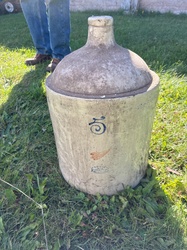
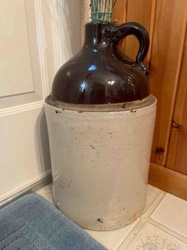
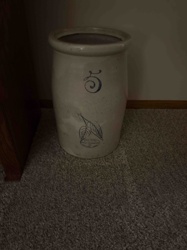
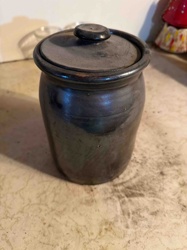
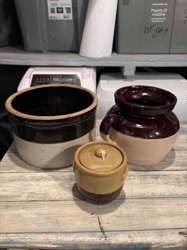
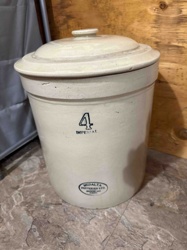
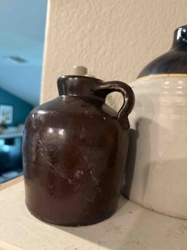
This is a two-tone stoneware jug, likely used for storing liquids such as water, milk, or spirits. The jug features a cylindrical body with a natural, unglazed earthenware finish in a light beige or off-white color. The top portion, including the neck, pouring spout, and a single, sturdy handle, is glazed in a rich, dark brown, giving it a distinctive two-tone appearance. The glazing on the upper half is smooth and glossy, contrasting with the matte, slightly rough texture of the lower body. The handle is C-shaped, robust, and ergonomically designed for pouring. There are no visible maker's marks or decorative embellishments on the exterior. The unglazed portion of the body shows some minor discoloration, consistent with age and use, and possibly some surface dirt. There appear to be no major chips, cracks, or repairs visible in the provided images, suggesting it is in good, used condition. The general aesthetic and construction suggest a utility item from the late 19th to early 20th century, a common period for such stoneware production. The craftsmanship appears functional and utilitarian, with no elaborate decorative elements, indicating it was primarily designed for practical use rather than ornamental display. The jug is proportioned for stability, with a wide base relative to its height.
AI Appraisal Report
This two-tone stoneware jug, likely dating from the late 19th to early 20th century, presents as a utilitarian piece consistent with that period. Based on the visual examination of the provided image, the condition appears good for its age. I observe no major chips, cracks, or repairs, which is a significant factor in maintaining its value. The discoloration on the unglazed portion is expected with age and use, and does not detract from its character as an authentic period piece.
From a market perspective, these utilitarian stoneware jugs are relatively common. While there is a consistent collector base for antique stoneware, demand for undecorated, functional pieces like this is moderate, not typically reaching high premium prices unless tied to a specific, rare maker or region, which is not evident here. Comparables for similar unbranded, good-condition two-tone stoneware jugs typically fall within a modest range.
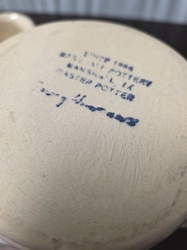
The absence of maker's marks limits its rarity, as specific regional potteries or master potters often command higher prices. Its value is primarily driven by its age, good condition, and representativeness of a historical household item. Factors that could negatively impact value, such as significant damage or restoration, do not appear to be present.
It is crucial to note that this appraisal is based solely on visual inspection of the image. A definitive assessment of authenticity would require in-person examination to thoroughly check for hairline cracks, professional repairs, or any hidden damage not visible in the photograph. Examination of the interior for residue or wear patterns could also provide further insights into its use. Authenticity verification regarding specific origin or maker is limited without provenance documentation or a maker's mark.