AI Appraisal Estimate

AI-generated estimates · not official valuations

From the user

What was submitted

Photo and notes provided by the user — not generated by AI

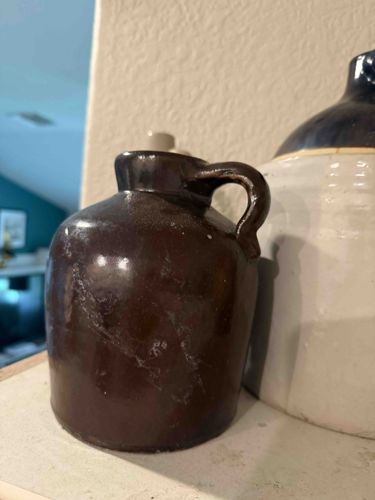
Submitted item photo
Submitted photo · June 6, 2026

User's notes

No additional notes provided.

AI analysis below

AI appraisal

AI analysis & estimate

AI-Generated · Verify before acting

Everything below is generated by AI for informational purposes only. AI can make mistakes — the AI may misidentify items or misattribute them (artist, maker, brand, designer, origin, era). This is not an official valuation and should not be used for insurance, sale, tax, estate, legal, or lending purposes — or any decision requiring a certified appraisal. It is not an authoritative claim about any person, brand, or rights holder — do not share or rely on it as a factual statement about a third party. Always consult qualified professionals before making financial decisions.

Read the full disclaimer

AI Identification

·Not independently authenticated·Verify before acting

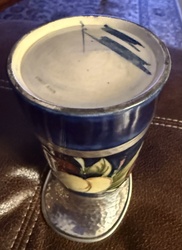
Antique Stoneware Pottery Jug (Whiskey/Pickle/Molasses Jug)

Pottery and Ceramics

AI Estimated Value

·Not an official valuation·Verify before acting

$40-60

As of June 6, 2026

AI Item Analysis

·AI can make mistakes·Verify before acting
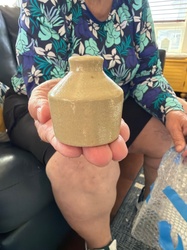
This is a small, antique stoneware pottery jug, likely used for spirits like whiskey, or for storing molasses or pickles due to its robust construction and glaze. It features a rich, dark brown or 'Albany Slip' glaze, which is typical for utilitarian stoneware from the 19th and early 20th centuries. The jug has a classic ovoid or squat body shape, with a narrow neck and a small, functional pouring spout. A single, C-shaped applied strap handle is attached to the neck and shoulder, designed for easy handling and pouring. The surface exhibits a glossy finish, though there are visible scuffs, scratches, and abrasions, particularly on the body, which appear as lighter white marks contrasting against the dark brown glaze. These marks indicate significant use and handling over time, contributing to its aged patina rather than detracting from its character, typical of well-preserved utilitarian items. The overall condition suggests it is free from major cracks or chips that would compromise its structural integrity, although minor imperfections expected from a utilitarian piece of its age are likely present. There are no discernible maker's marks or signatures visible from the provided image, common for many mass-produced stoneware items of the period. Its utilitarian aesthetic and characteristics place it probably within the late 19th to early 20th-century American folk art or industrial pottery tradition. The craftsmanship is simple but sturdy, reflecting its practical purpose.
AI Appraisal Report

·AI can make mistakes·Verify before acting
Upon visual examination of the provided images, I have assessed this antique stoneware pottery jug. It presents as a classic example of American utilitarian pottery, likely dating from the late 19th to early 20th century. The jug features a common ovoid form with a single strap handle and is covered in a dark brown Albany-type slip glaze. The condition appears to be fair to good for its age and utilitarian purpose. There are numerous scuffs, scratches, and abrasions visible on the body, which, while attesting to its history of use, do detract from its pristine value. Crucially, there are no visible major cracks or chips that would compromise its structural integrity. The most significant factor impacting value is the lack of any identifiable maker's mark or distinctive decoration. Such anonymous, mass-produced stoneware pieces are quite common in the market. Current market conditions for unmarked, simple brownware jugs like this one are modest. While there is steady demand from decorators and collectors of primitive or folk art items, the supply is plentiful. Comparables for similar unmarked Albany slip jugs of this size typically sell in the $40 to $60 range at auction and in antique shops. The value is primarily for its decorative and historical appeal rather than rarity. It's important to note that this appraisal is based solely on images. An in-person examination would be required to confirm the absence of hairline cracks or repairs, and to more closely inspect for any faint maker's marks that are not visible in the photos. Without physical inspection, a definitive authentication cannot be completed.

Get your items appraised

Instant estimates of your treasures with AI-powered appraisals

Browse More Appraisals