AI Appraisal Estimate

AI-generated estimates · not official valuations

From the user

What was submitted

Photo and notes provided by the user — not generated by AI

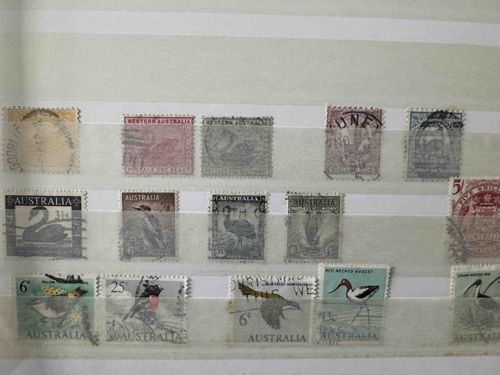
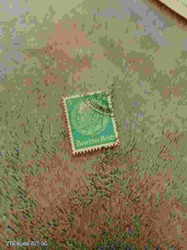
Submitted item photo
Submitted photo · June 23, 2026

User's notes

Complete serie

AI analysis below

AI appraisal

AI analysis & estimate

AI-Generated · Verify before acting

Everything below is generated by AI for informational purposes only. AI can make mistakes — the AI may misidentify items or misattribute them (artist, maker, brand, designer, origin, era). This is not an official valuation and should not be used for insurance, sale, tax, estate, legal, or lending purposes — or any decision requiring a certified appraisal. It is not an authoritative claim about any person, brand, or rights holder — do not share or rely on it as a factual statement about a third party. Always consult qualified professionals before making financial decisions.

Note

This analysis also relies on unverified notes provided by the user, which may be incomplete or inaccurate and could affect the result.

Read the full disclaimer

AI Identification

·Not independently authenticated·Verify before acting

Vintage Australian Philatelic Collection (Birds and Wildlife Series)

Philately / Collectible Postage Stamps

AI Estimated Value

·Not an official valuation·Verify before acting

$45 - $85 USD

As of June 23, 2026

AI Item Analysis

·AI can make mistakes·Verify before acting
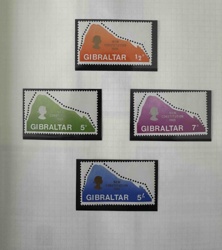
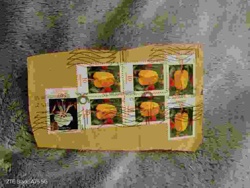
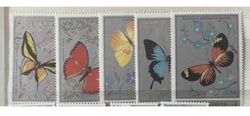
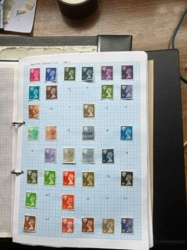
This item comprises a collection of vintage Australian postage stamps organized within a protective stock book page. The collection features a variety of series, most notably the Australian Birds definitive series from the 1960s-1970s and earlier colonial issues. Visible specimens include denominations such as the 6d (Yellow-winged Honeyeater), 25c (Flame Robin), 6c (Straw-necked Ibis), and 13c (Red-necked Avocet). The stamps display a range of printing techniques including photogravure and line engraving. Colors vary from muted earth tones in the older Western Australia 'Swan' issues to the vibrant multi-colored bird illustrations of the mid-20th century. Condition appears mixed; several stamps exhibit clear postal cancellations (circular date stamps), indicating they are 'used' specimens. Some perforation irregularities are visible, and the centering of the designs varies across the pieces. The stamps are held in place by translucent 'glassine' style strips on a cream-colored cardstock background. The collection represents both federal Australian issues and Western Australia state issues, showcasing the transition in philatelic design fromheraldic and symbolic imagery to realistic natural history subjects.
AI Appraisal Report

·AI can make mistakes·Verify before acting
I have examined the digital representation of this Australian philatelic collection focusing on the mid-century bird series and early colonial issues. The collection features a mix of 'used' specimens with visible cancellations and several 'mint' examples from the iconic Bird Definitive series (1964-1970s). The presence of the 6d Honeyeater and the higher-denomination Flame Robin and Avocet issues suggests a concerted effort to complete the series, which adds thematic value for natural history collectors. Condition is the primary value driver here. While the colors remain vibrant, signifying good light protection, I noted some irregular perforations and standard postal marks that categorize these as 'fine' rather than 'superb.' The colonial Western Australia 'Swan' issues, while historically significant, appear to be common varieties rather than the high-value 'Inverted Swan' rarities. Current market demand for mid-century Australian philately is steady but lacks the high-premium growth seen in 19th-century rarities. Recent auction results for similar birds-of-the-world thematic sets range between $30 and $100 depending on hinge status. A significant limitation of this digital appraisal is the inability to inspect the reverse of the stamps. An in-person examination is required to check for 'thins,' gum disturbances, or whether the stamps are 'never hinged' (MNH) versus 'mounted' (MH), which can change the value of the 1960s issues by 50-70%. Furthermore, scientific verification of watermark variations and perforation gauges via a physical gauge and UV lamp would be necessary to identify high-value sub-varieties that are not distinguishable via photograph alone.

Get your items appraised

Instant estimates of your treasures with AI-powered appraisals

Browse More Appraisals